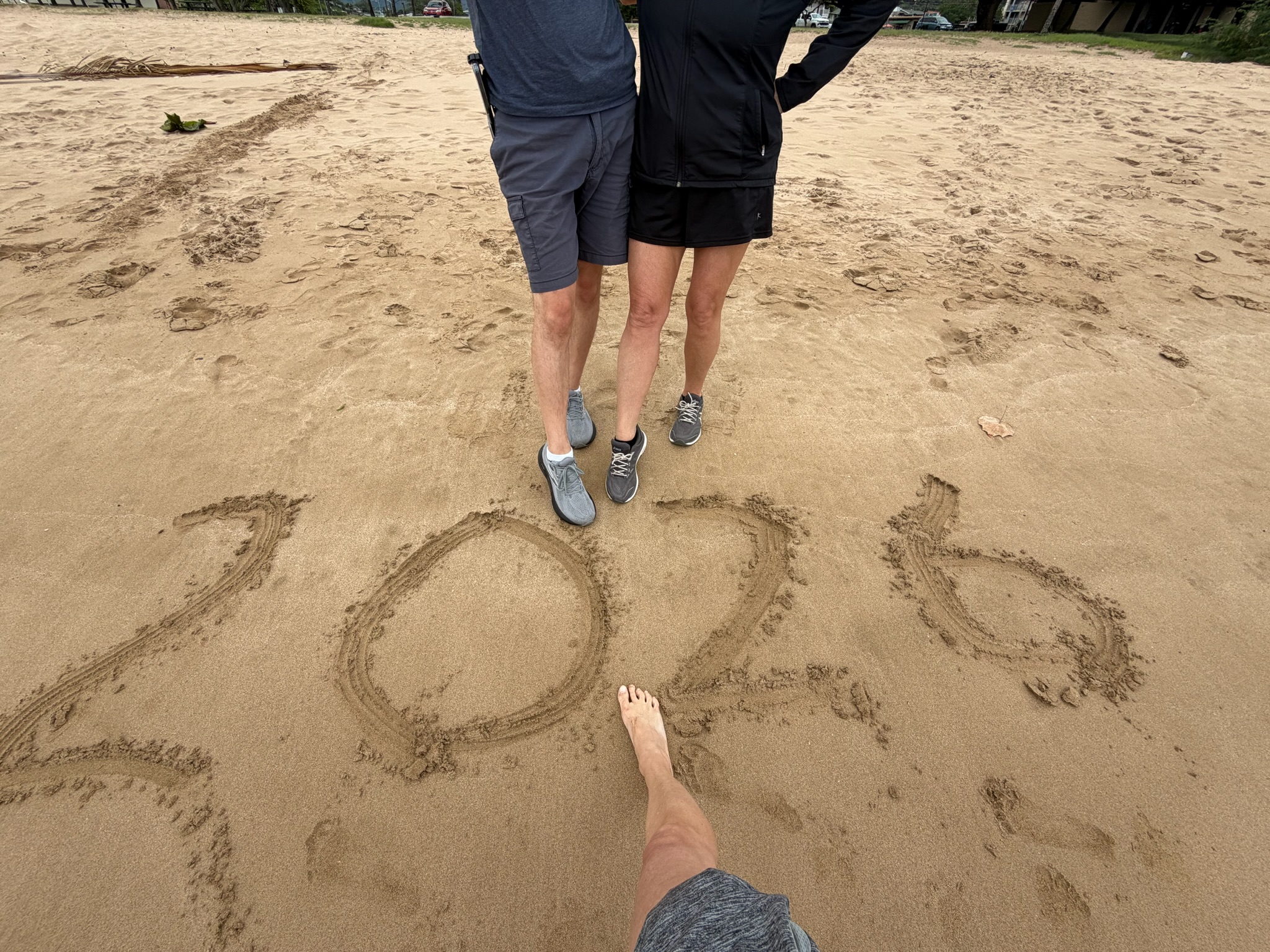
Most of what shows up here is technical. This one isn't. I went to Oahu in early February 2026 and came back feeling relaxed, reenergized, and ready for another hard working year. Here are some media I wish to share to encourage you to unplug, get away, and enjoy yourself.
Twelve minutes of ocean
If you can't fly over to the islands yourself, here's something to relax your day. Two long static takes of the surf, set to loop — leave them running in the background and they'll keep going with no seam, no fade, just real surf running back to the start with cadence that drifts the way real surf drifts.
I don't personally use them as background noise, but they're perfect for it.
If you've ever paid for a white-noise app, try shooting a long static take next time you're somewhere with surf and just keeping it. The phone has the camera and the microphone. It's free.
Plane spotting
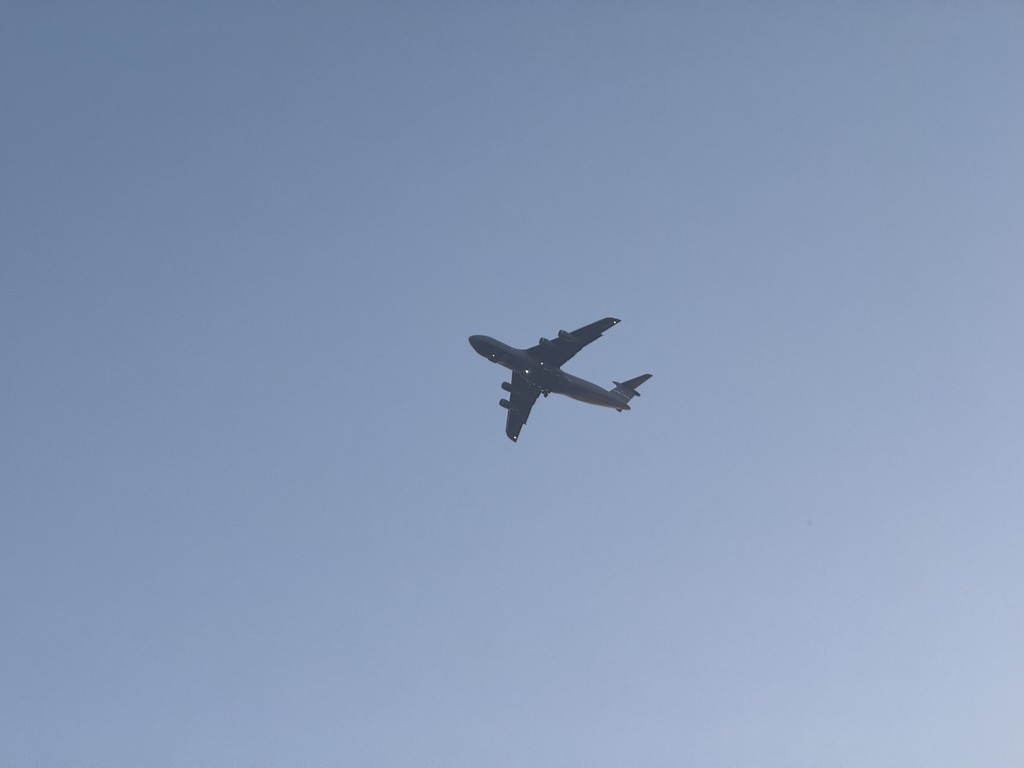
The plane spotting was an unexpected and recurring feature of the trip. We stayed at Marriott's Ko Olina Beach Club, which sits under the approach to Joint Base Pearl Harbor–Hickam — Air Force jets buzzed us more than a few times as they rocketed in to land. Overhead before you heard them, then the noise catching up.
The pair in this video looks like an F-22 and a couple of F-16s.
Two more from over the resort — same pattern, different days. The white spirals coming off the wingtips on the second one are condensation: when a fighter banks hard in humid air the pressure drop at the wingtip pulls moisture out of the surrounding air, and you get a visible vortex.
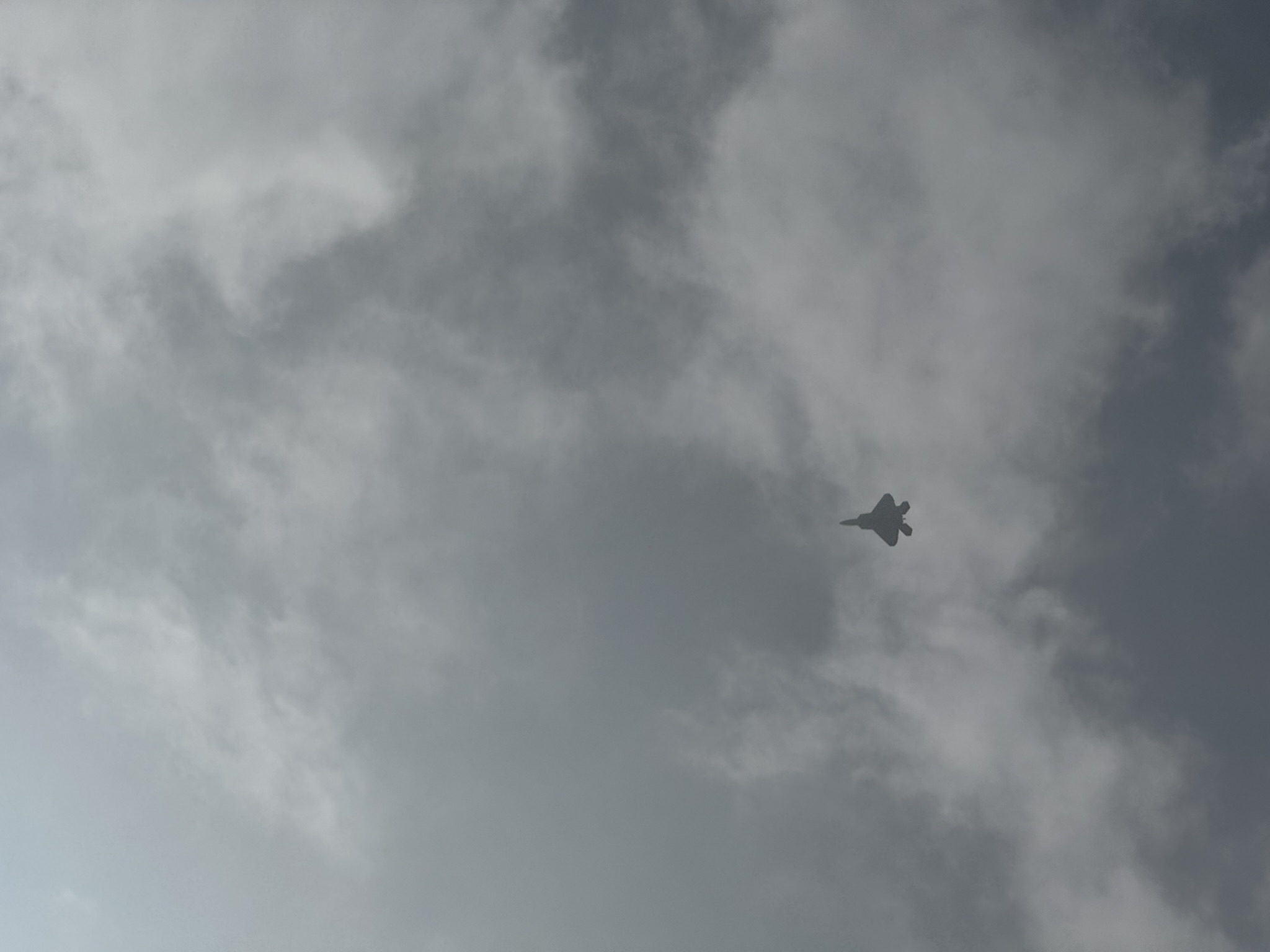
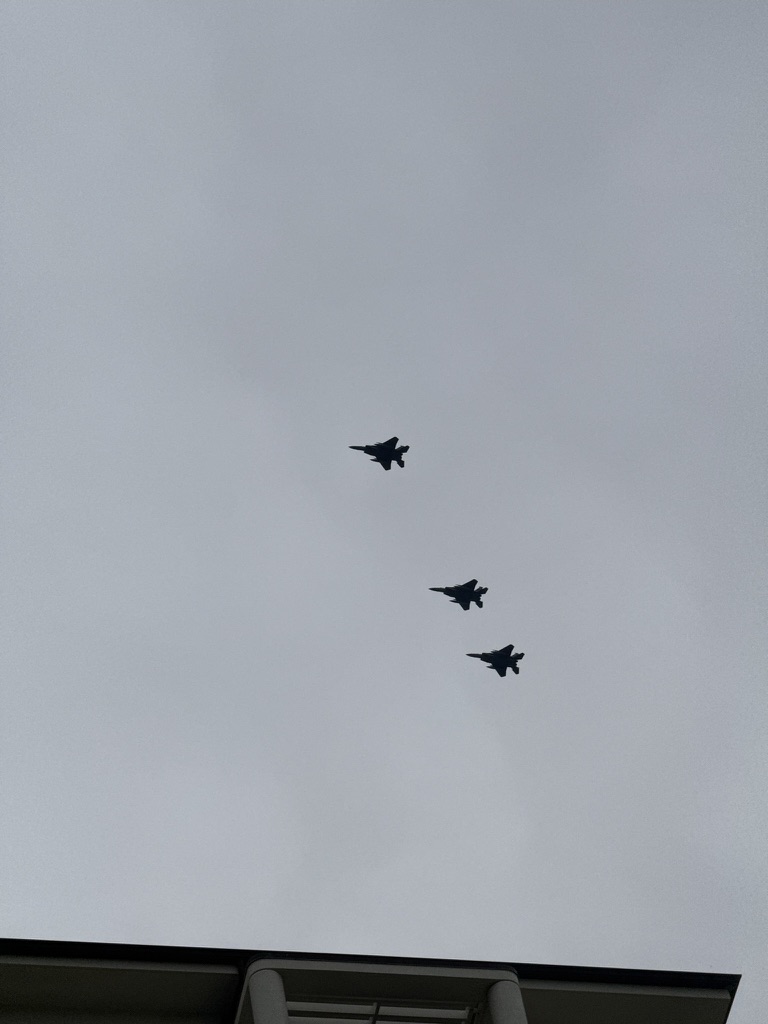
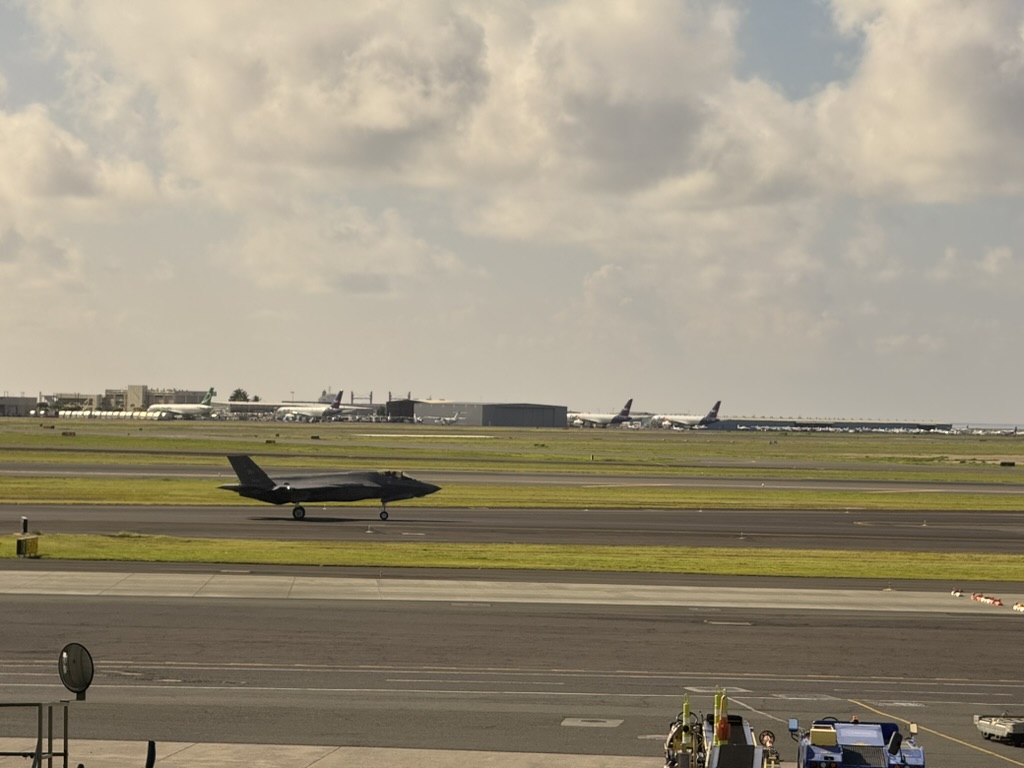
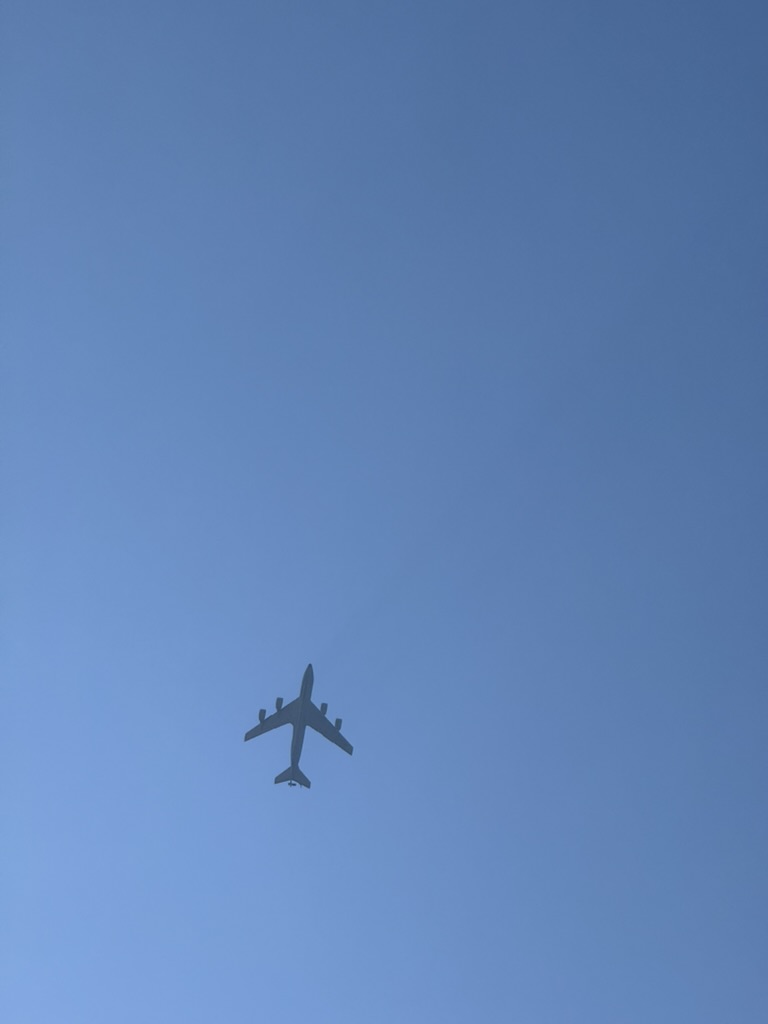
After that I started looking up. A solo F-22 cut across the cloud layer one afternoon — the canted twin tails are easier to read in a still than in any of the videos above. A trio of F-15s in echelon formation came over the resort the same week, and a stray F-35 was sitting on the runway behind a row of commercial widebodies on the way out of town. Big four-engine transports — likely C-17s and tankers — pass over Honolulu often enough that you start tuning to the sound. The military mix here is a side effect of basing: a single airfield shared by the Air Force, Navy, Air National Guard, and a steady drumbeat of commercial traffic. You don't need to be an enthusiast to notice the variety; you just need to be outside.
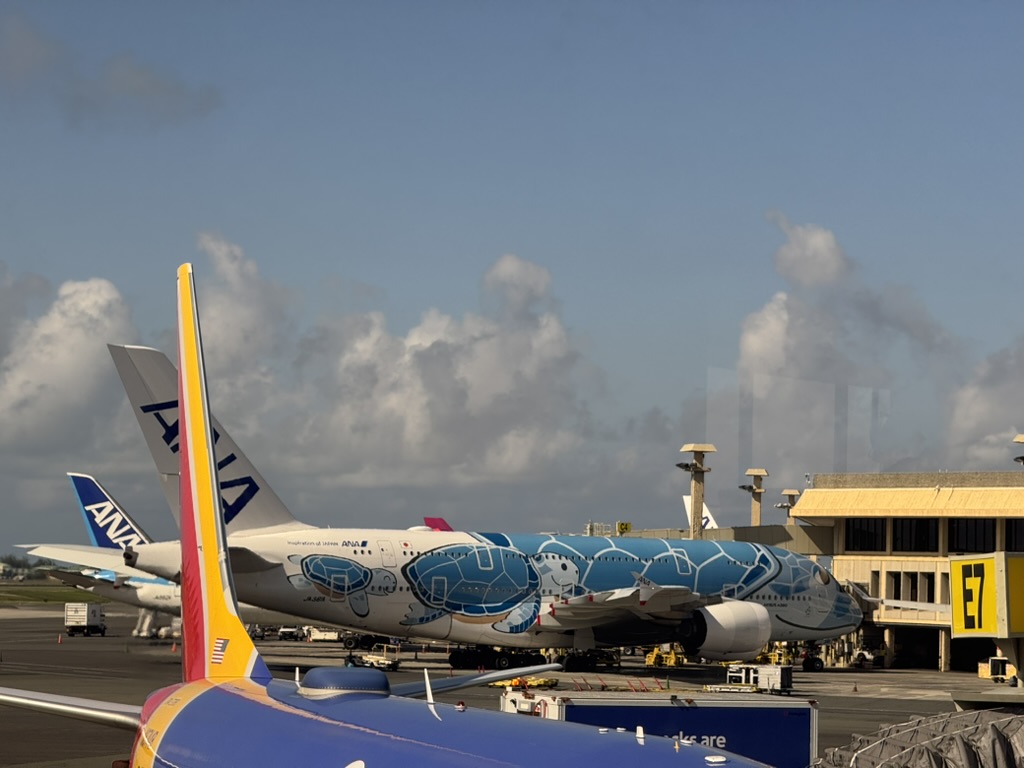
The non-military highlight on the runway: an ANA "Flying Honu" — an Airbus A380 painted to look like a Hawaiian green sea turtle. The A380 is the largest passenger aircraft ever built, and ANA flies a small fleet of Honu-liveried examples on the Tokyo–Honolulu route specifically — three of them, each in a different color. The one I caught is the blue one, "Lani" (sky). Double-decker wide-body as a love letter to the islands; I was unreasonably happy to spot one.
Photos
I always appreciate the islands. They're such a good place for slowing down time... getting back to yourself... letting your problems fade away... and forgetting how to login to certain servers when you get back.
A few favorites from the trip, lightly grouped. Light, water, and sky — there's a reason most of these are some combination of the three. Hawaii isn't subtle about what it wants you to look at.
The land
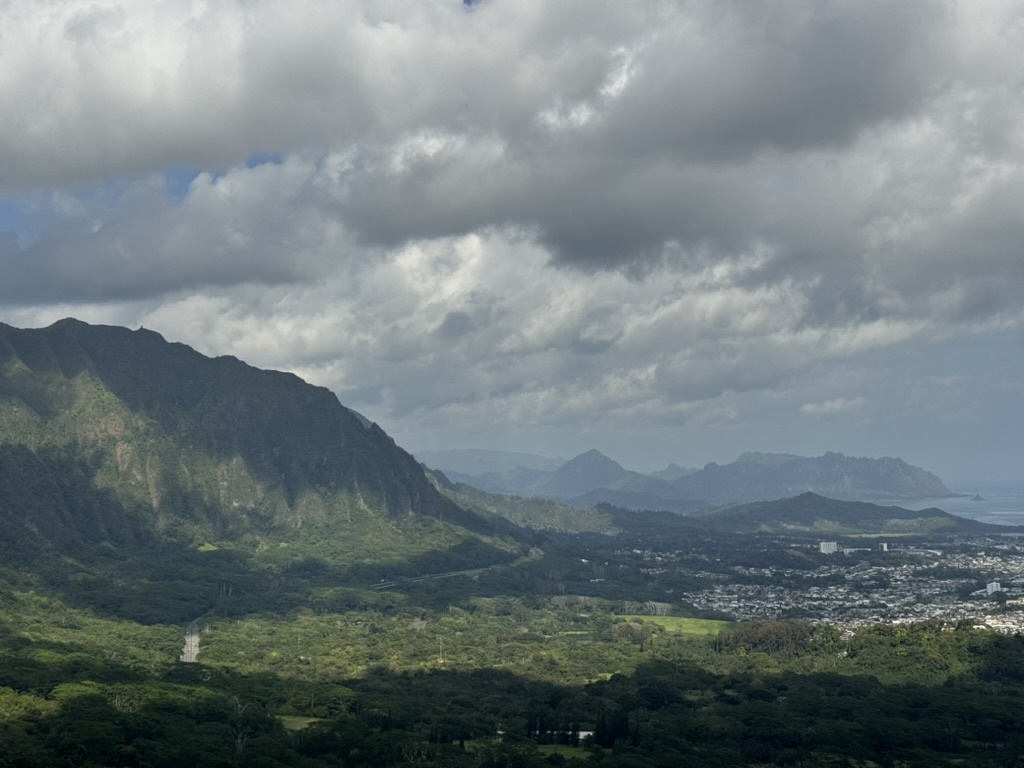
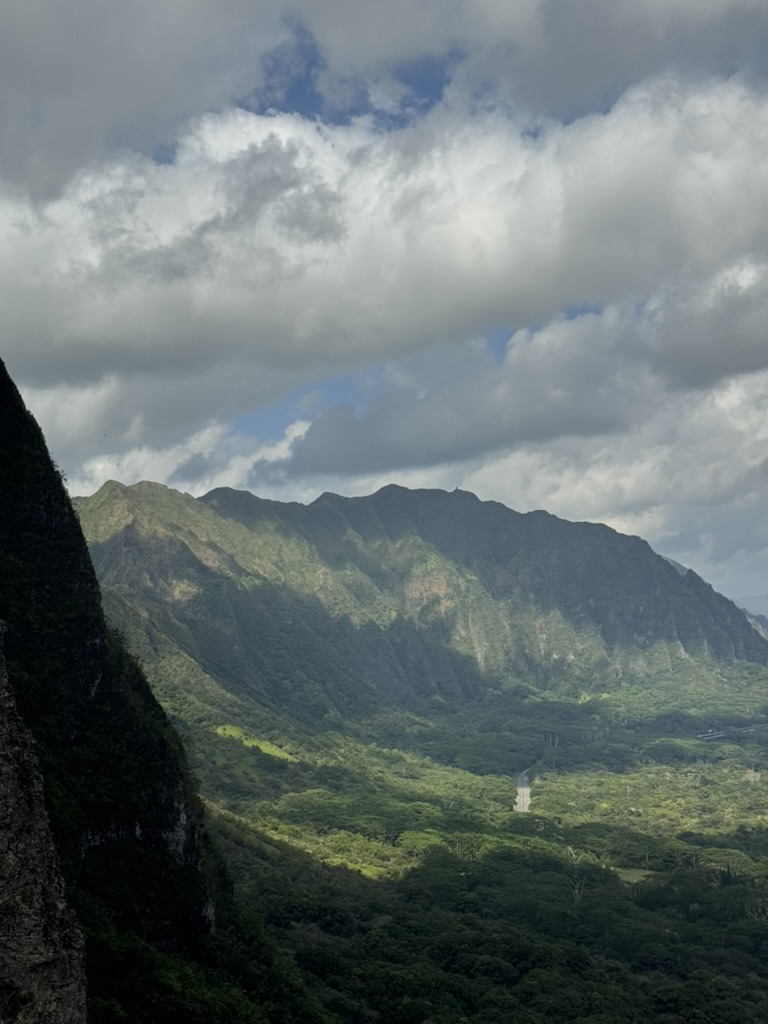
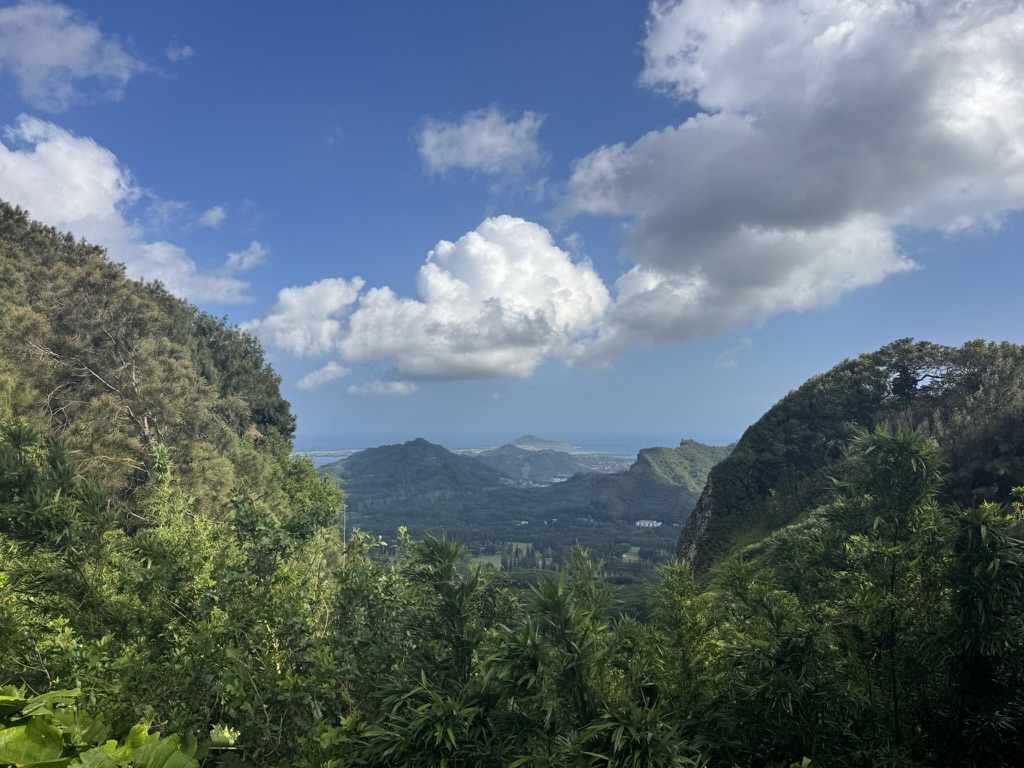
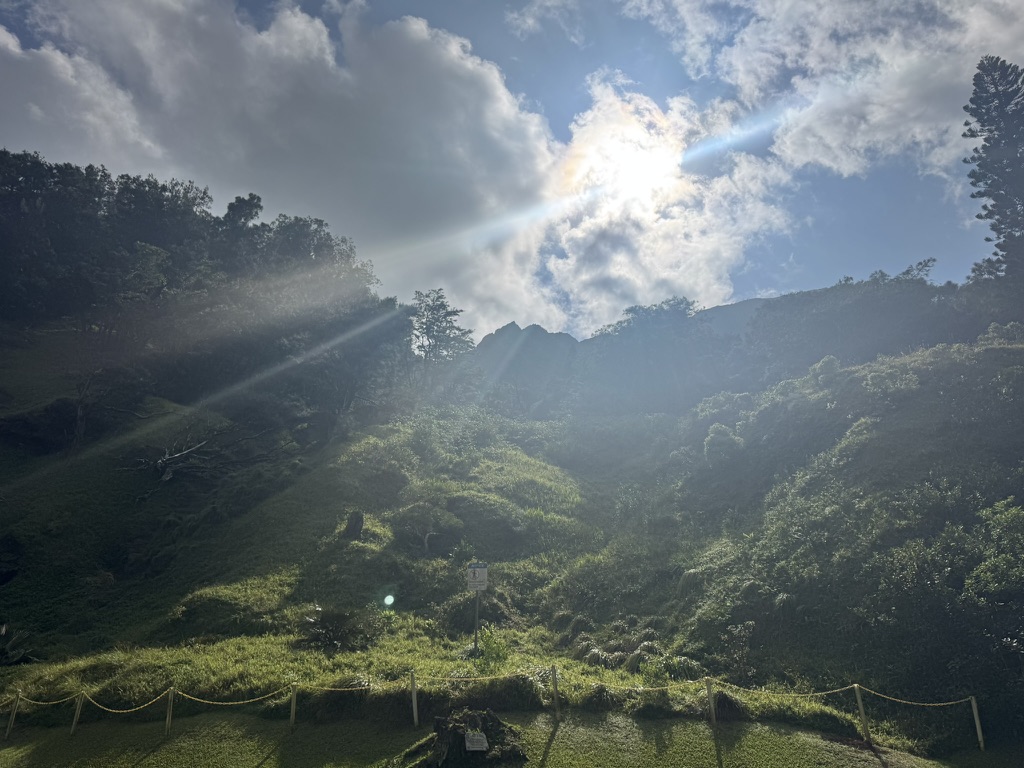
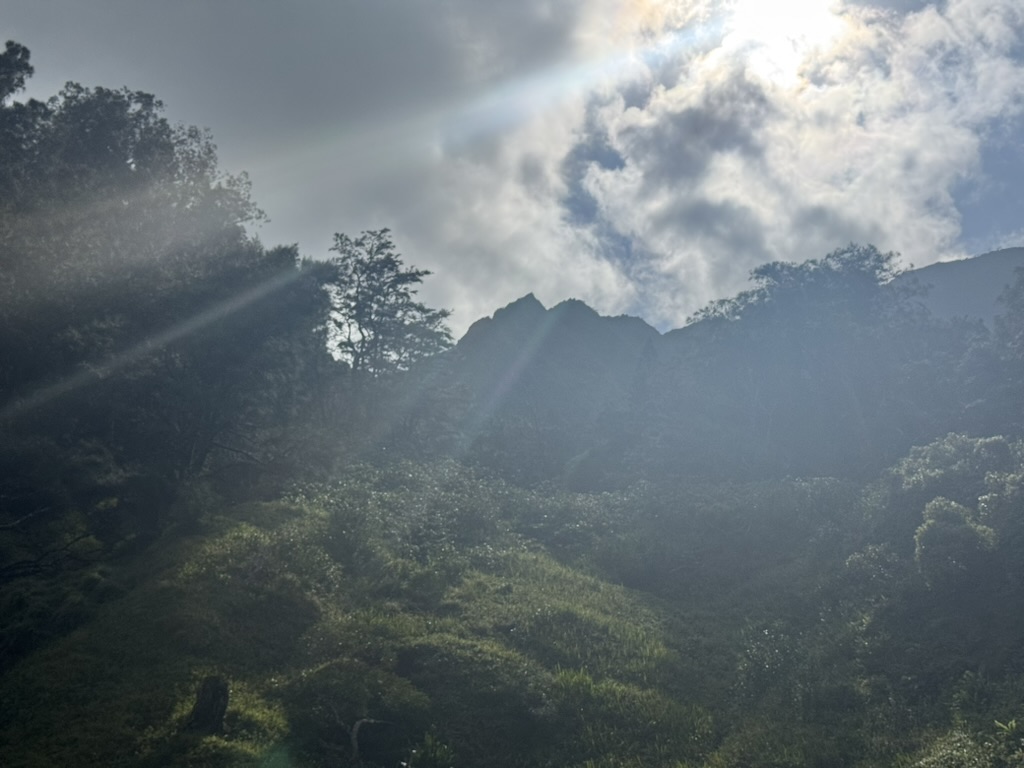
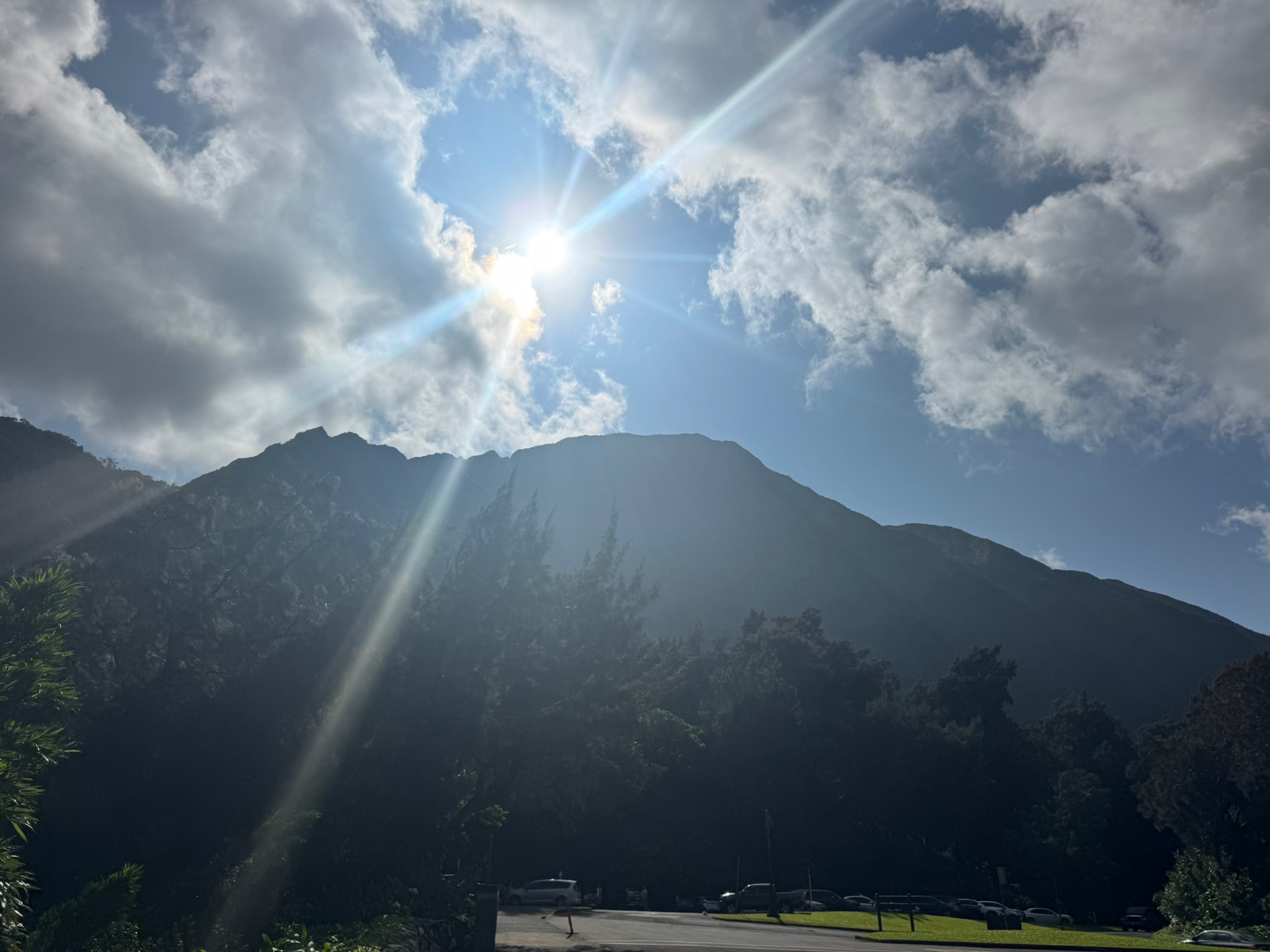
The Nuʻuanu Pali Lookout is the obvious one — windward Oahu opens out below you and the trade winds hit hard enough to lean into. The Koʻolau range walls off the whole windward coast and looks completely different depending on whether the clouds have decided to behave. The valley shots were somewhere greener and quieter, light coming through after a passing rain.
Oahu is the eroded remains of two ancient shield volcanoes, and you can feel both of them on a single afternoon — the dryer, sun-washed leeward side under the Waianae range, and the lush, rain-fed windward coast living in the lee of the Koolau ridge. Drive between the two and the climate changes inside half an hour. The mountains are old and soft now; the valleys read green even in the dry months because the trades drag moisture up the windward slopes and dump it before anything makes it across.
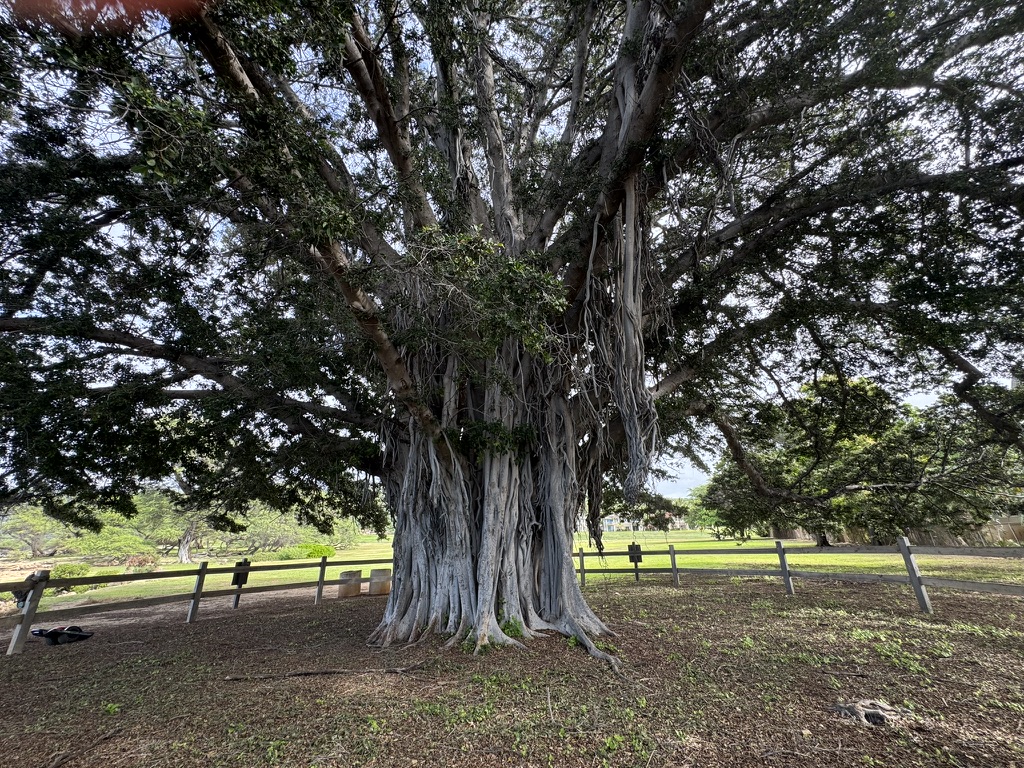
A banyan for scale — every aerial root counts as a separate trunk, and a tree this size has been doing that math for a long time.
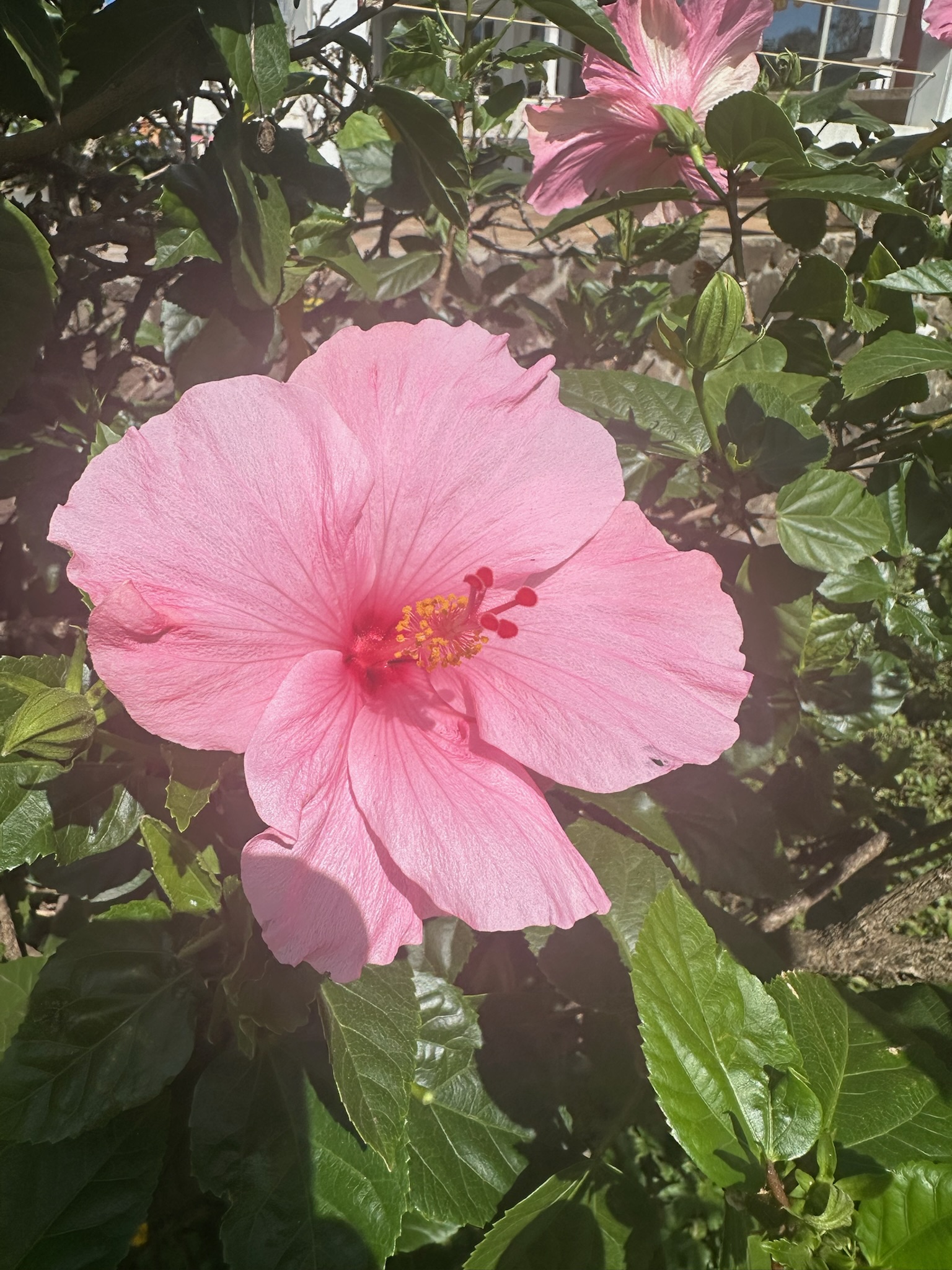
And a pink hibiscus — the islands' unofficial mascot, growing on what feels like every other shrub.
The wildlife
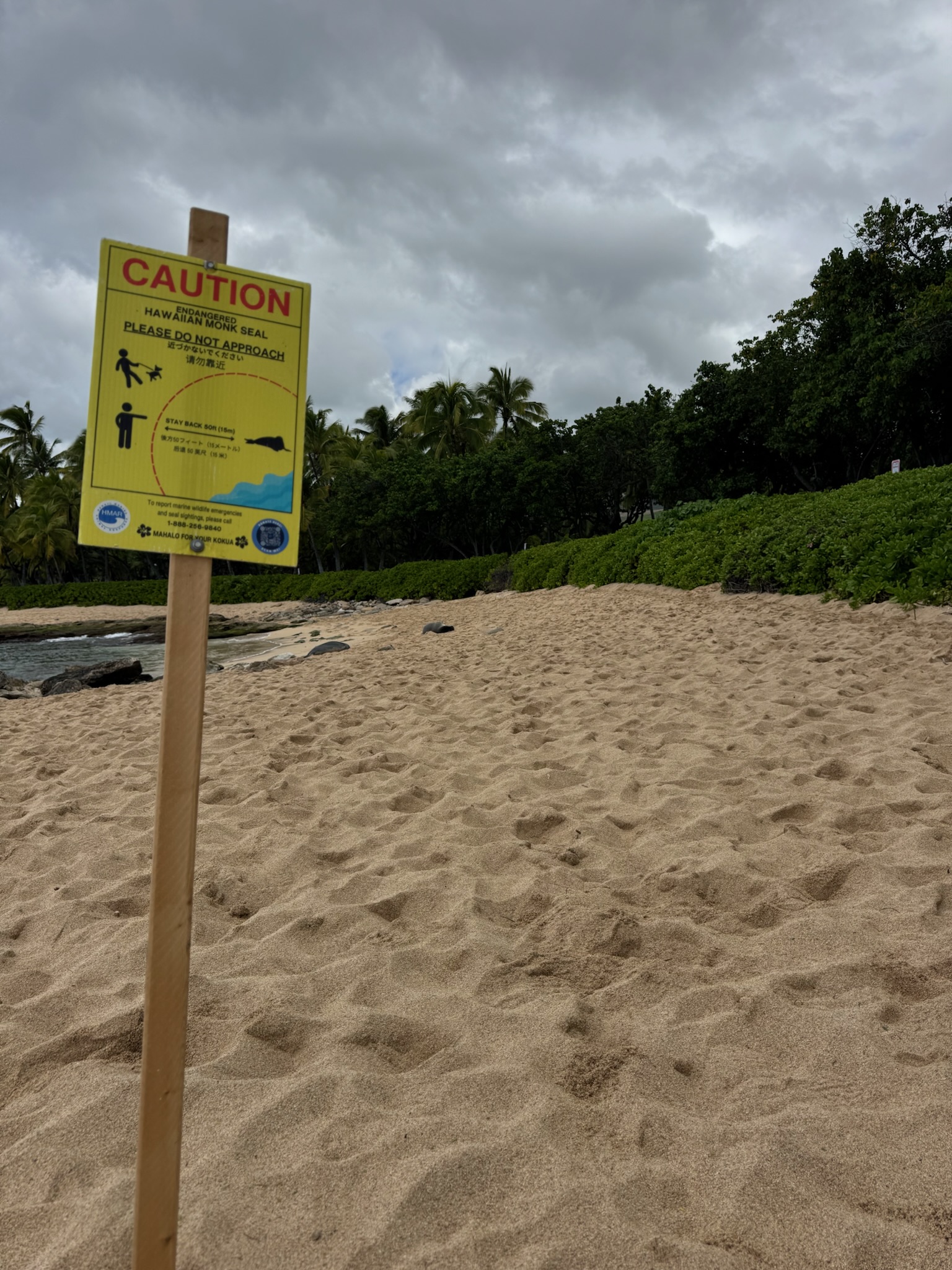
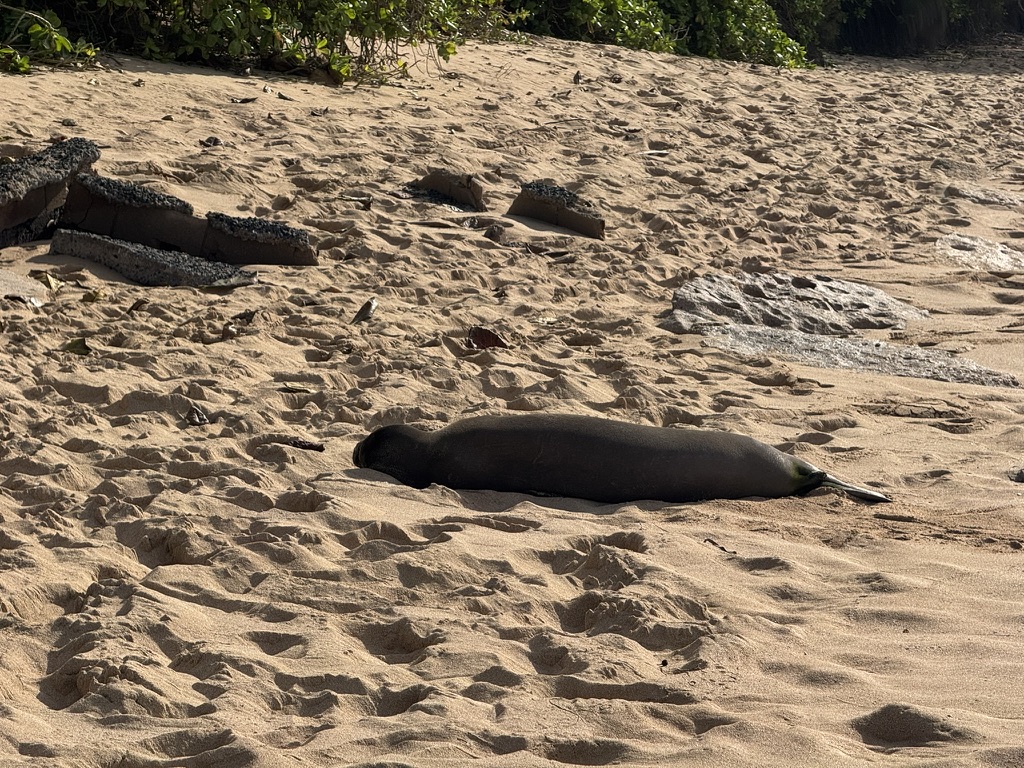
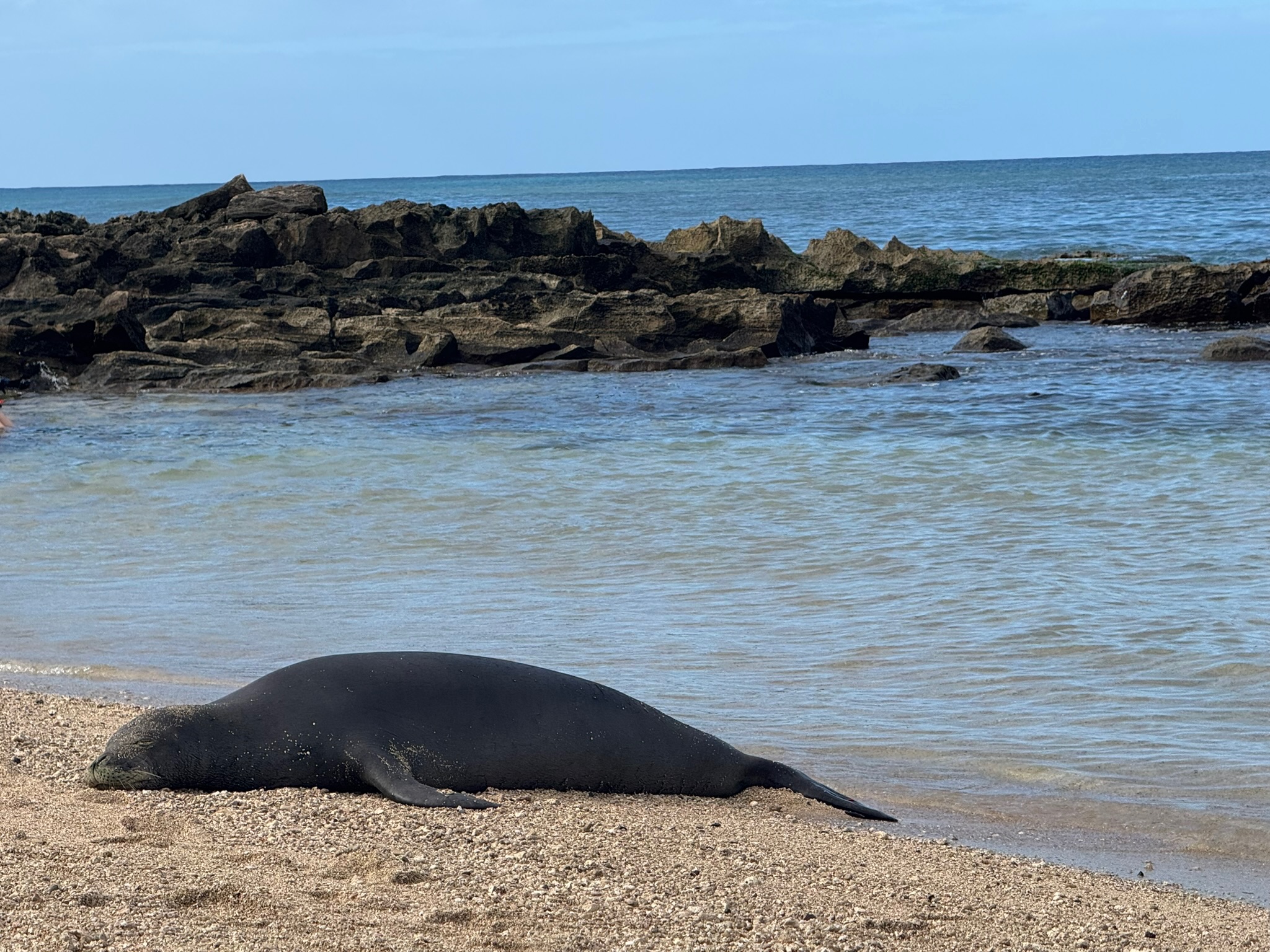
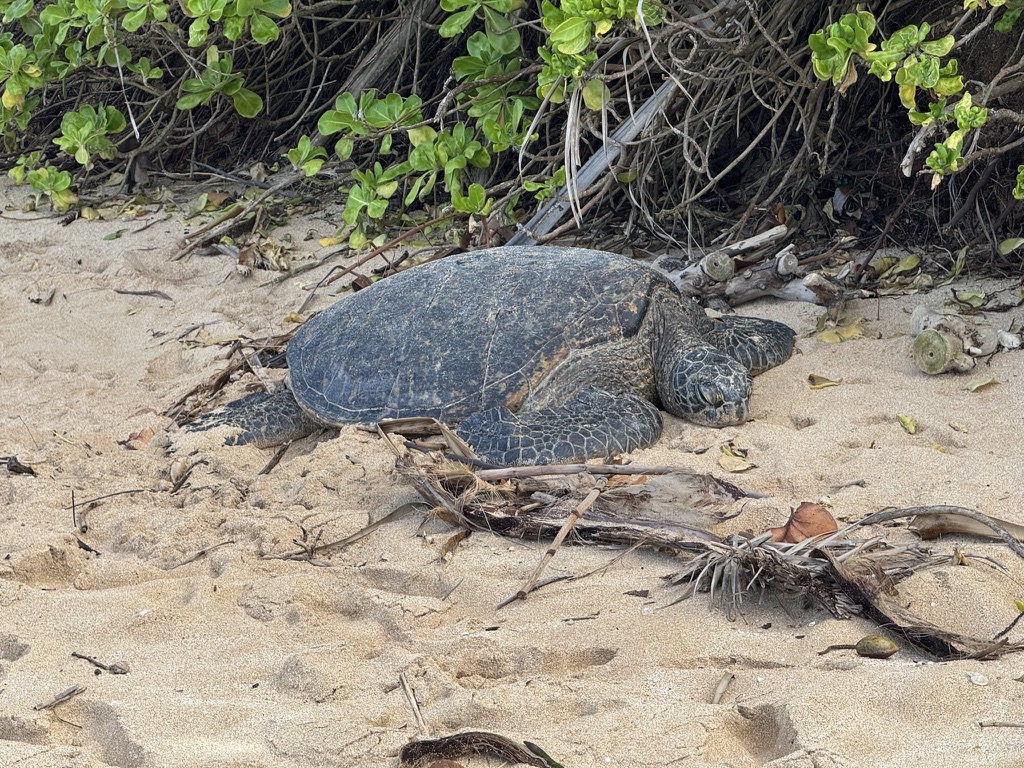
A Hawaiian monk seal napping on the sand and a green sea turtle doing the same a little further up the shoreline. Both endangered, both protected, both completely unbothered by anyone giving them the legally-required wide berth — there's an actual sign about it.
Monk seals are one of the world's rarest seal species: about 1,500 of them left, the population slowly recovering after generations of being hunted close to extinction. When one hauls out on a public beach, NOAA volunteers from the local response network turn up, rope off a perimeter, and post the kind of sign you see below. The seal sleeps. People walk around the rope. Everybody wins. The same volunteer model handles green sea turtles when they come ashore to bask, which is enough of a daily occurrence on some beaches that the rope kits are basically pre-staged.
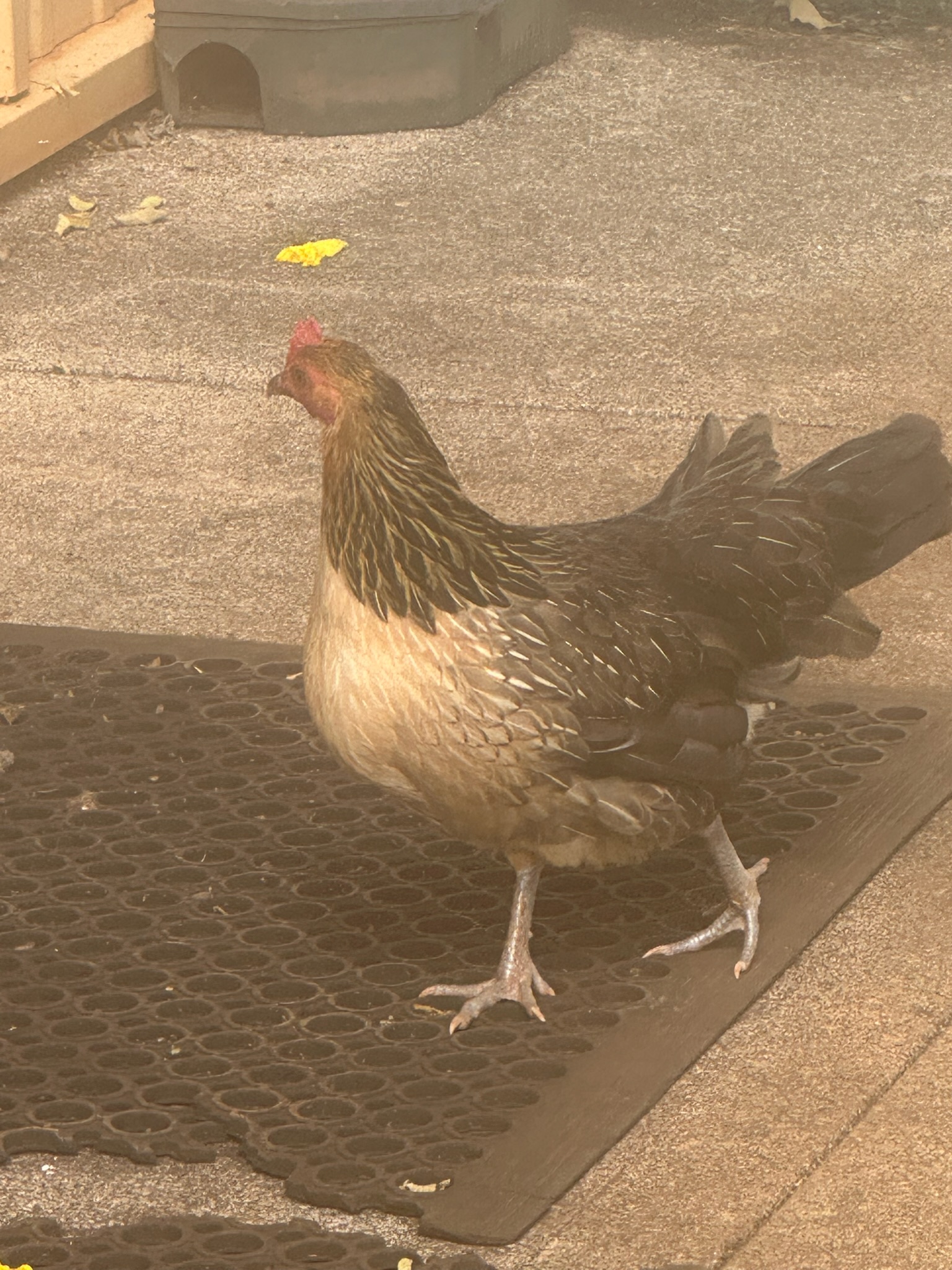
And a feral chicken — the islands have generations of escaped poultry living wild, and they have absolutely no fear of humans. Kauai's population spiked after Hurricane Iniki blew the cages open in 1992; Oahu has its own slower-burn version of the same story. Either way, the result is the same: every parking lot, every doormat, every patch of grass with a sandwich crumb on it eventually has a chicken on it. This one was loitering on the doormat.
The beach
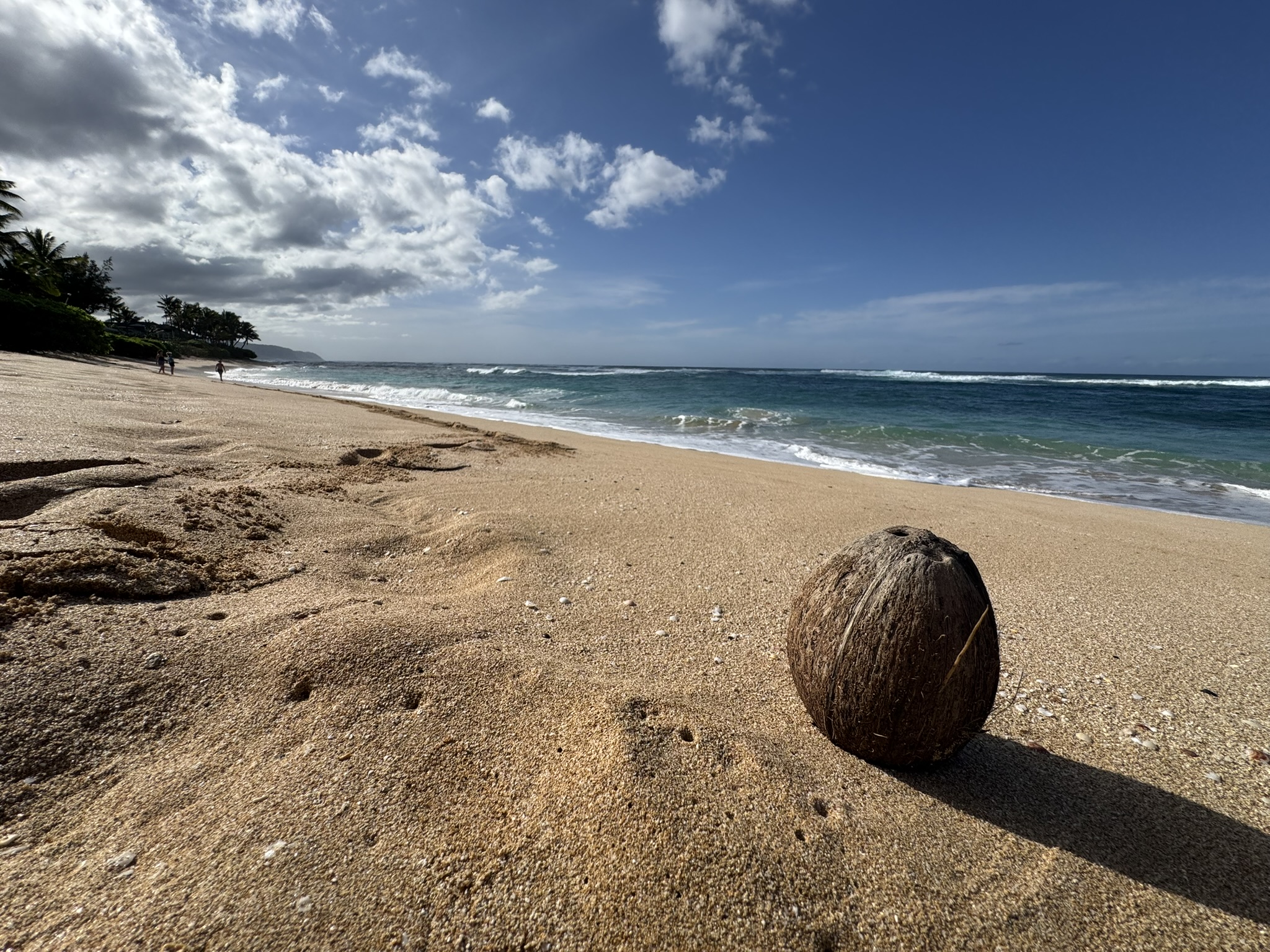
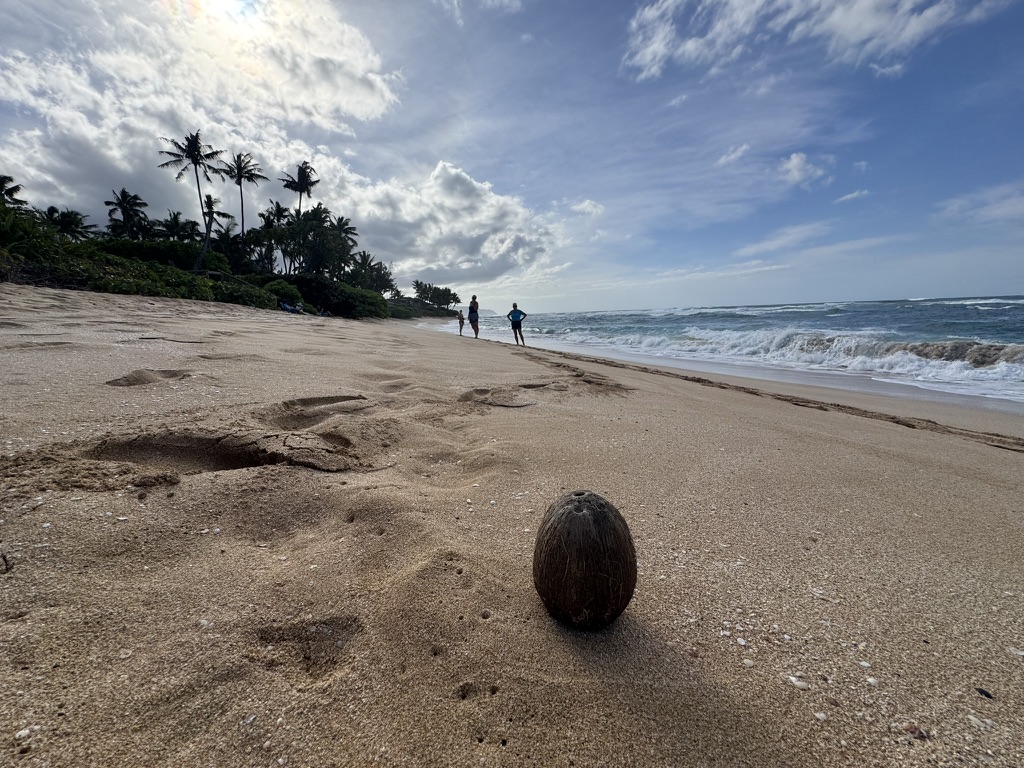
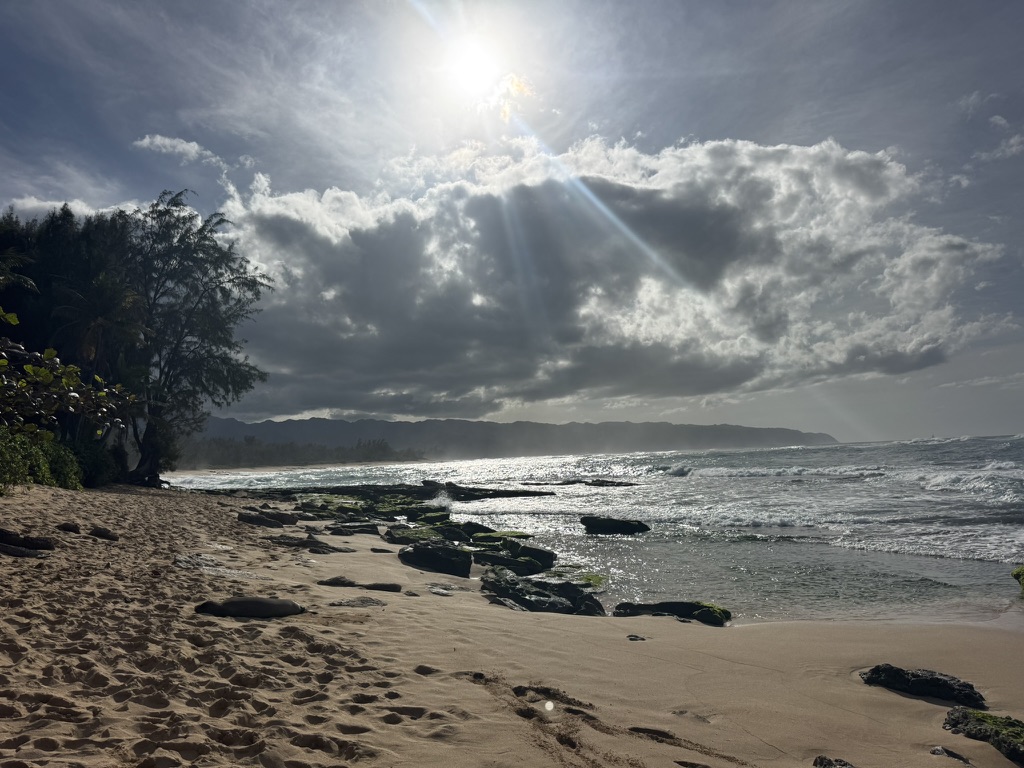
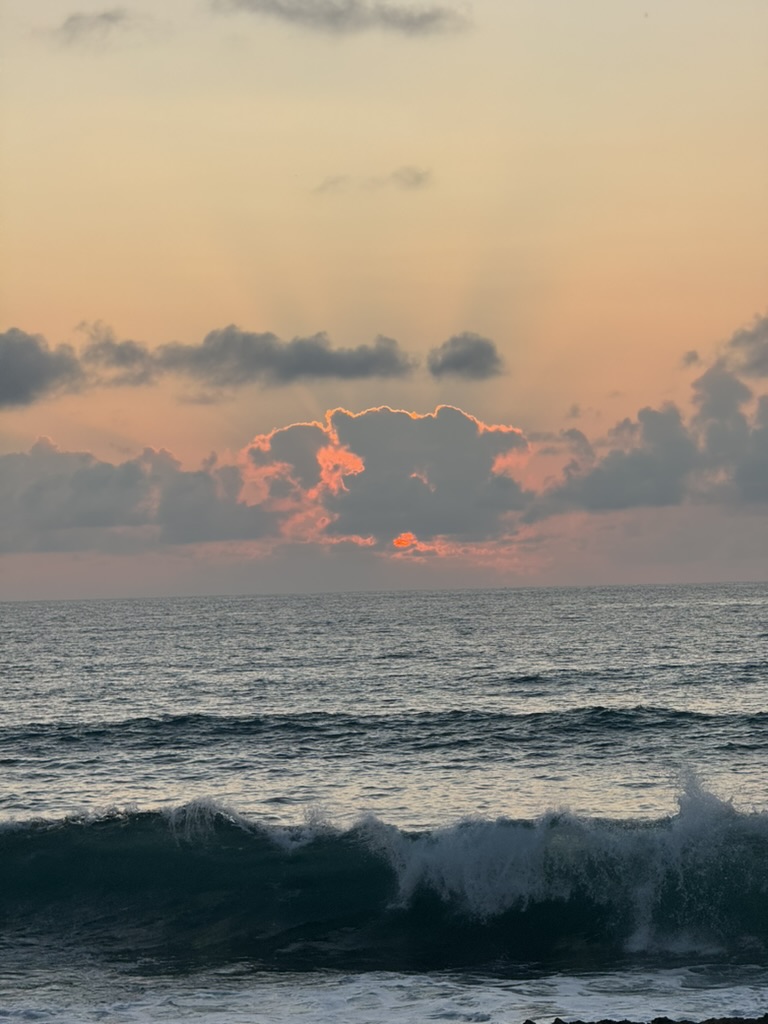
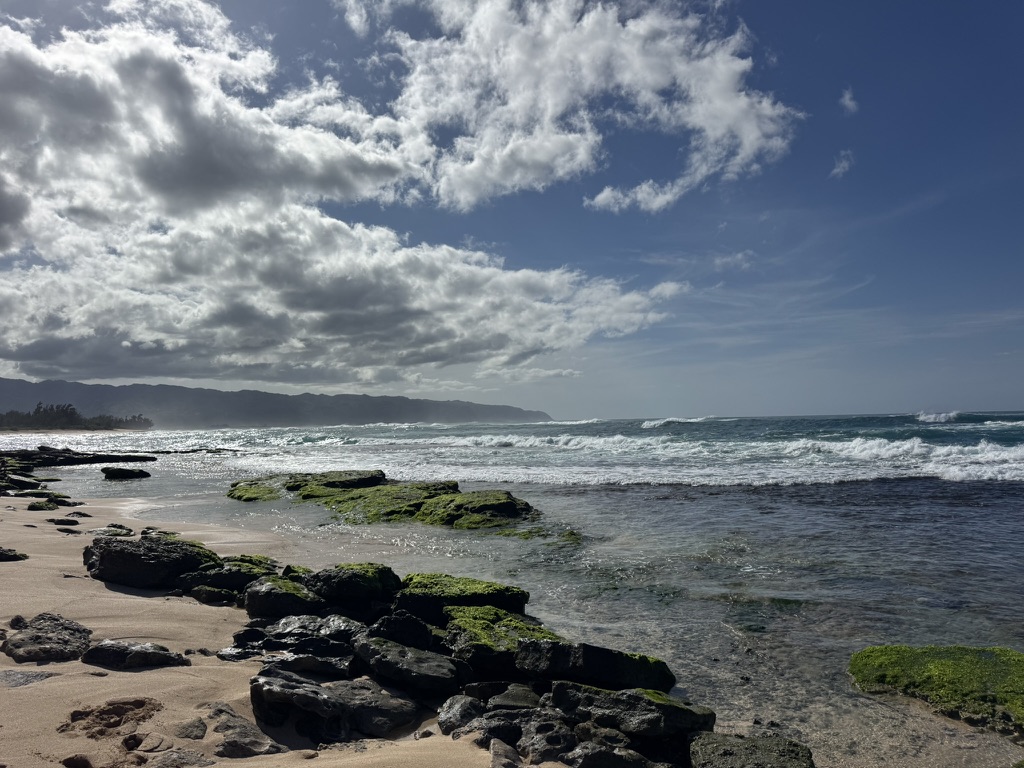
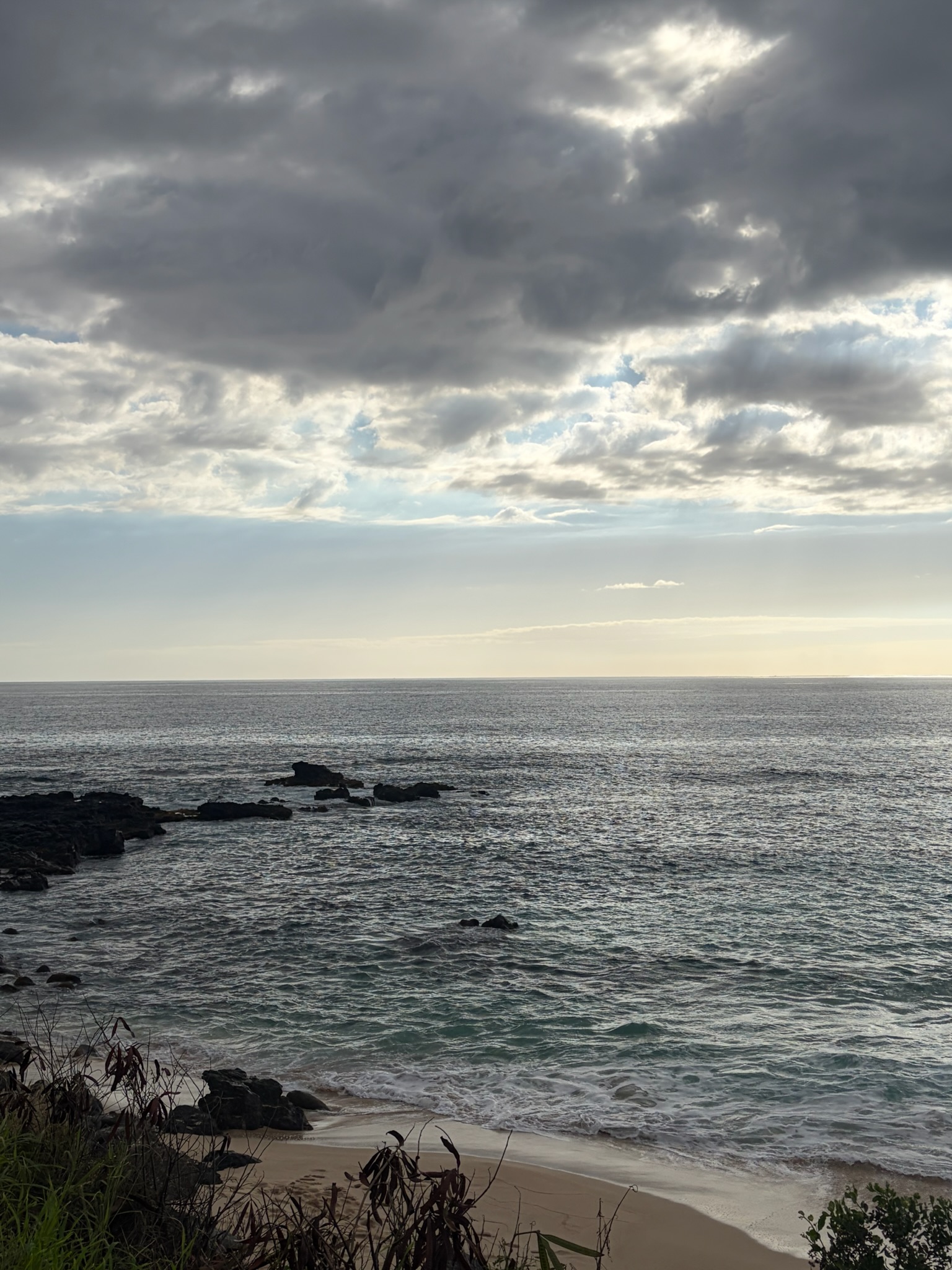
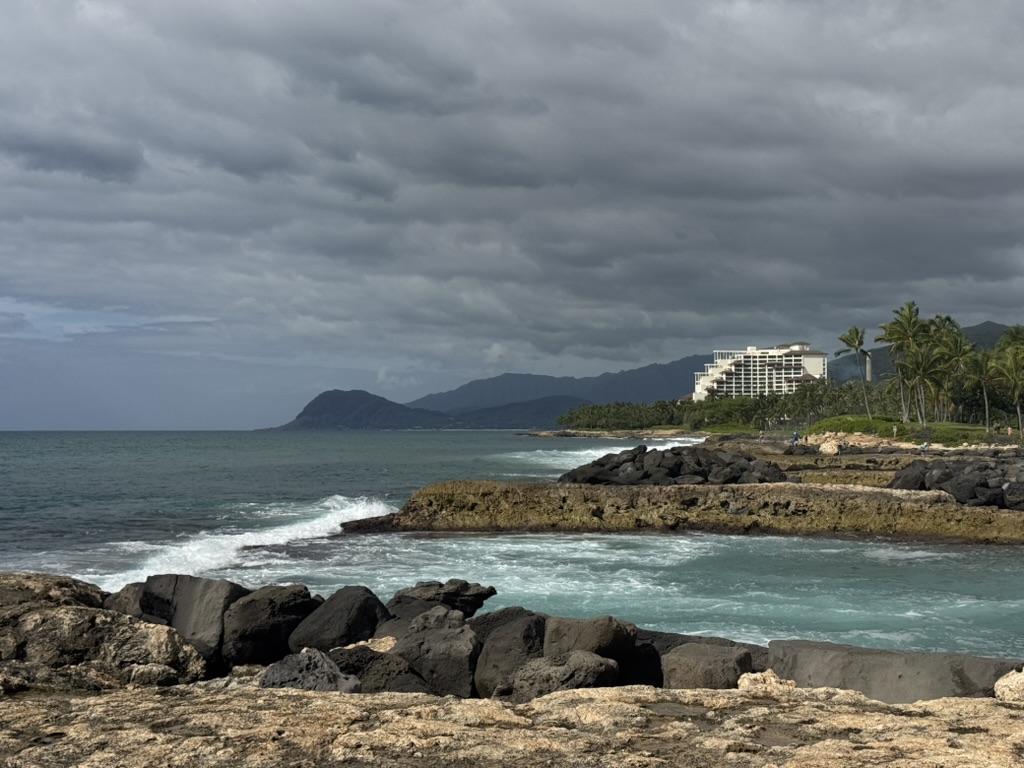
A few from various stretches of coast on different days — sun shifting between low cloud, the shore rolling, a coconut sitting where the last tide left it, mossy reef breaking the surf into tide pools. The North Shore was its winter self the week we were there: bigger swell, fewer people, and a kind of cold-tone light that none of the touristy summer photos prepare you for. The leeward stretches stayed sunnier and warmer, predictably. Both have their hour.
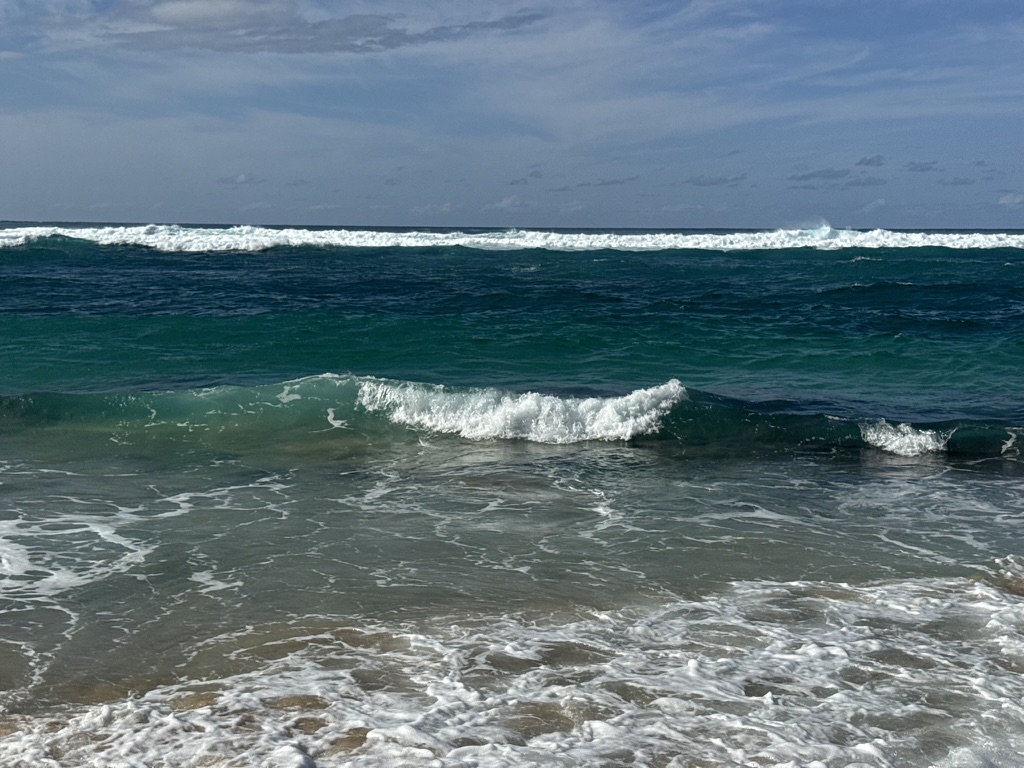
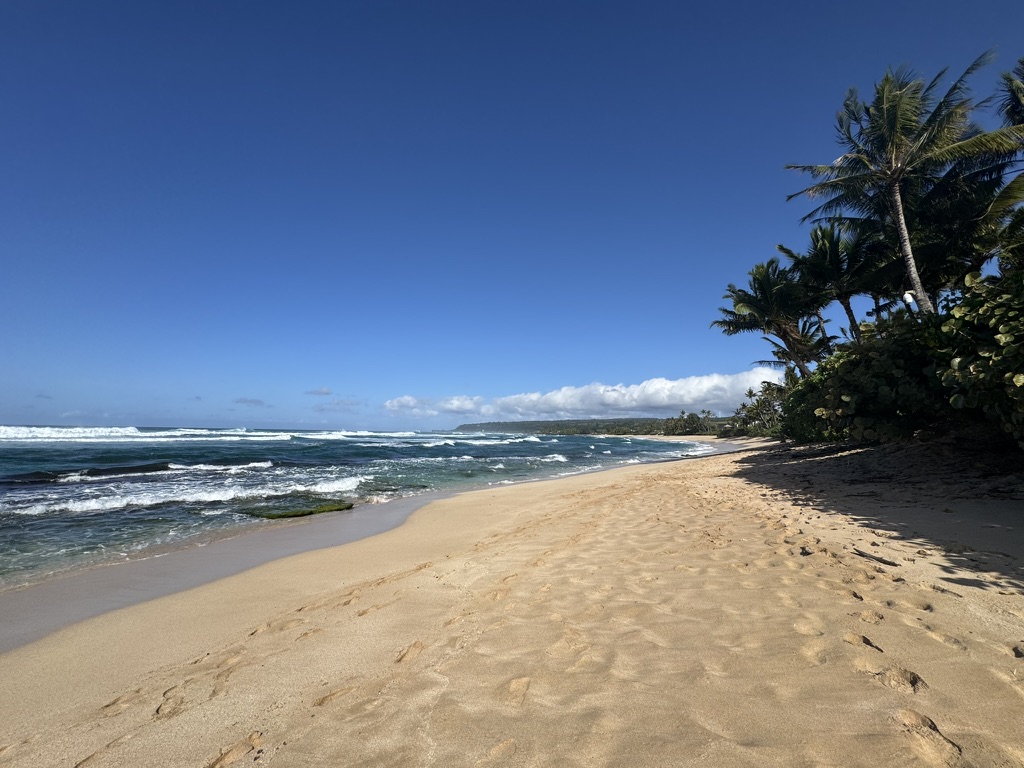
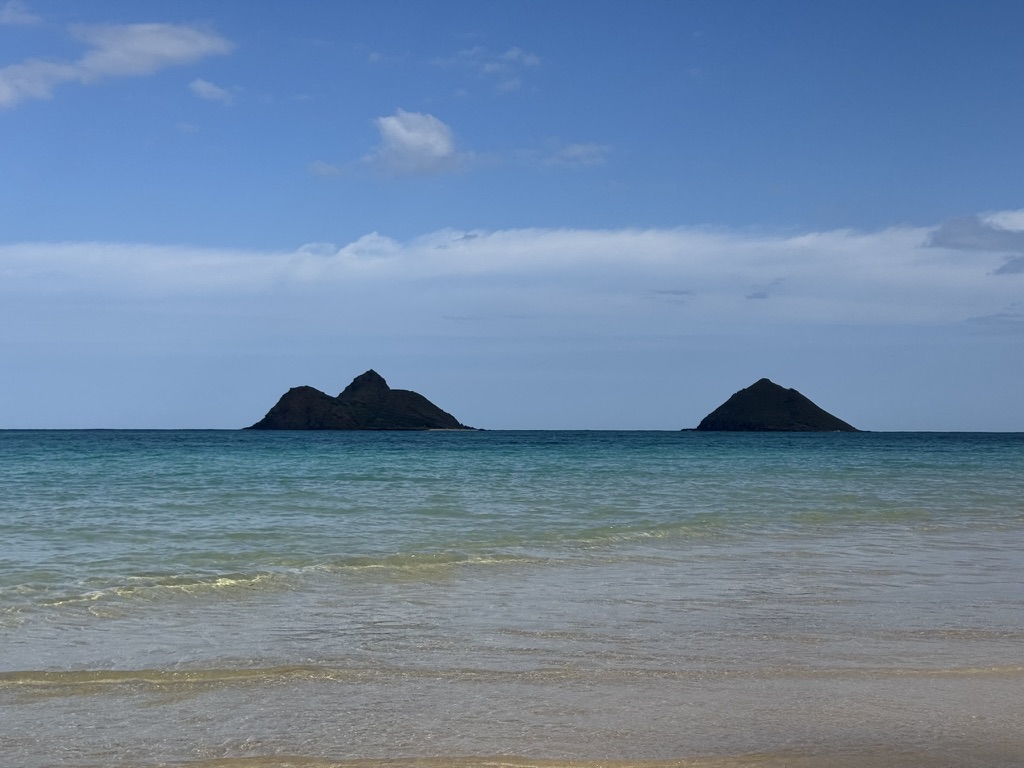
Lanikai Beach earned its postcard reputation. The two islands offshore are the Mokulua Islands — locals call them the Mokes — and the water really is that color.
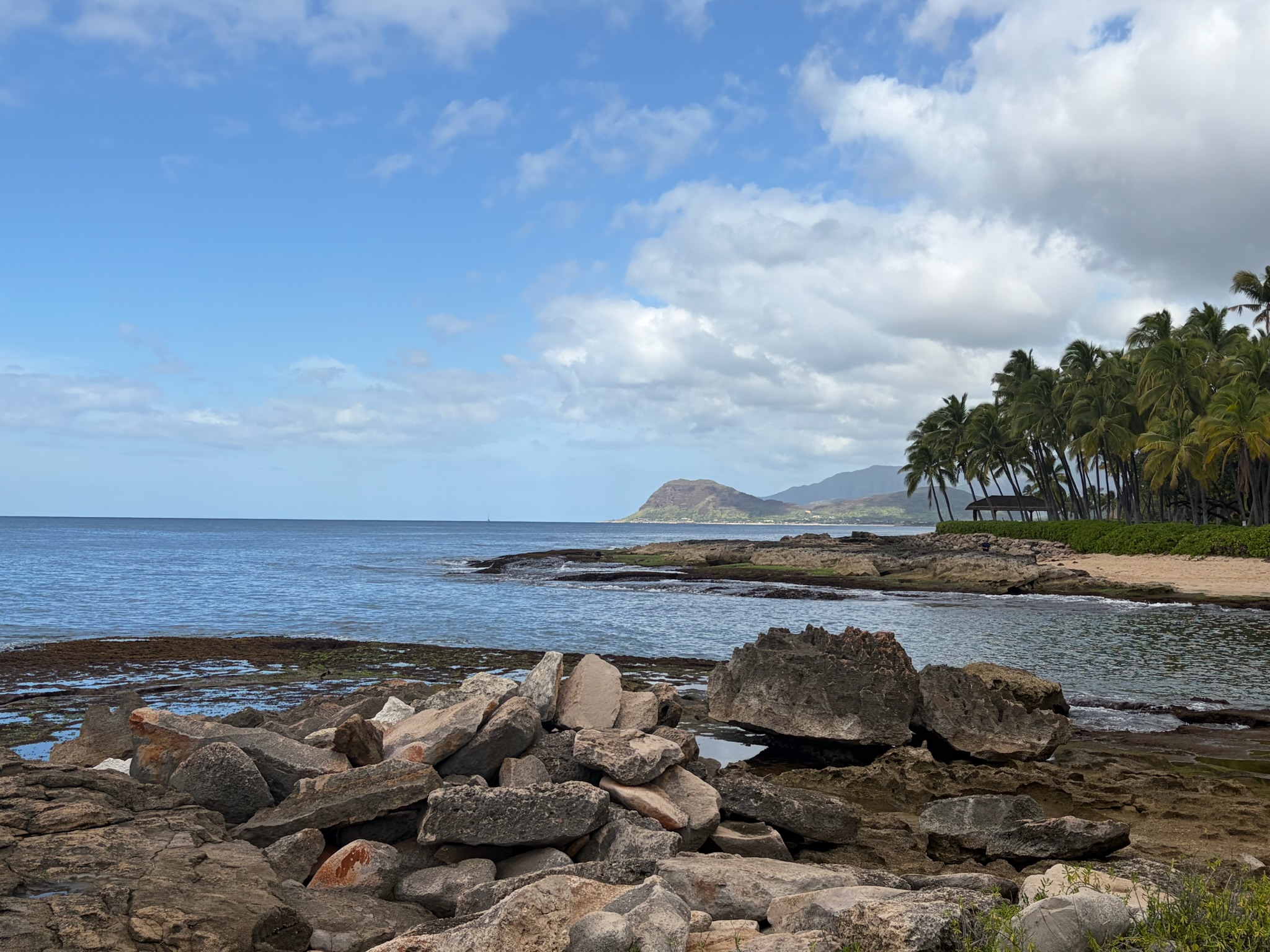
A walk down the leeward coast turns up rocky tide-pool stretches with the West Oʻahu mountains looming behind.
Off the boat
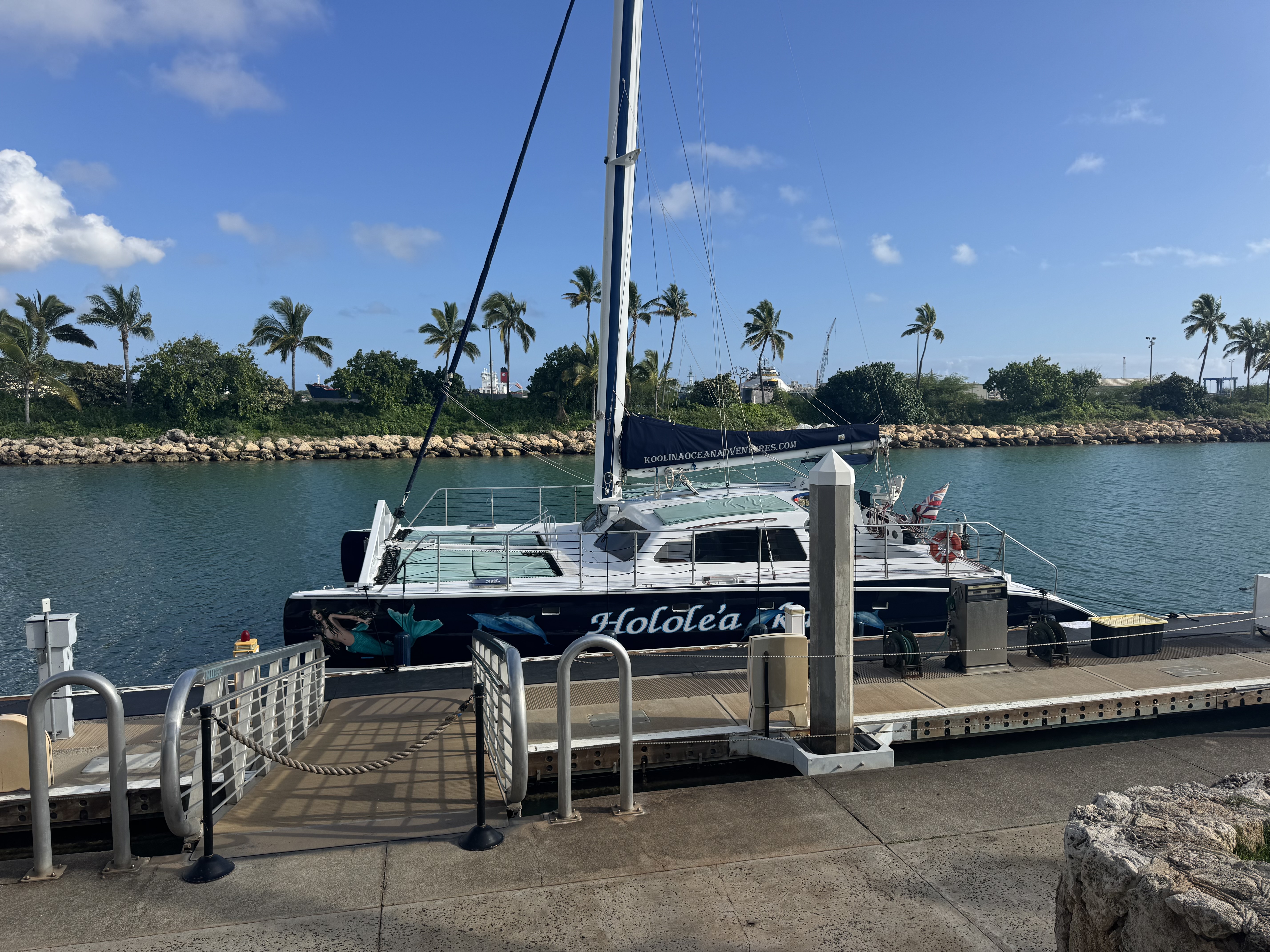
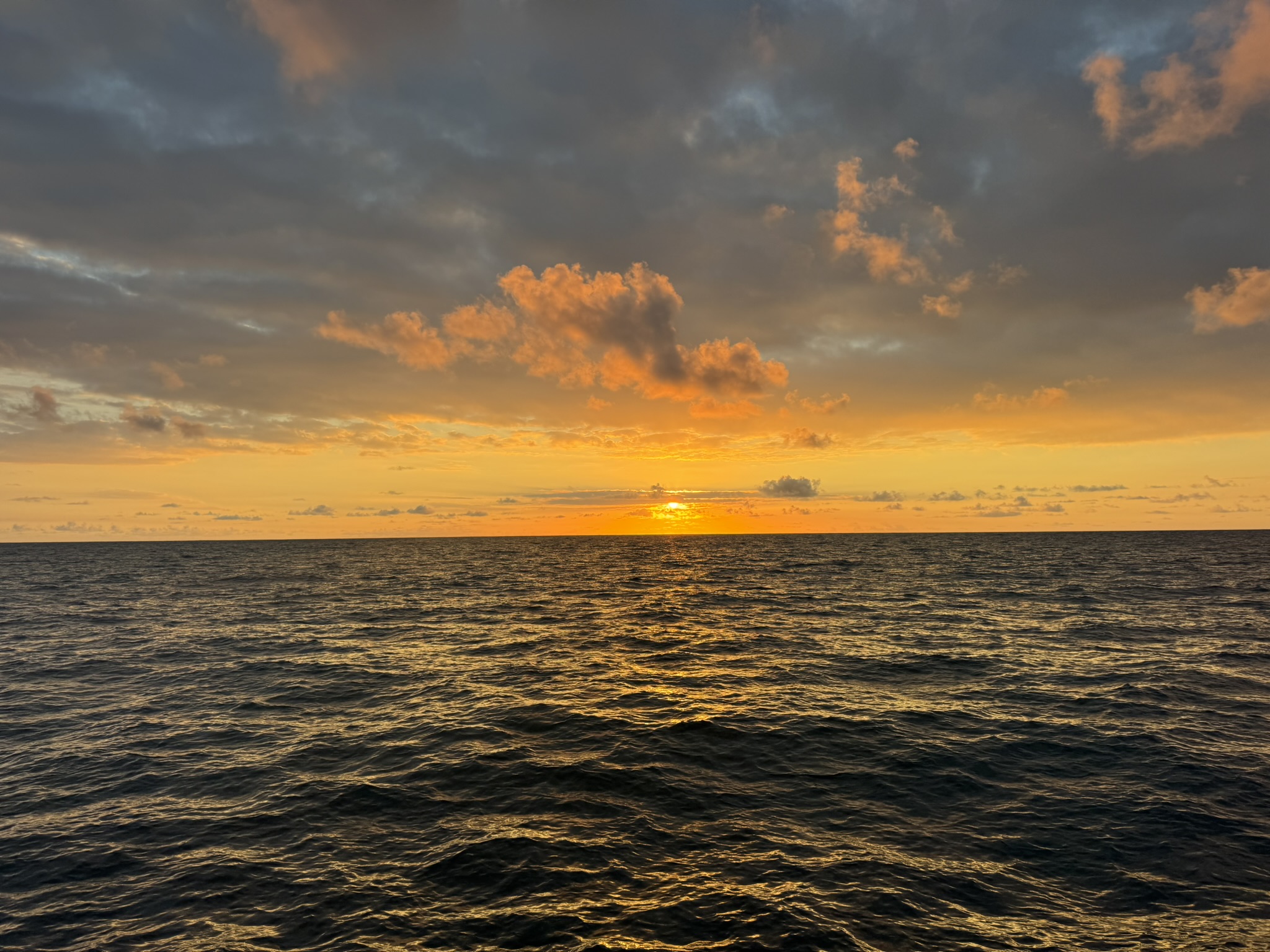
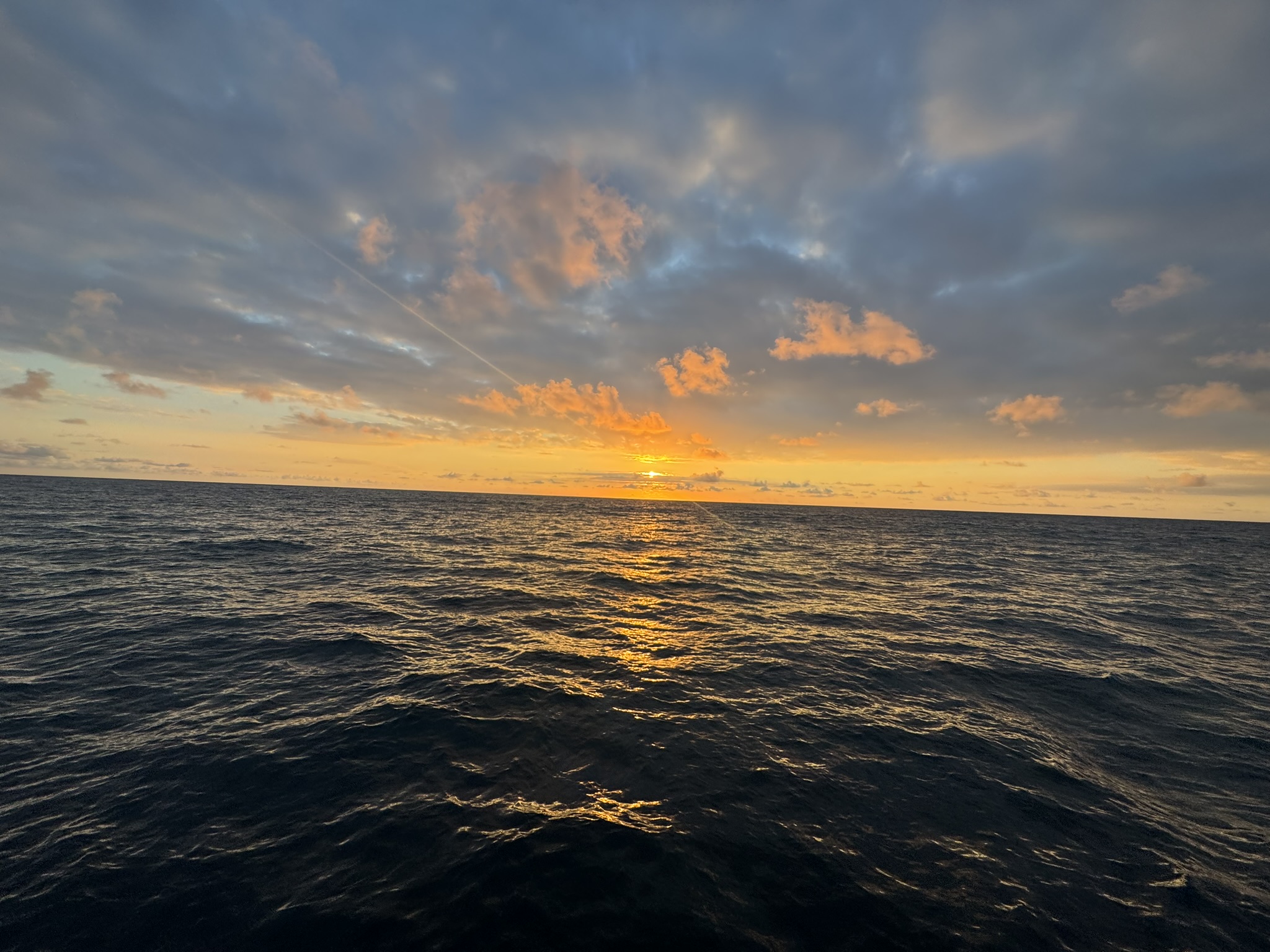
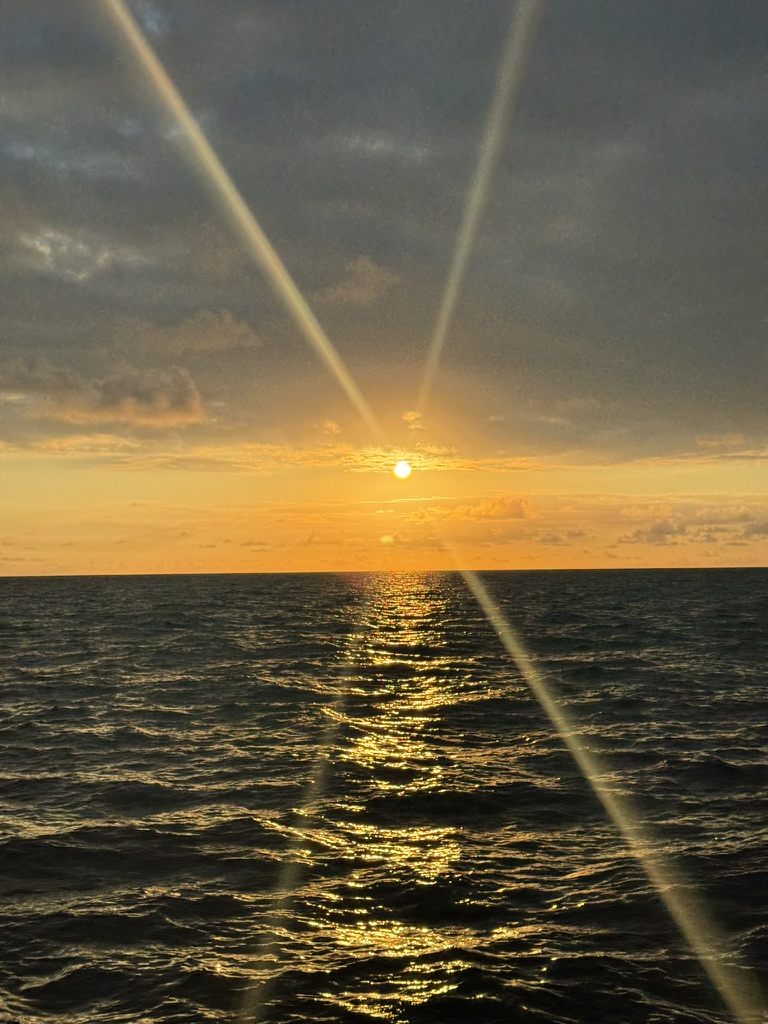
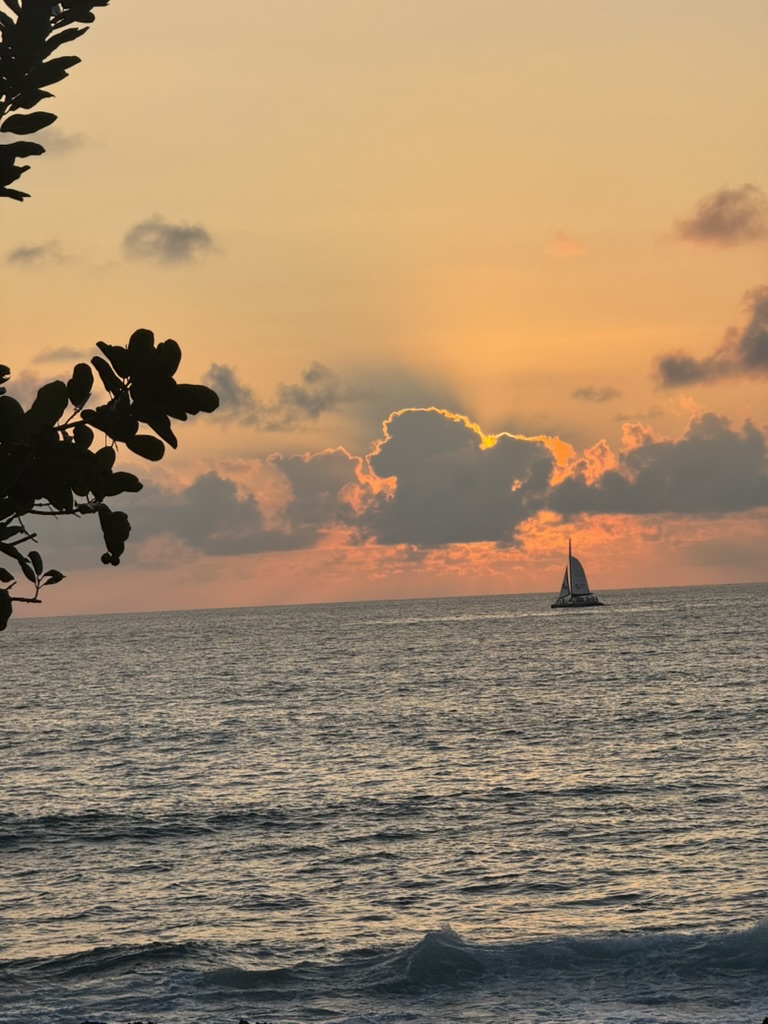
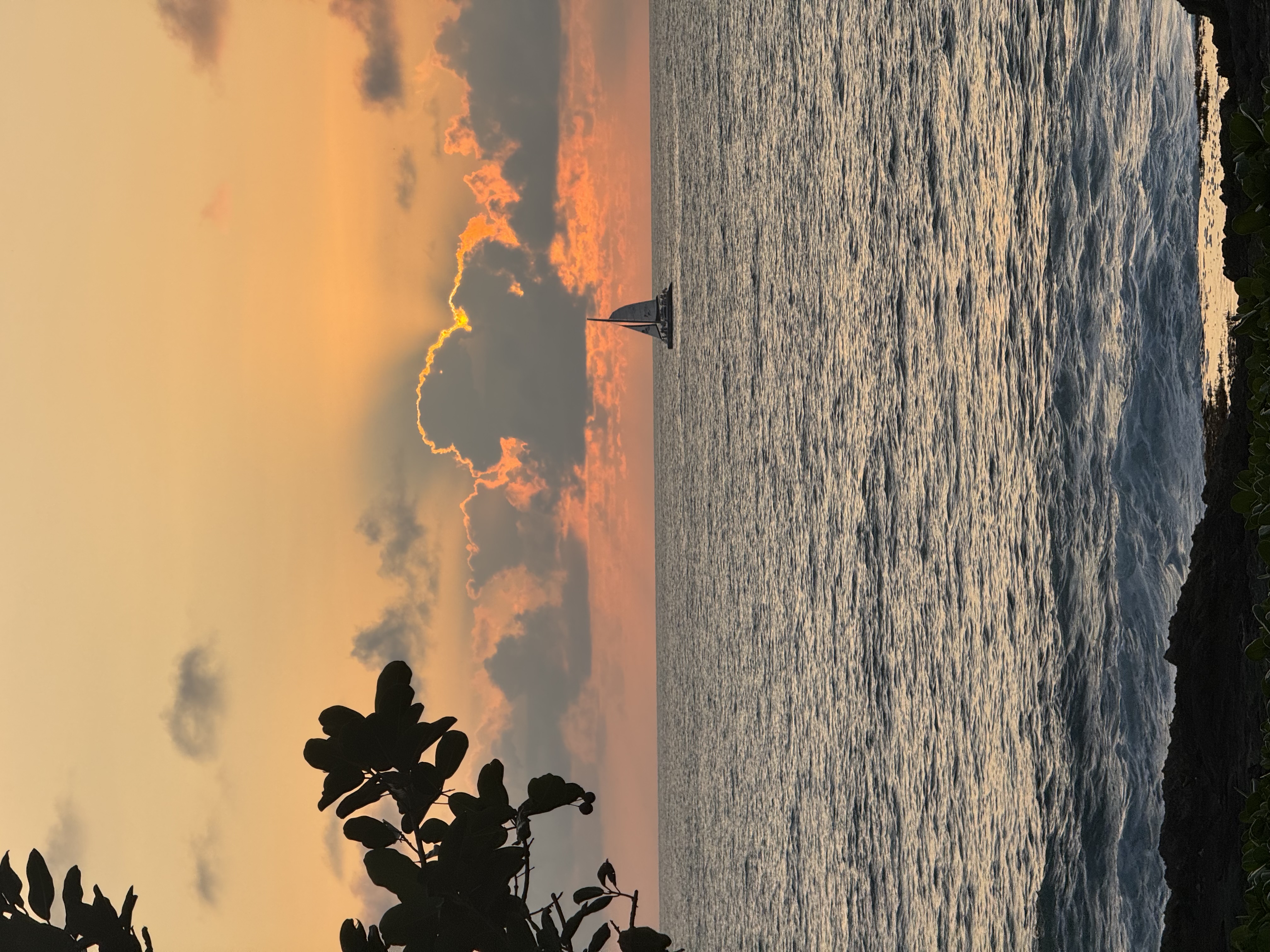
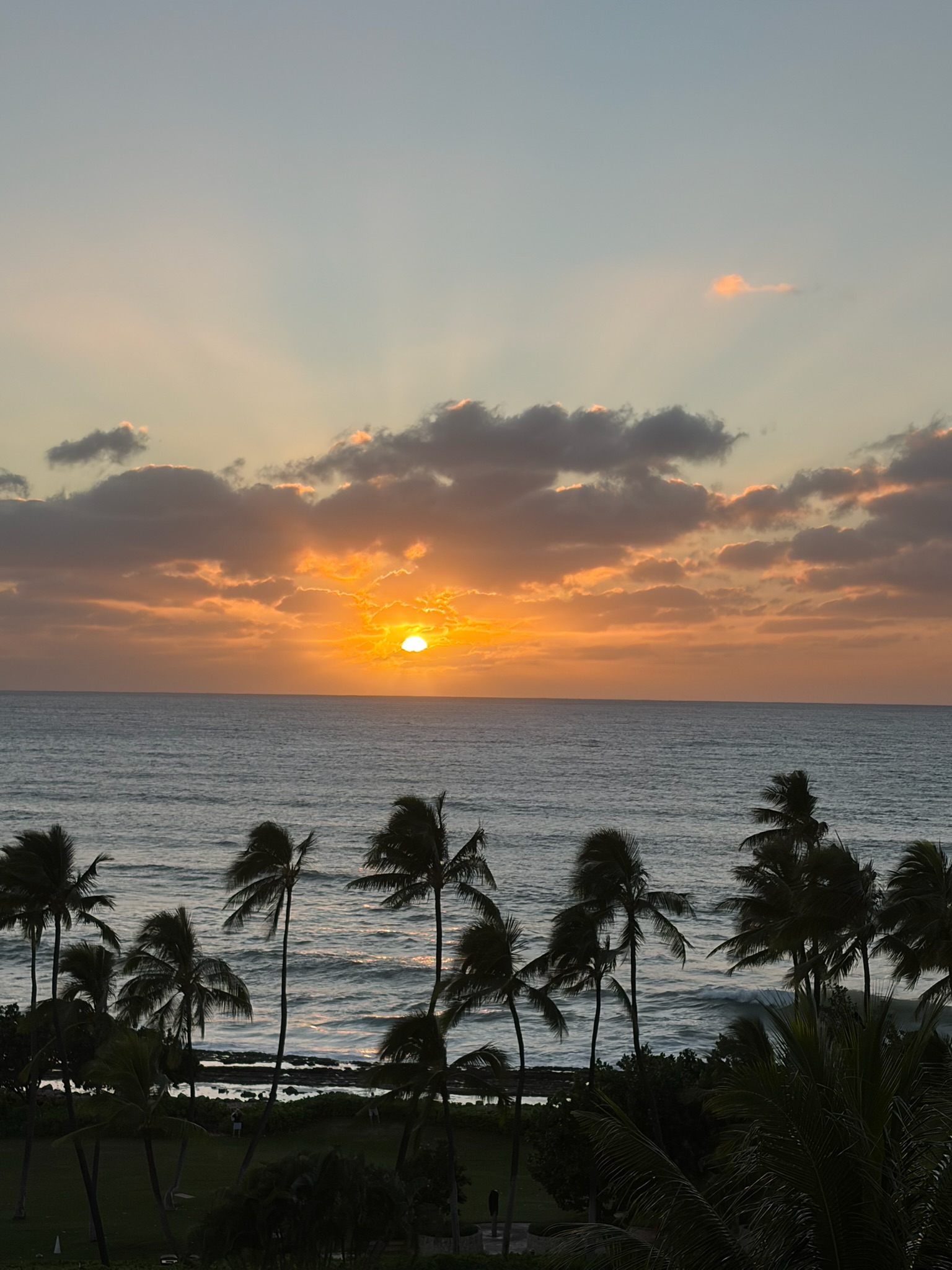
We took half a day out with Ko Olina Ocean Adventures, boarding their catamaran Hololeʻa at the marina and chasing the leeward coast — open water, the coastline in different light than you ever see it from shore, and the sun falling into the Pacific on the way back in. Catamarans are extremely civilized for this kind of thing: wide deck, low rocking, plenty of places to sit out of the wind without missing the view. The trade winds were lively that afternoon, and a mid-size cat handled them in a way that made the whole crossing feel like a moving porch instead of a boat ride — though that didn't prevent some people from getting sick. Thankfully not us.
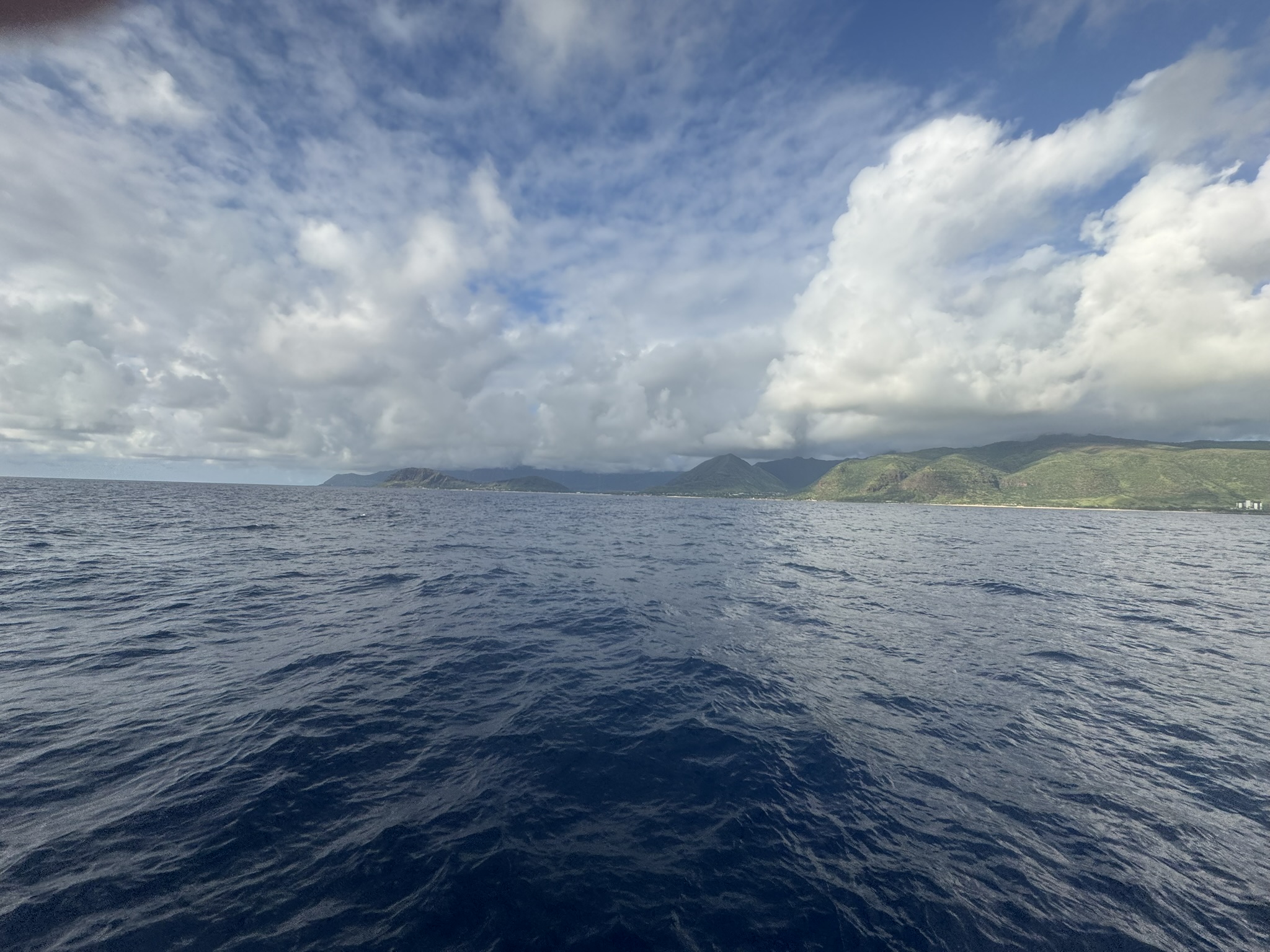
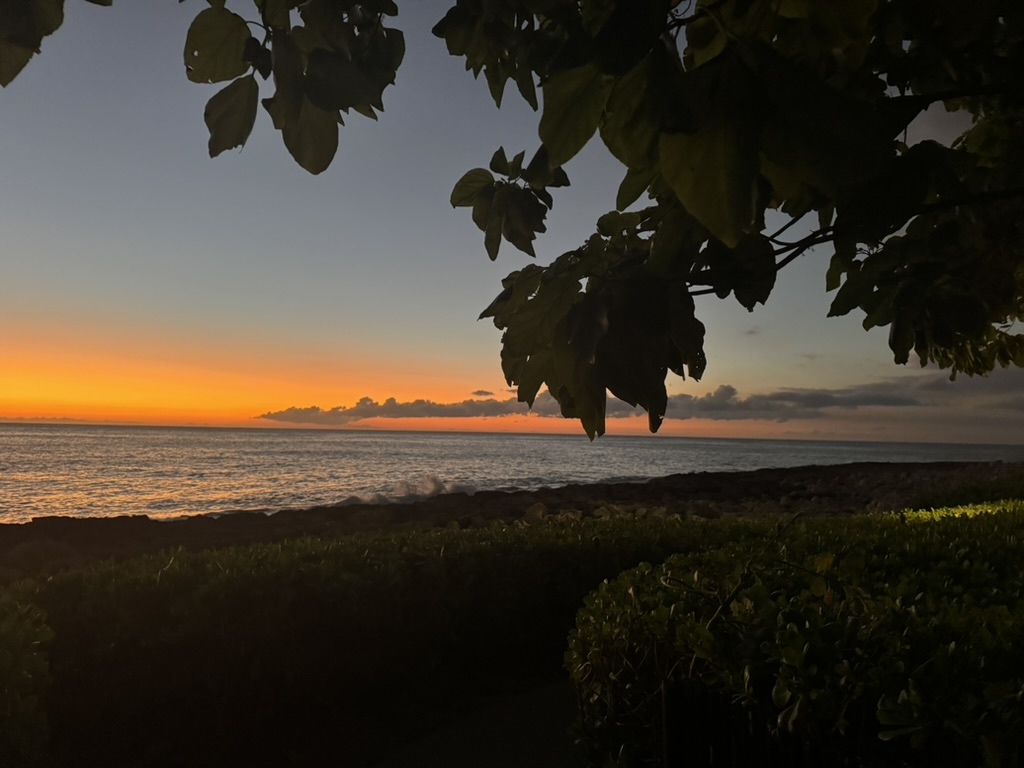
A few from underway — coastline, sunset, and the open water under it.
The view from the room
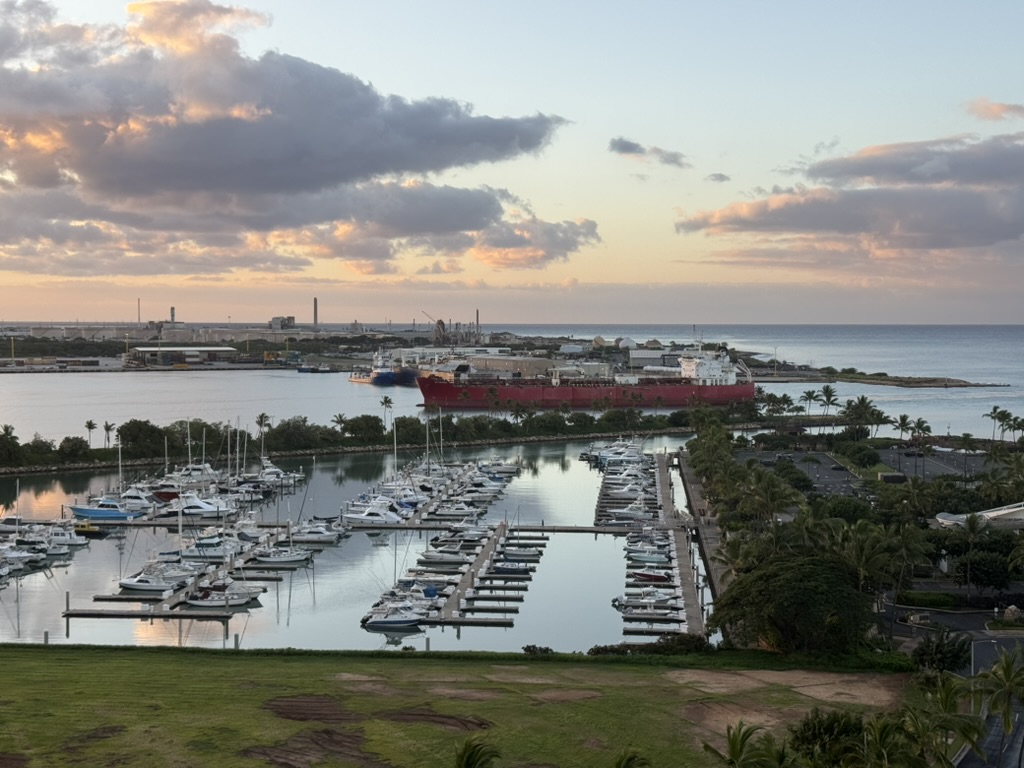
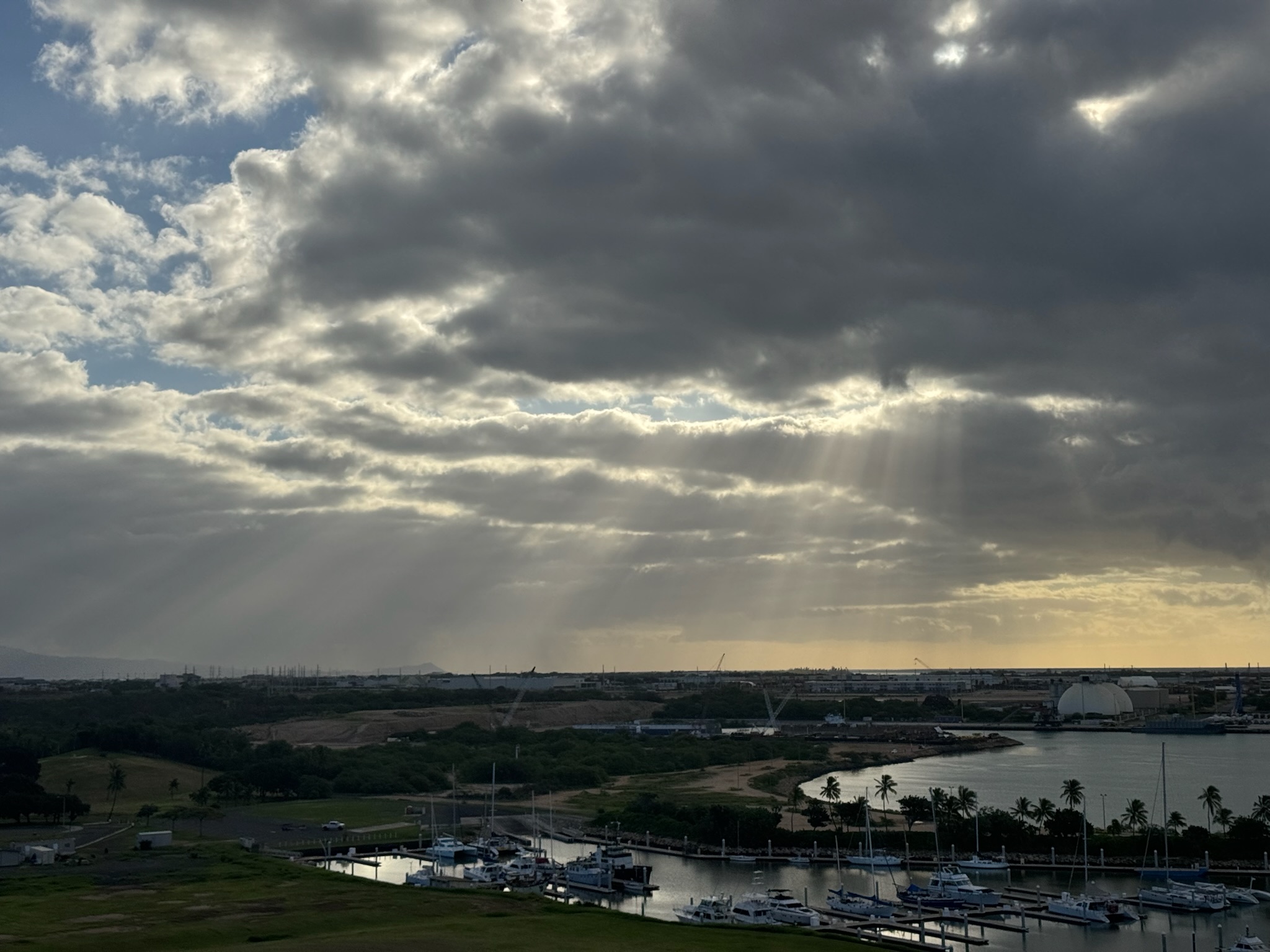
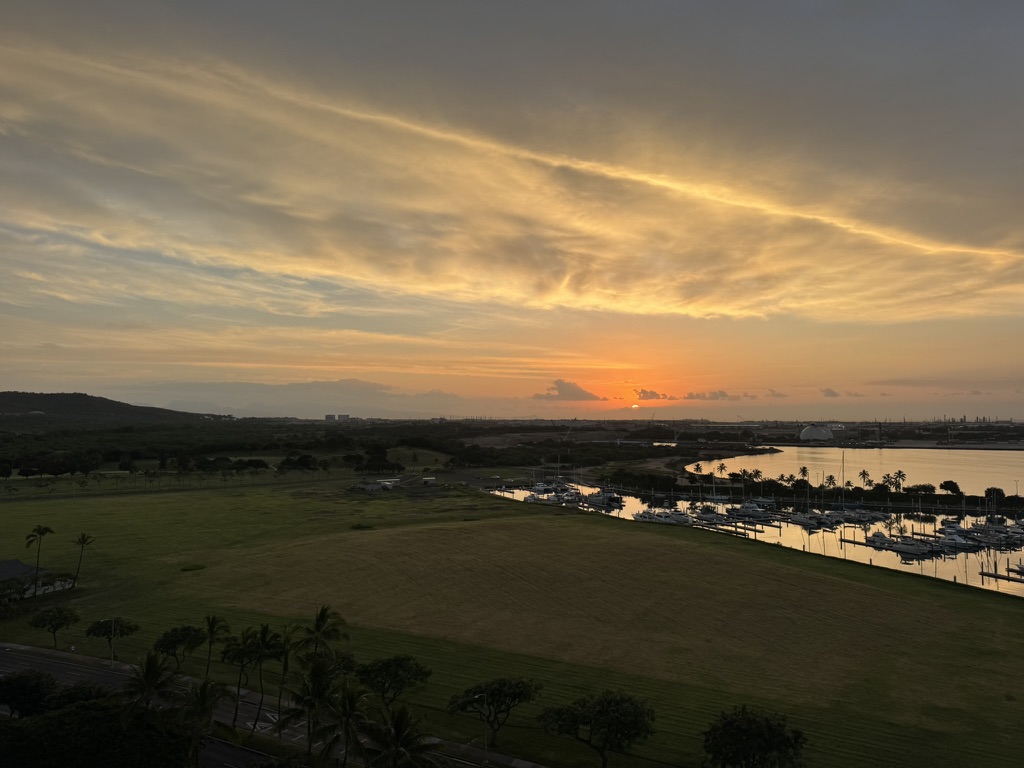
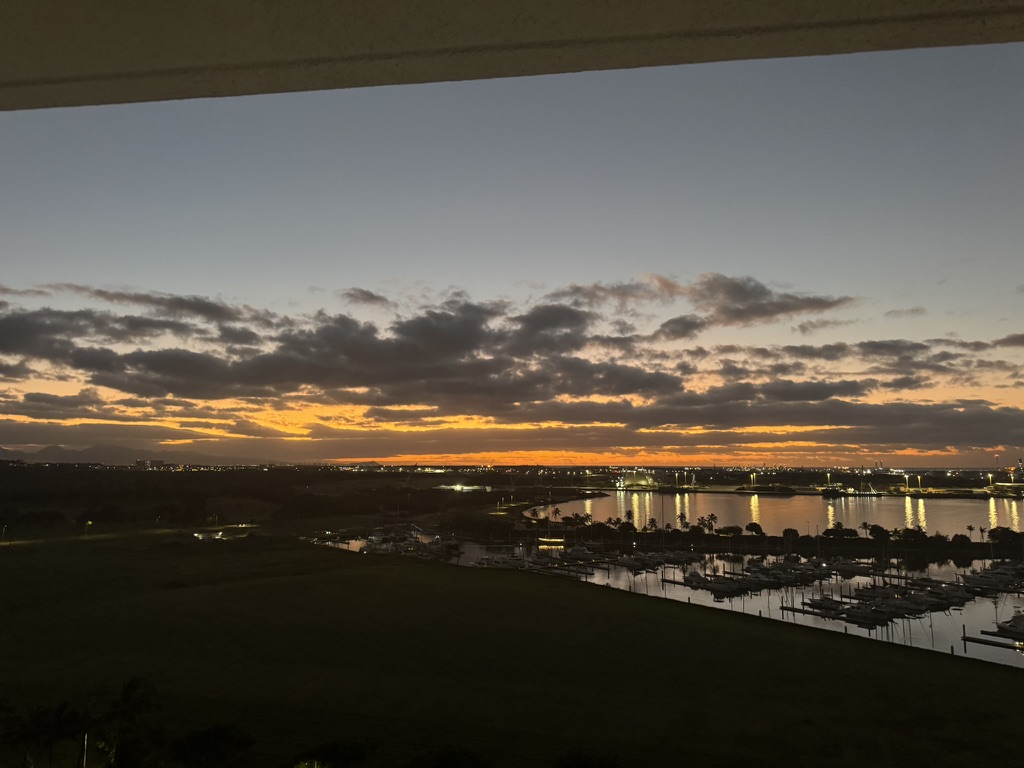
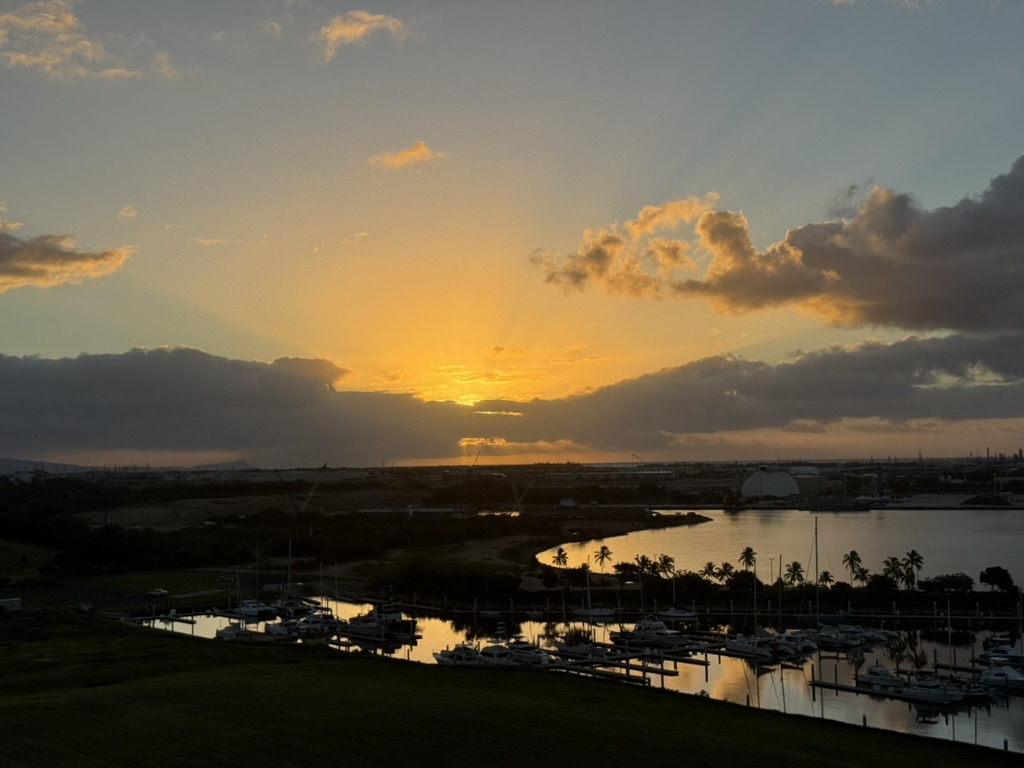
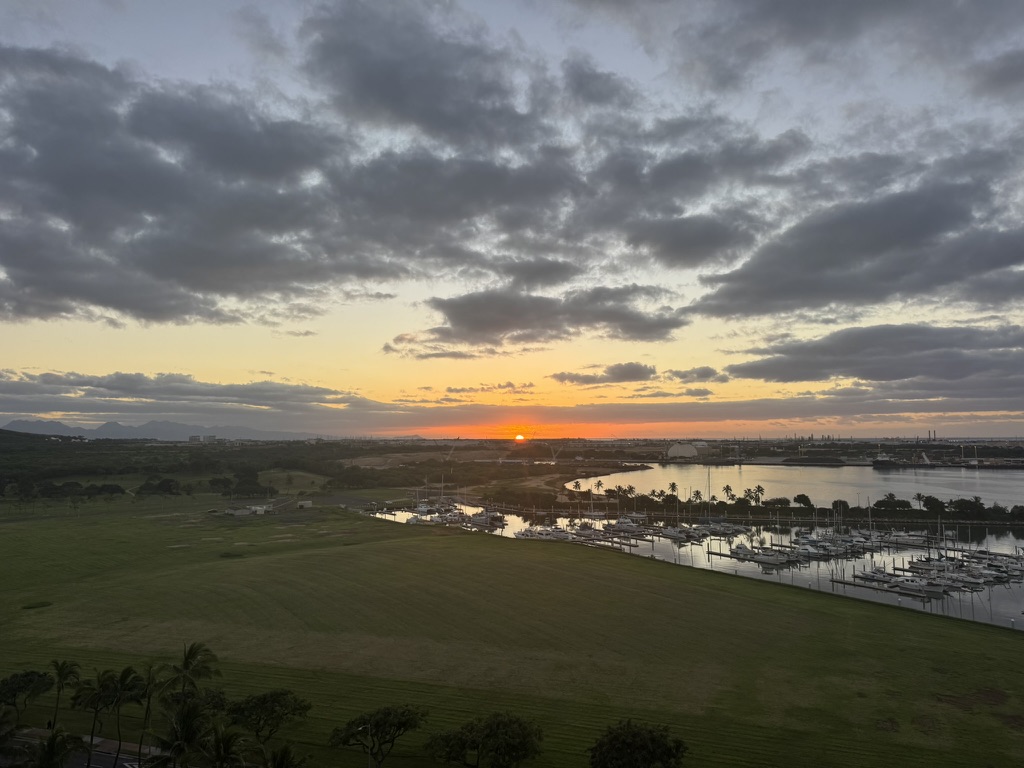
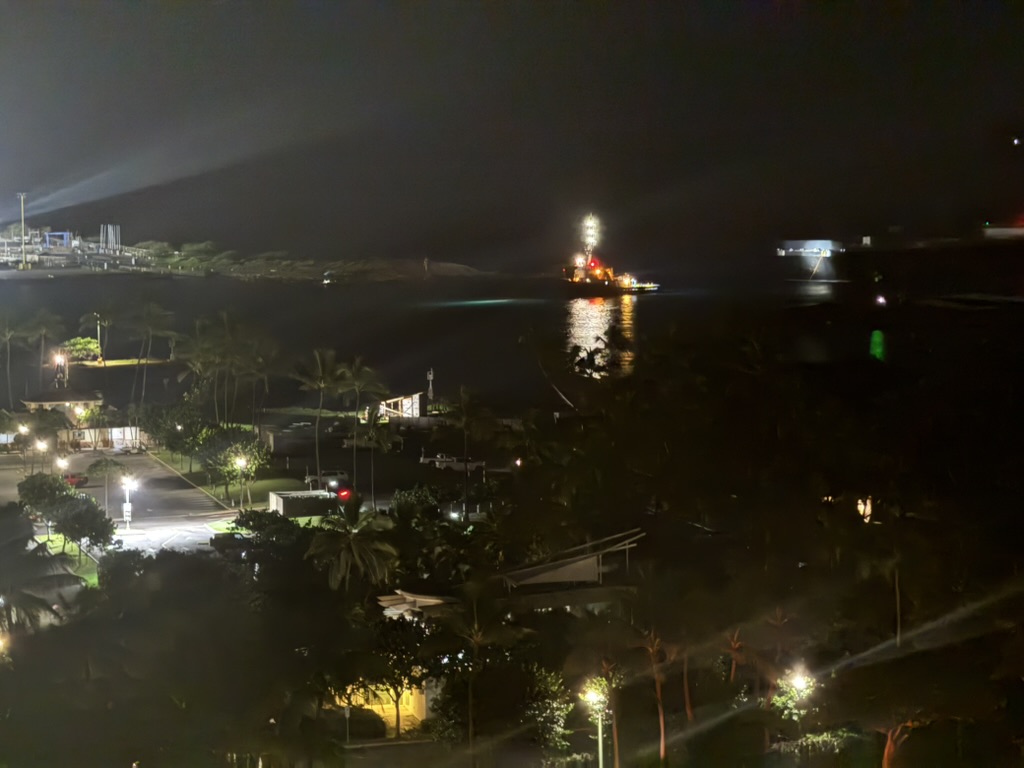
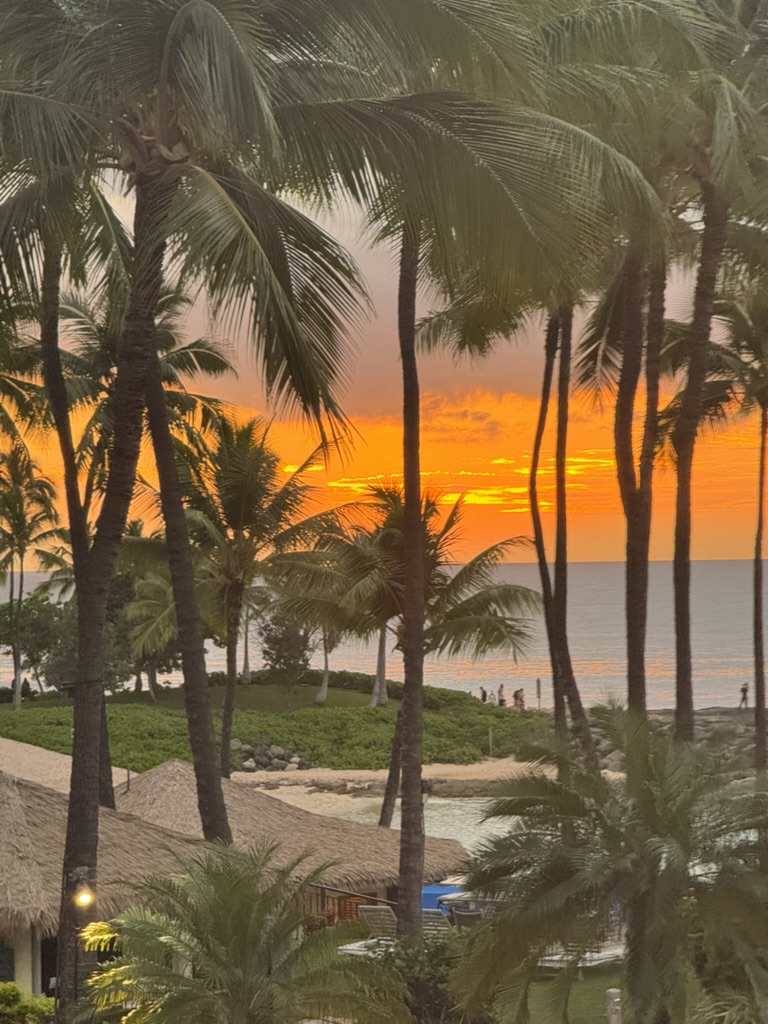
You take more photos of the same view than you mean to when it's the one you wake up and go to sleep next to. I won't pretend to be embarrassed about it. The room looked out over a marina, and the marina did something different every couple of hours — dawn light, mid-morning crepuscular rays, gold-hour, full dark with a single lit hull at anchor. It's the kind of view that makes you understand why people take up landscape photography as a hobby and never finish a single project — there's always one more variation worth catching.
The resort, after dark
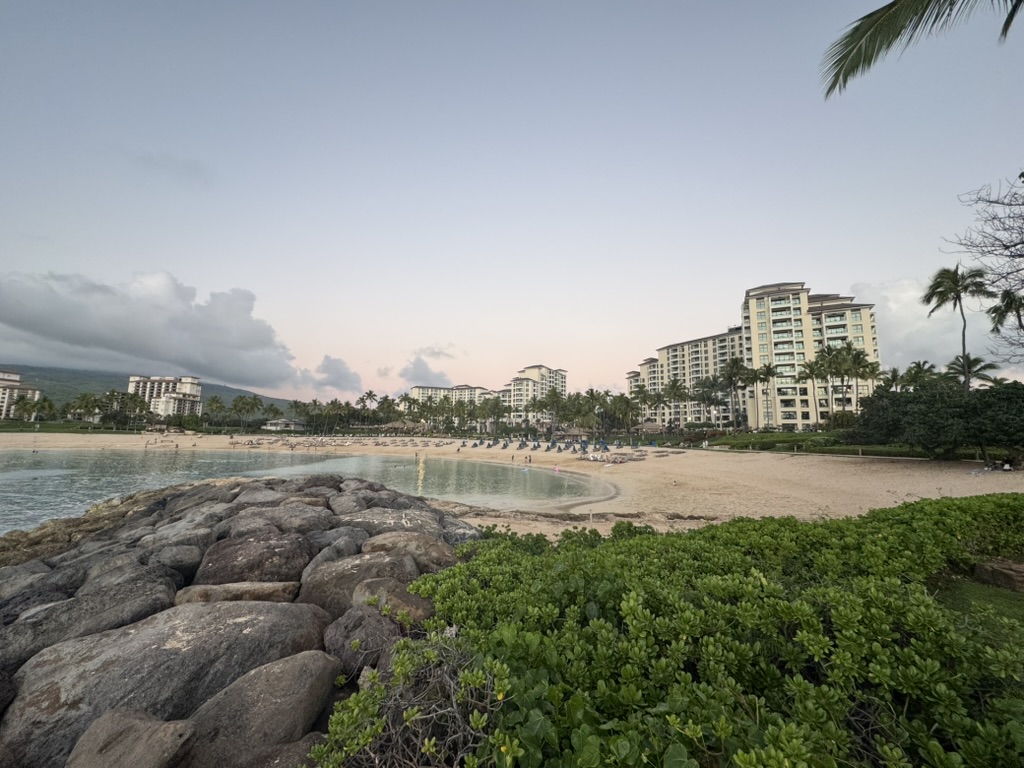
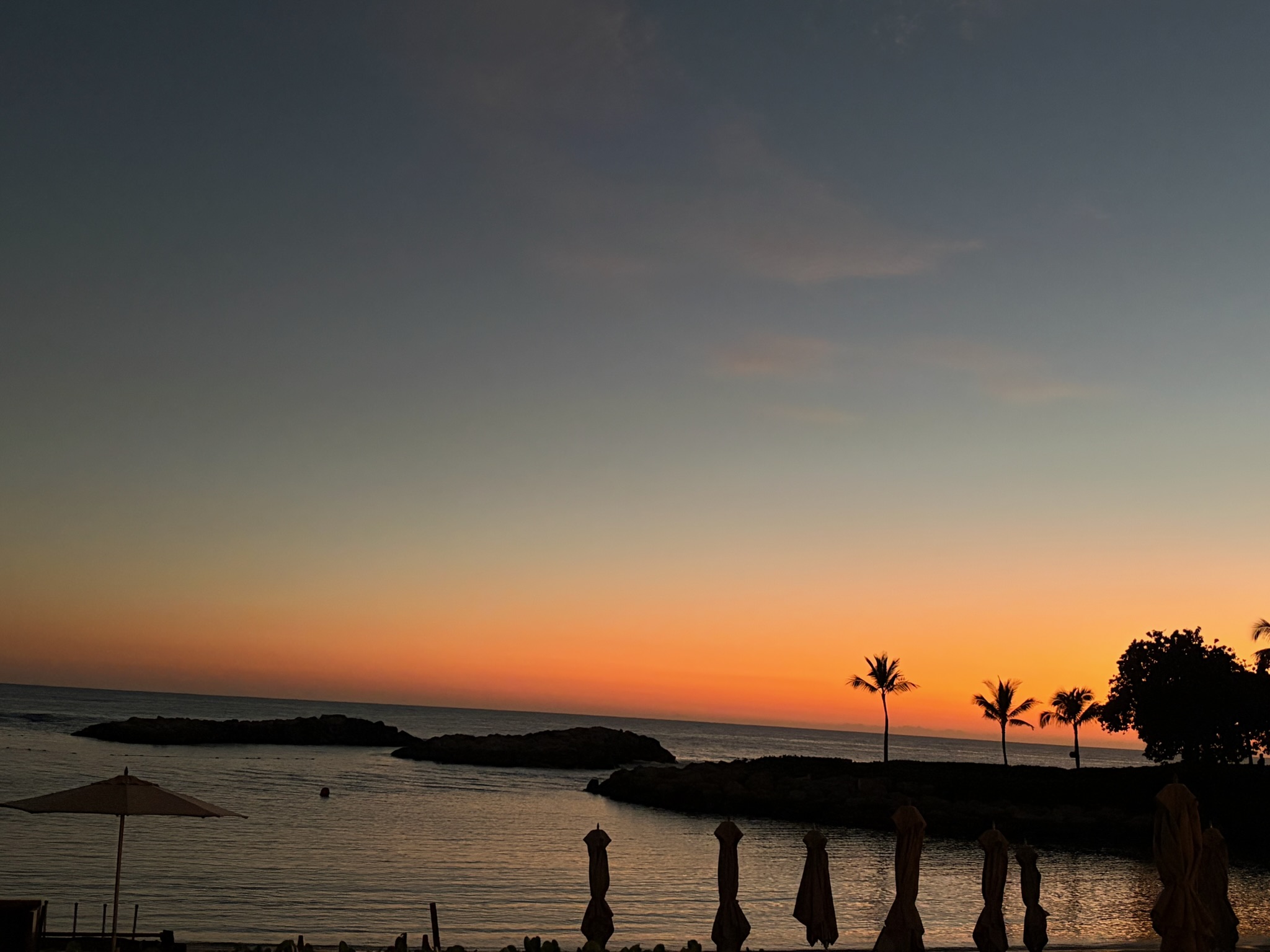
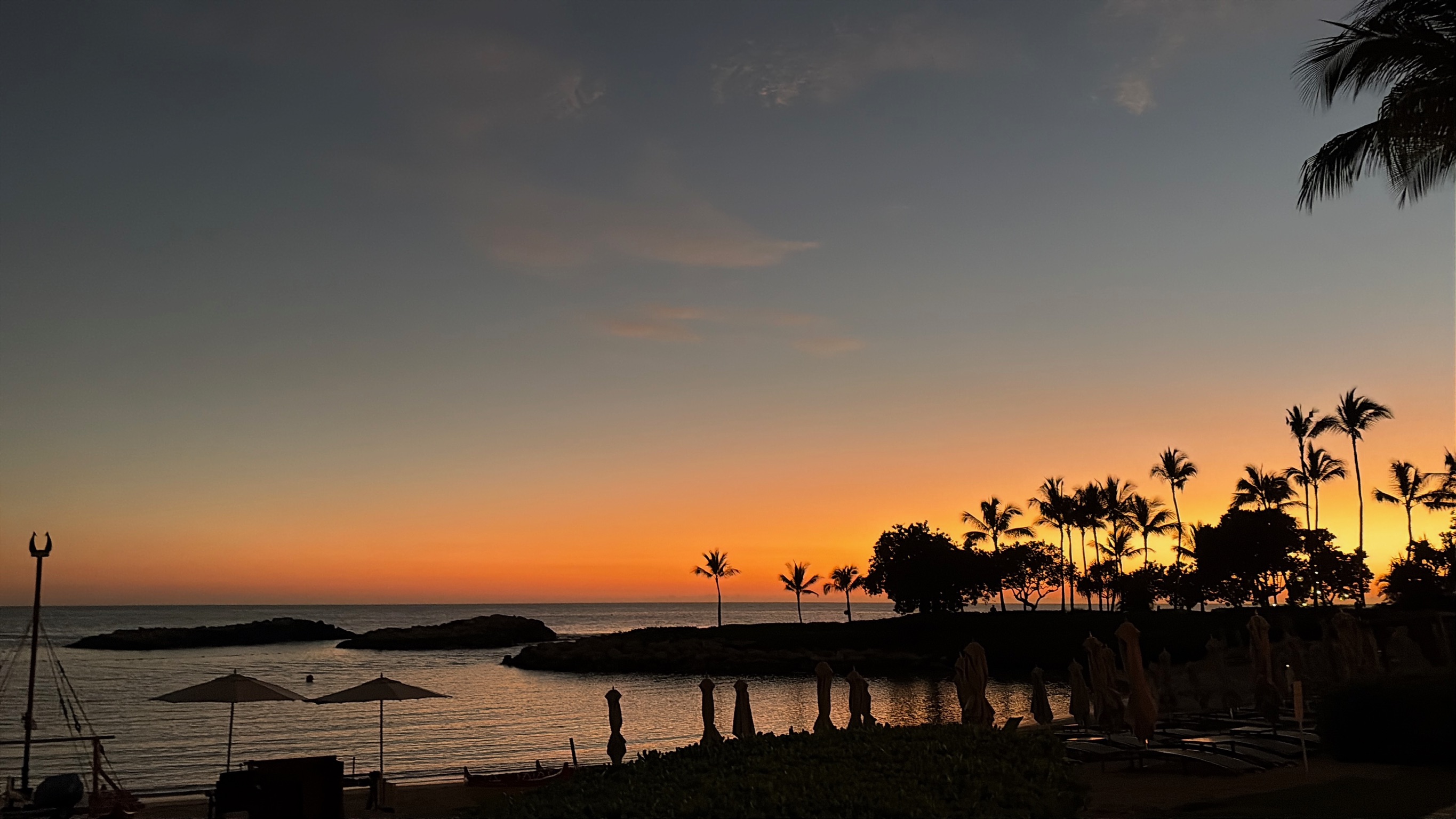
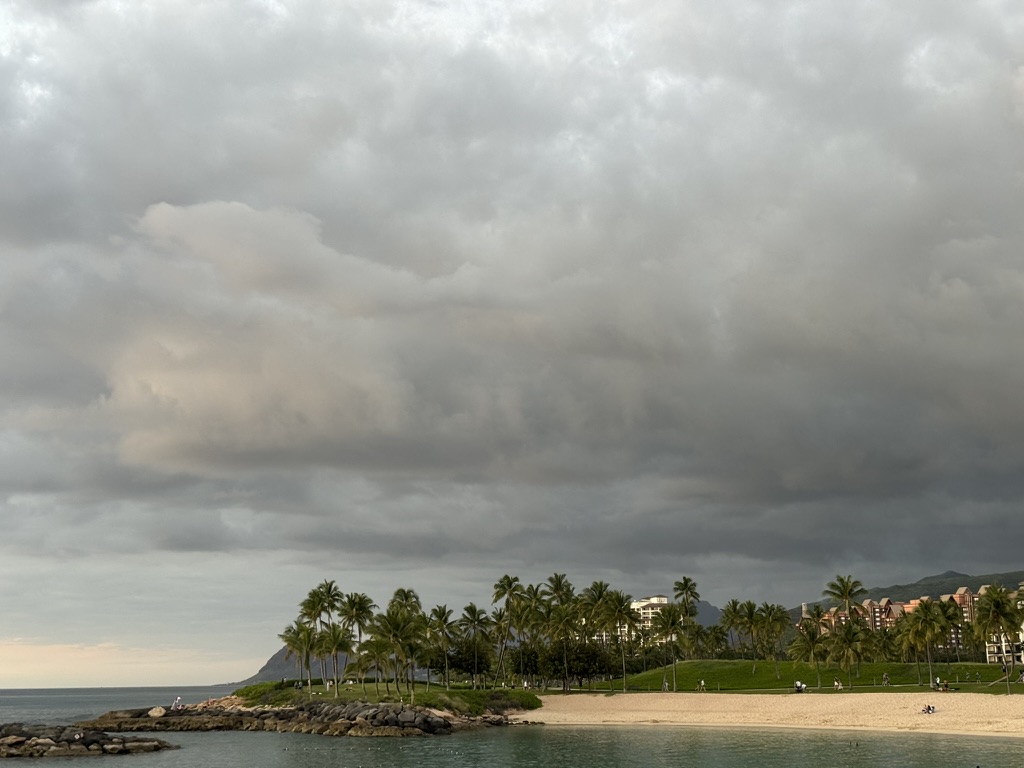
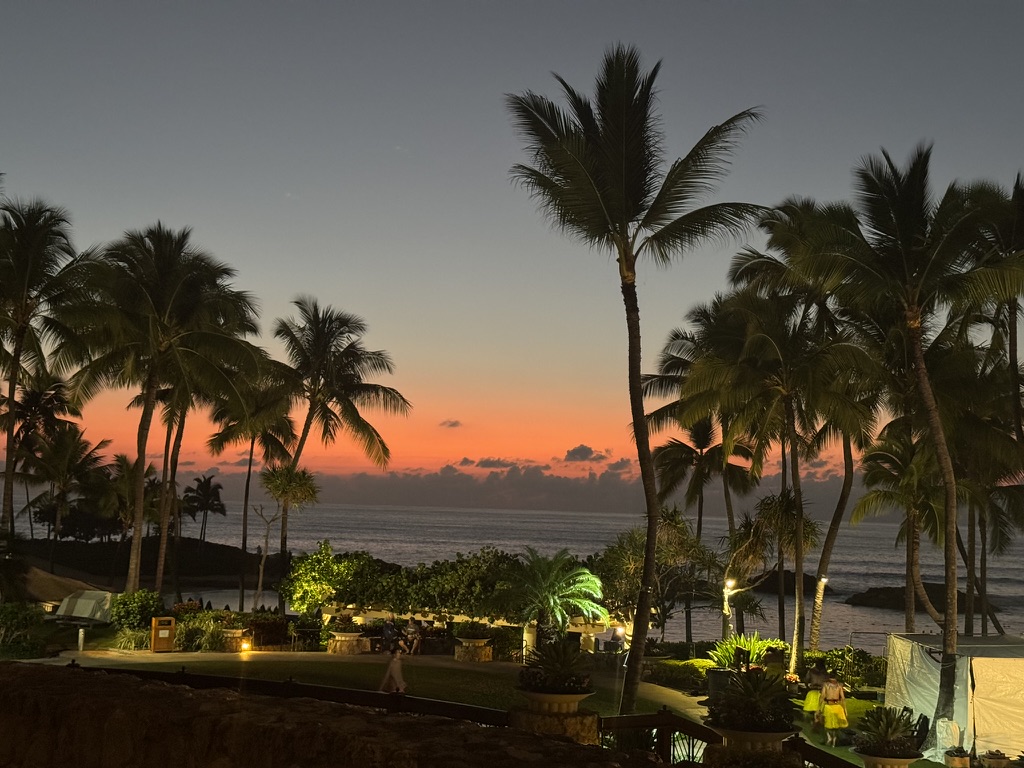
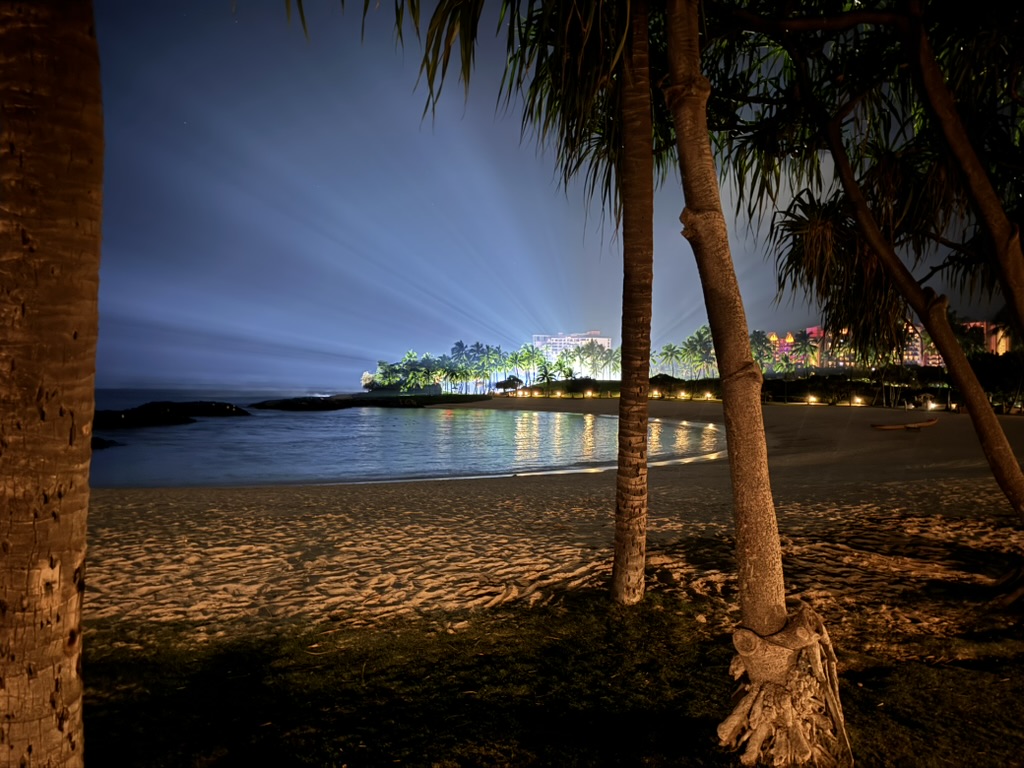
All from the Ko Olina lagoons — the four sandy crescent beaches the resorts on the leeward coast share between them. The resort had a Nick Kuchar gallery print of the place hanging in one of the buildings, and it sums up the brand of Ko Olina better than any caption I'd write — palm silhouettes, curved lagoon, sun dropping behind a headland.
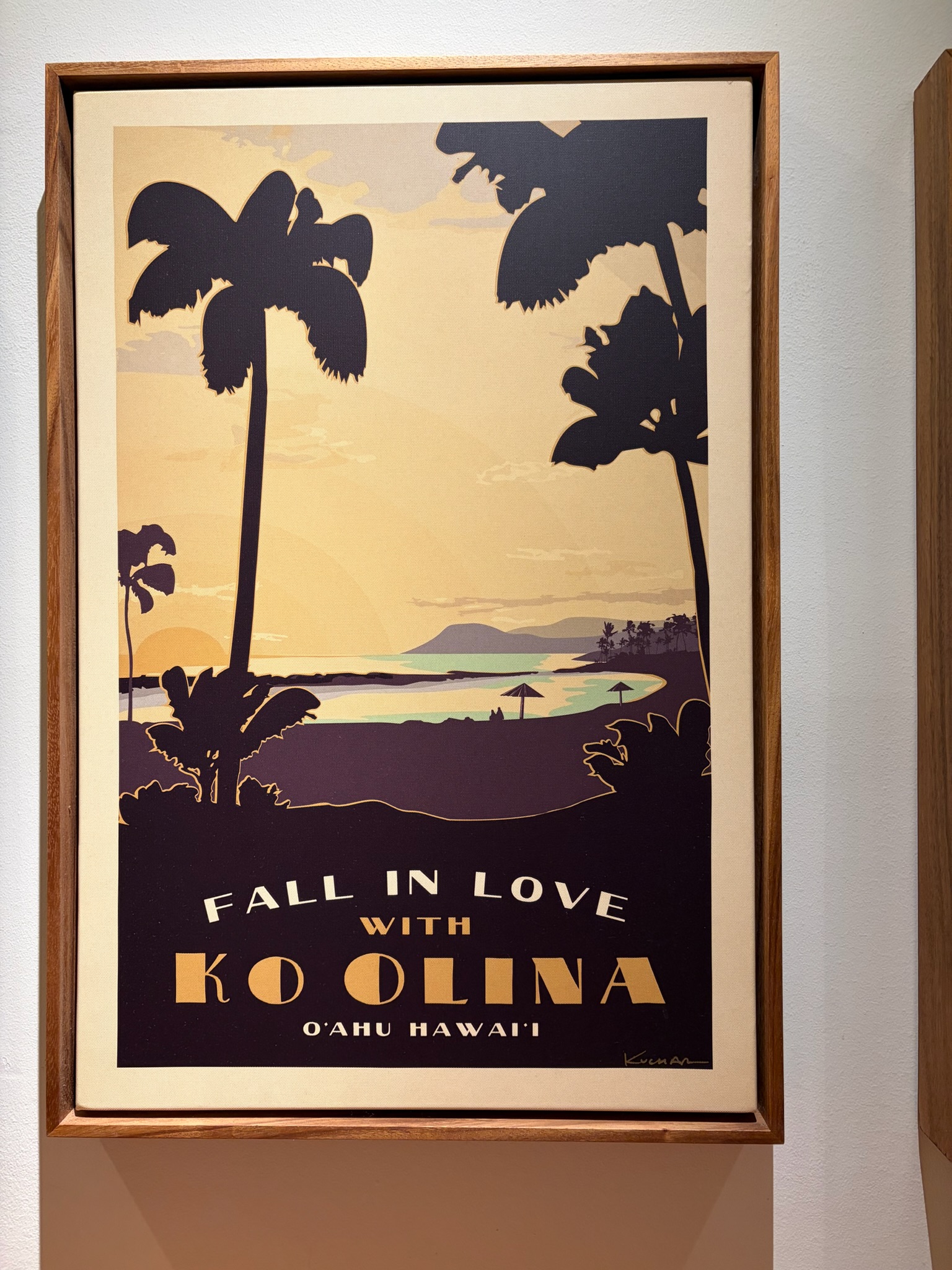
The four lagoons are man-made — carved out of the leeward coast in the late nineties as part of the Ko Olina master-plan — but they read as natural, sand and reef and palm and rock, and the resorts that sit on them all share the beach access. After sundown the place quiets down and you get the version below: lit palms, low conversation, the water going gold and then bronze and then black.
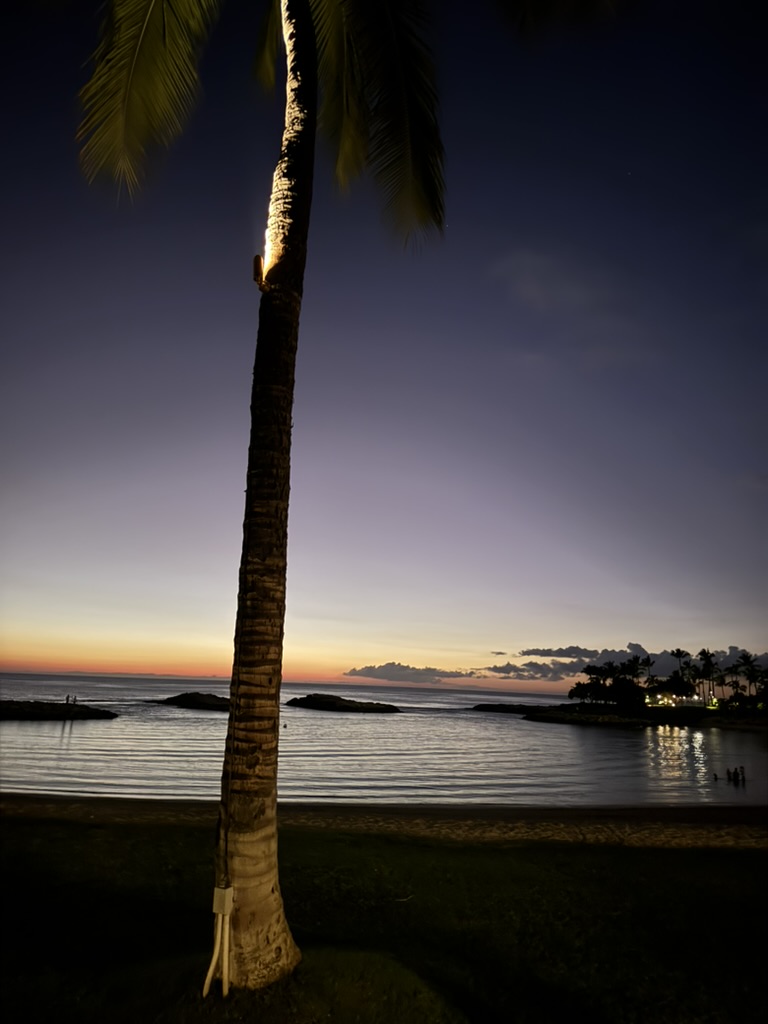
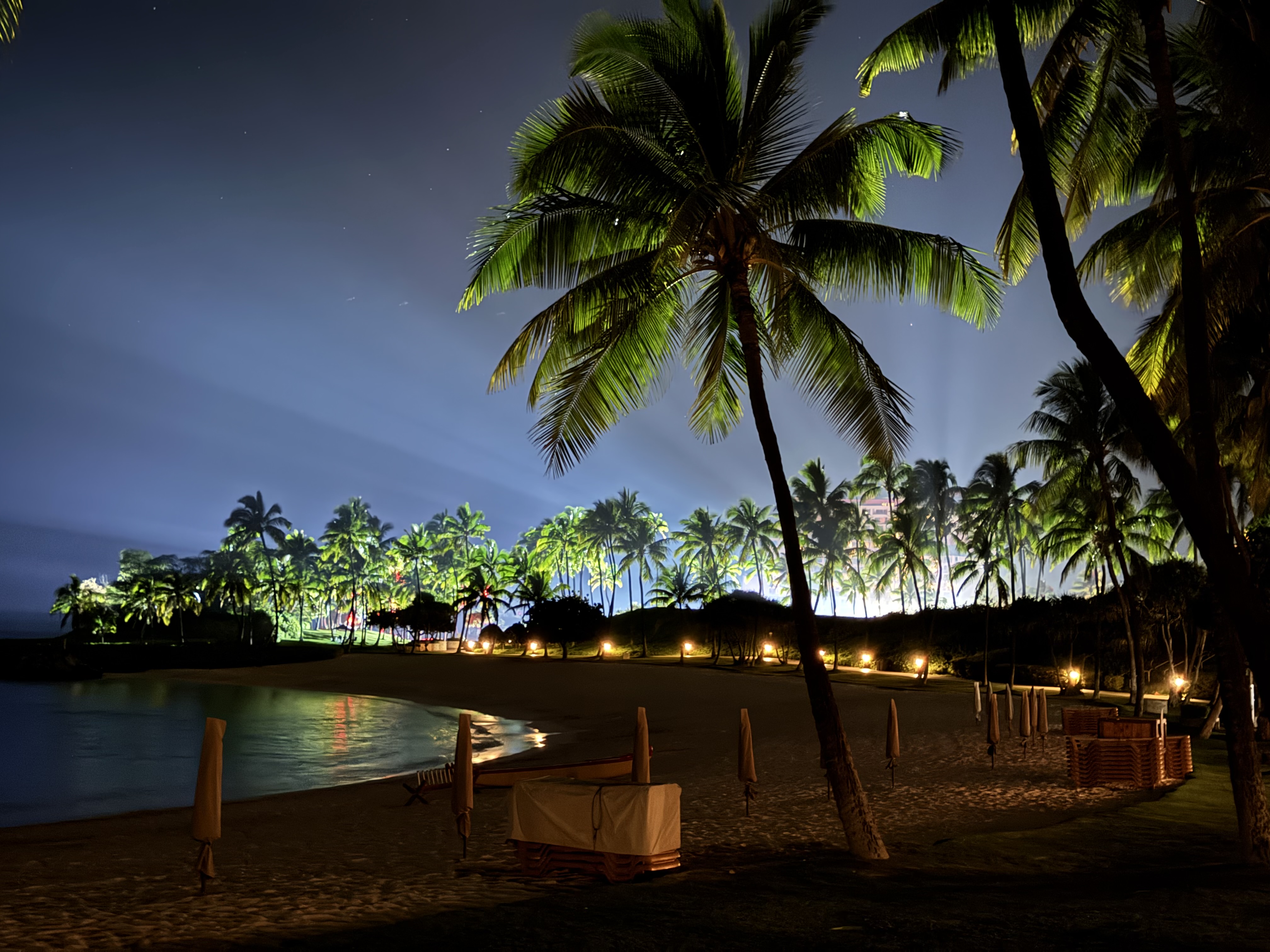
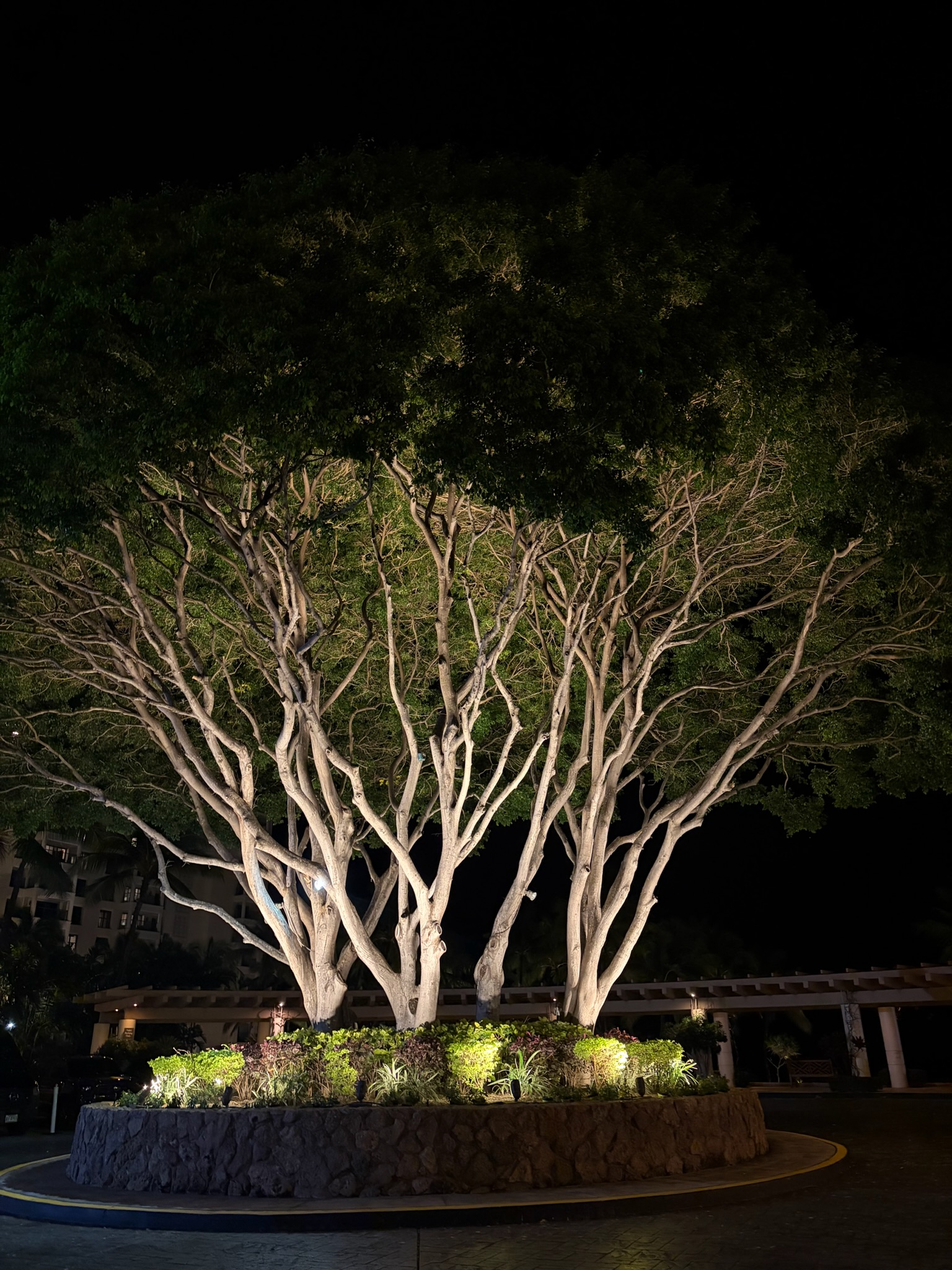
A monkeypod tree on the resort grounds, lit from below — different at night than during the day.
The American Idol set
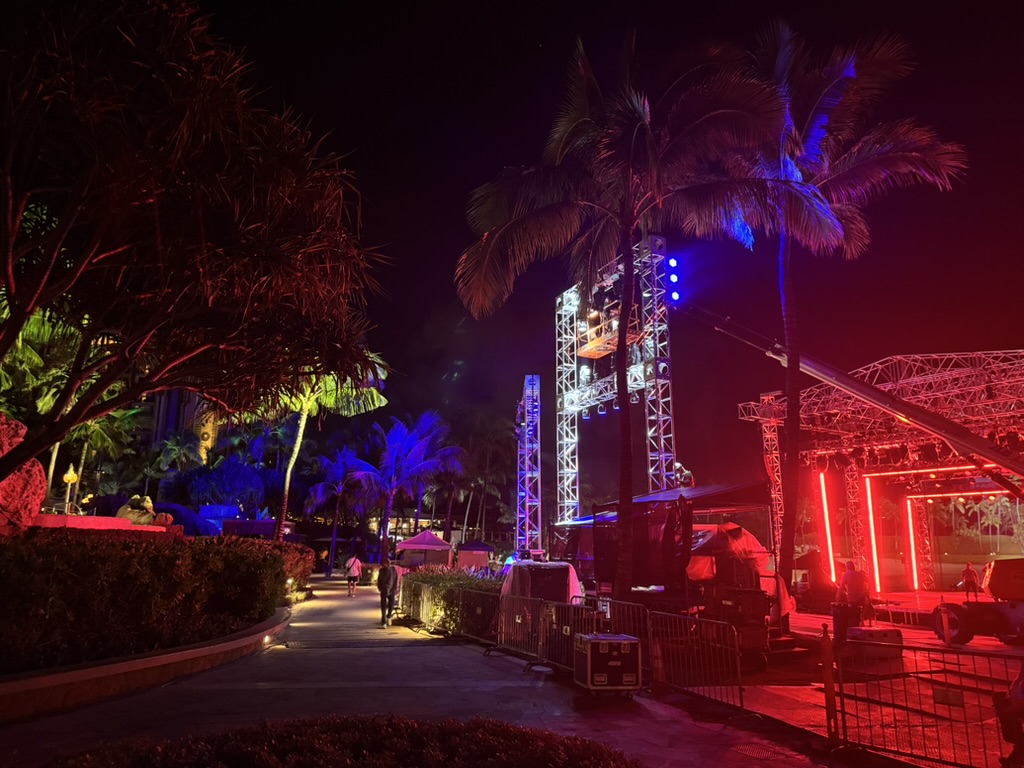
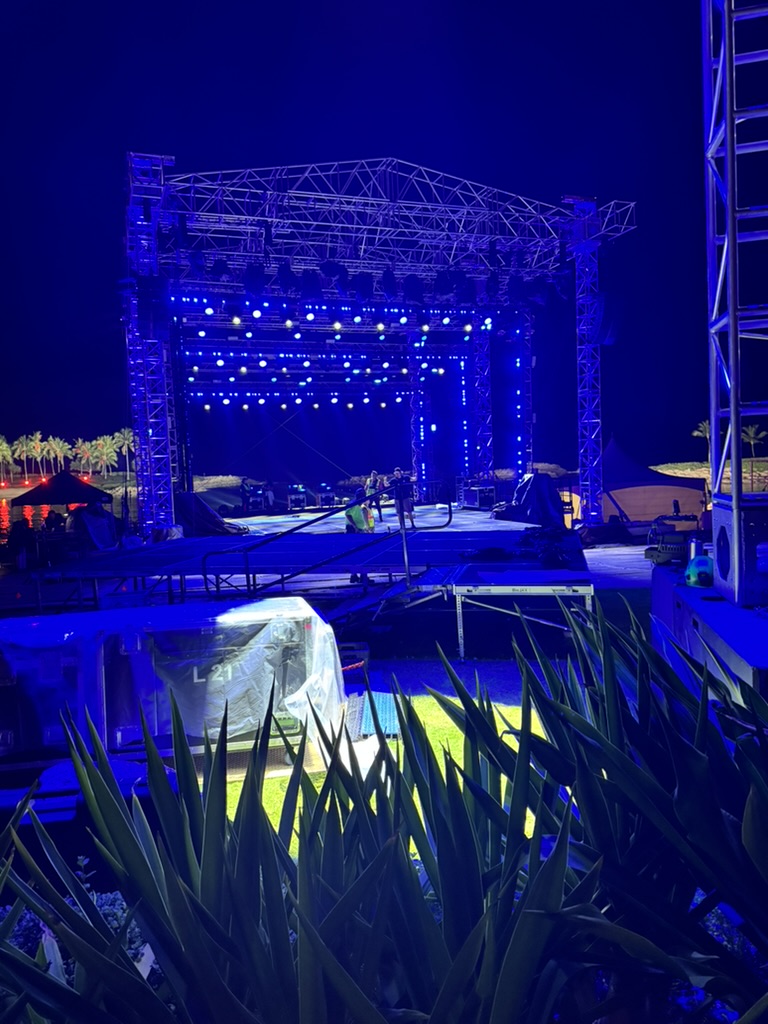
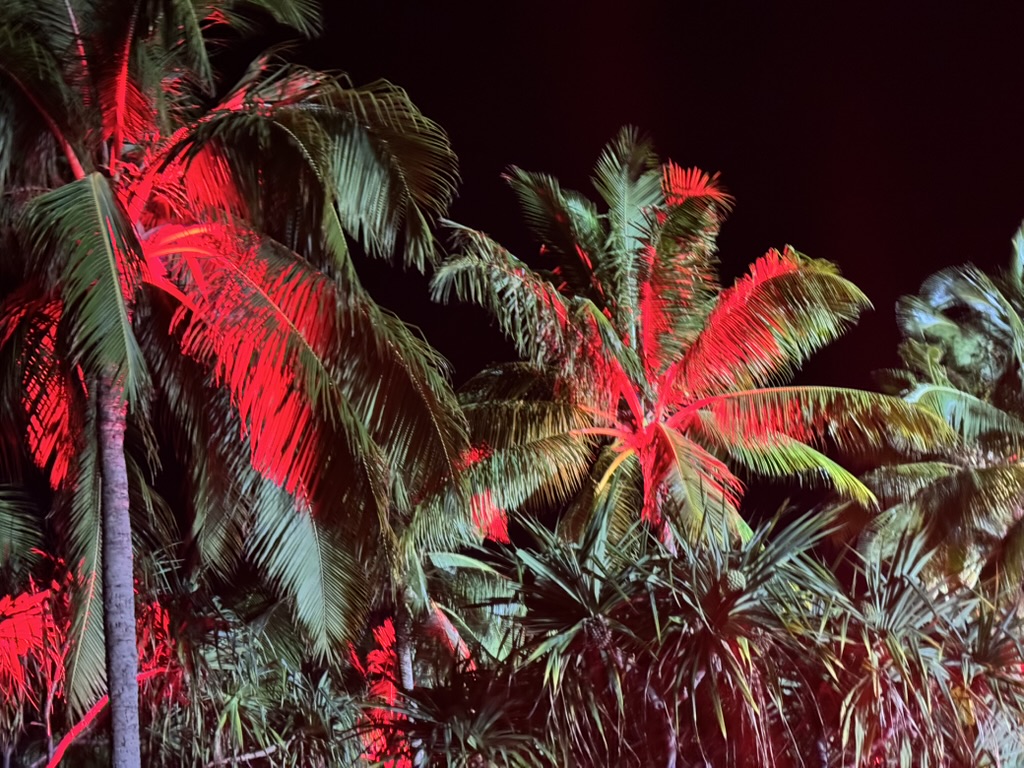
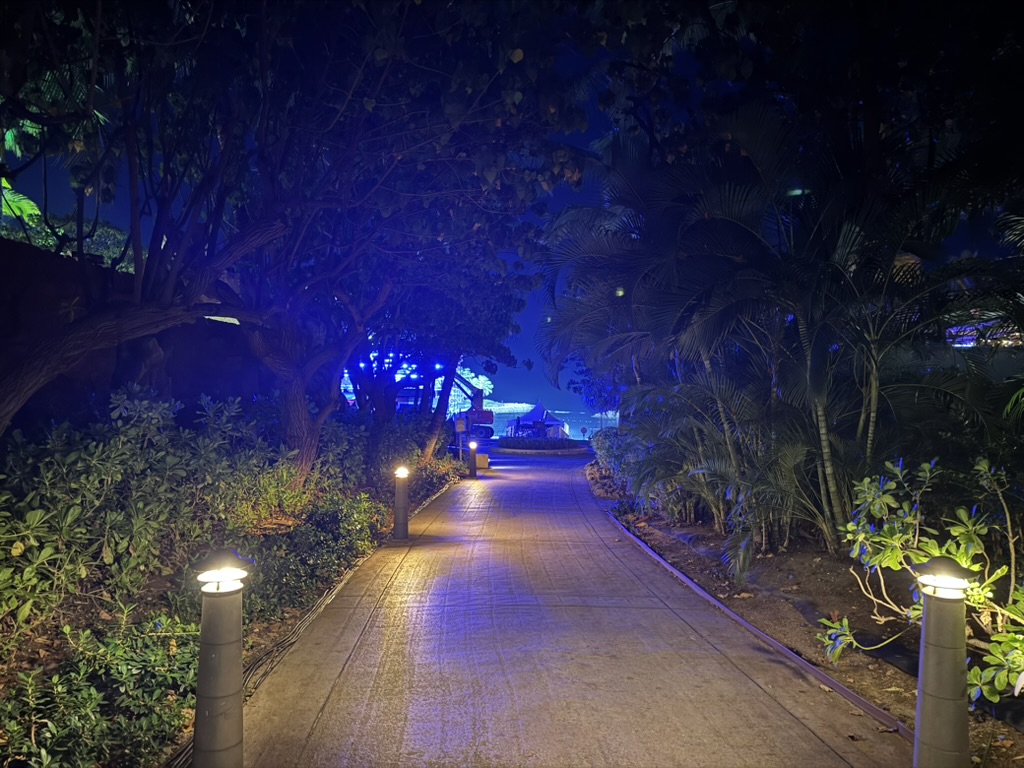
American Idol had a set up at the resort during our stay, which is one of those things you don't expect to be on the calendar for your trip until suddenly it is. The production lighting bled into everything after sundown — the lagoon, the pathways, the palms. Stage washes turn palm fronds into colored sculpture, which I'm guessing is part of why the producers pick locations like this in the first place. The resort goes about its evening like normal a hundred yards away; you walk back to your room past a forty-foot truss rig like it's a hedge.
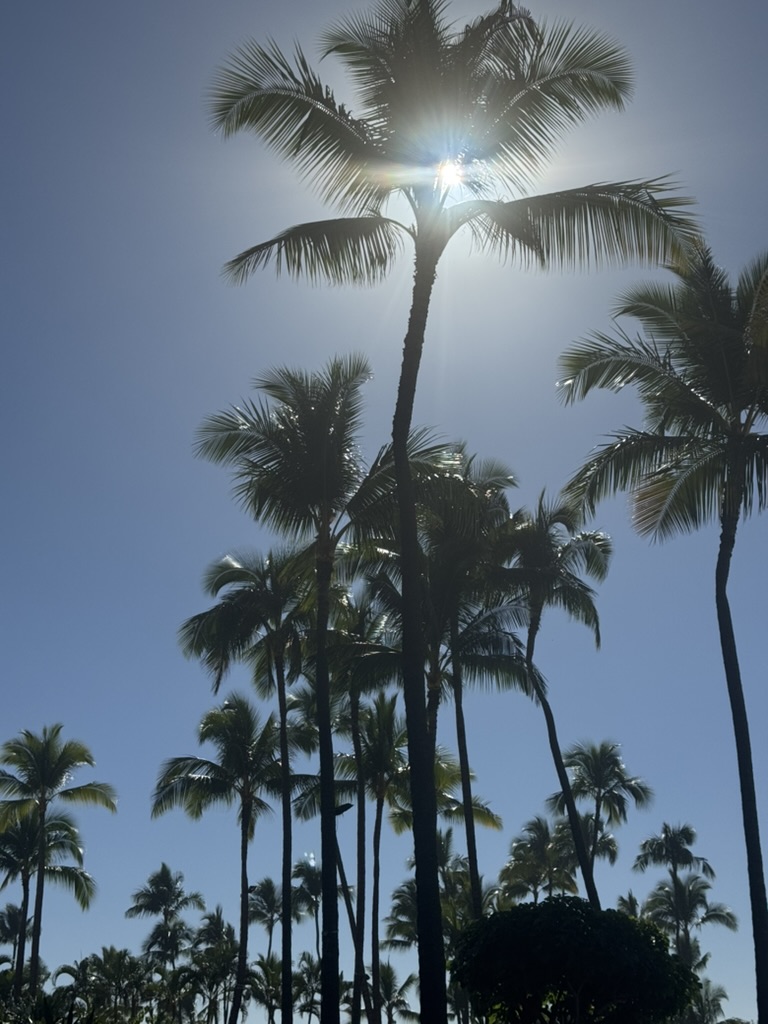
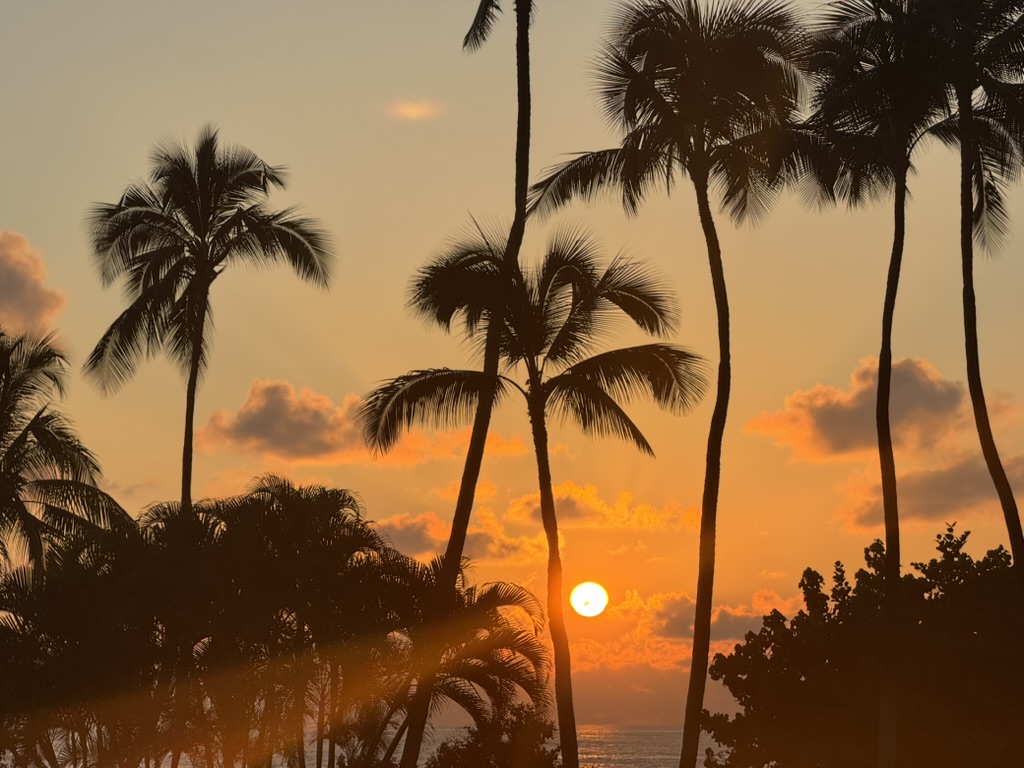
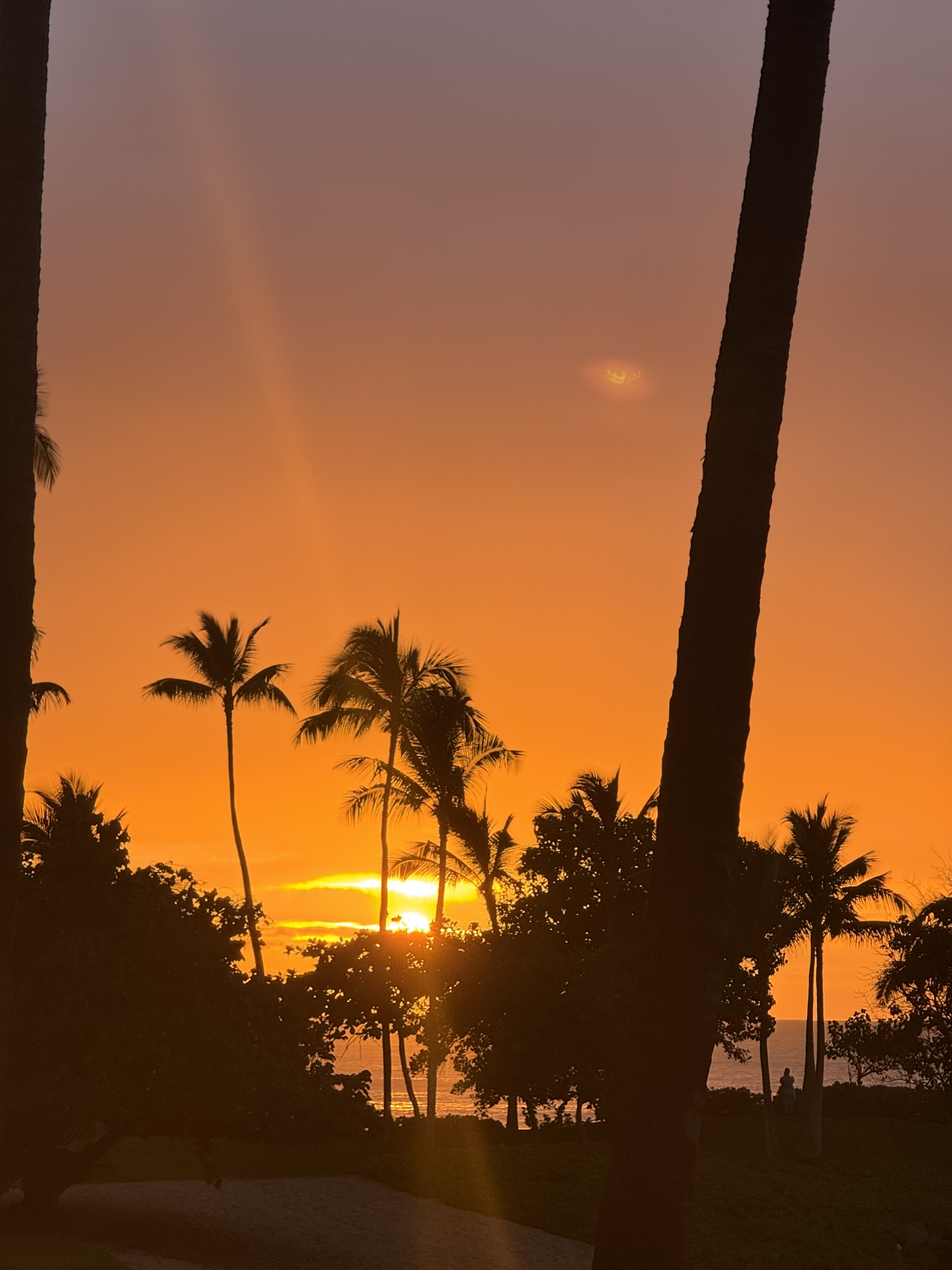
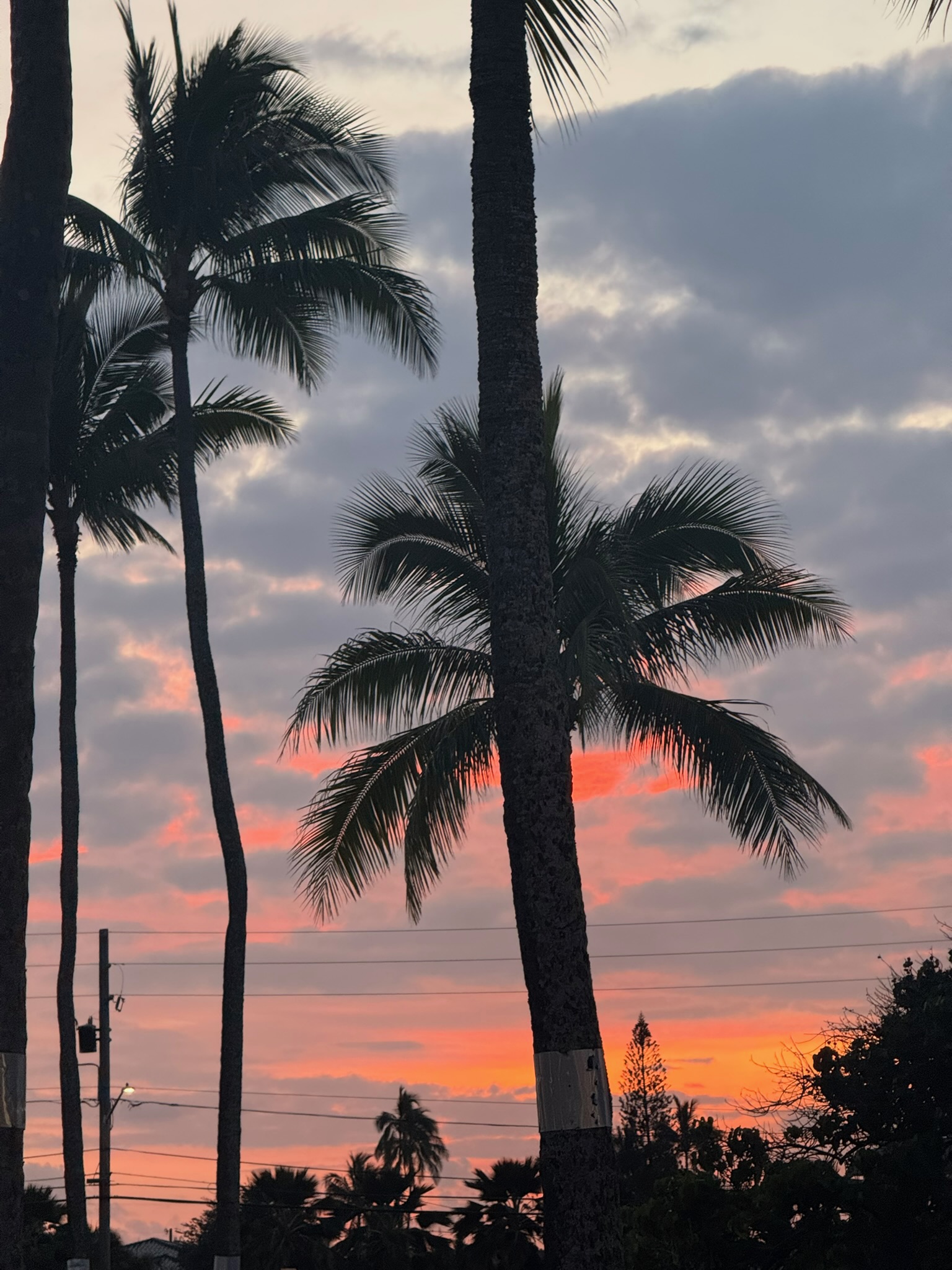
Daylight palms
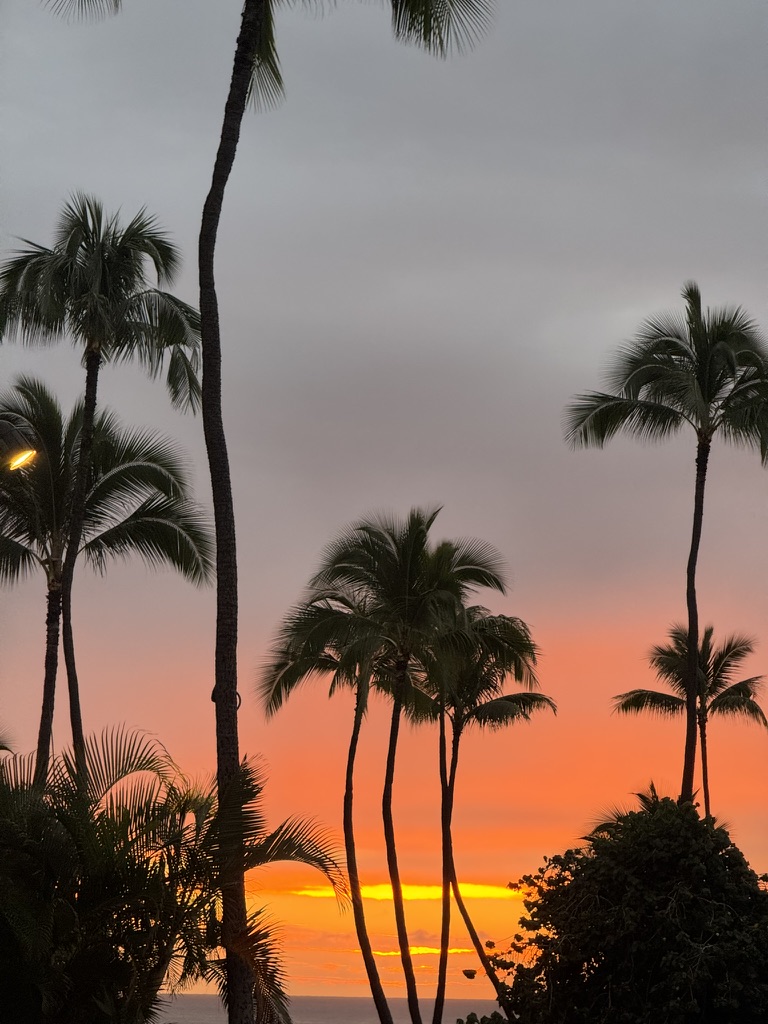
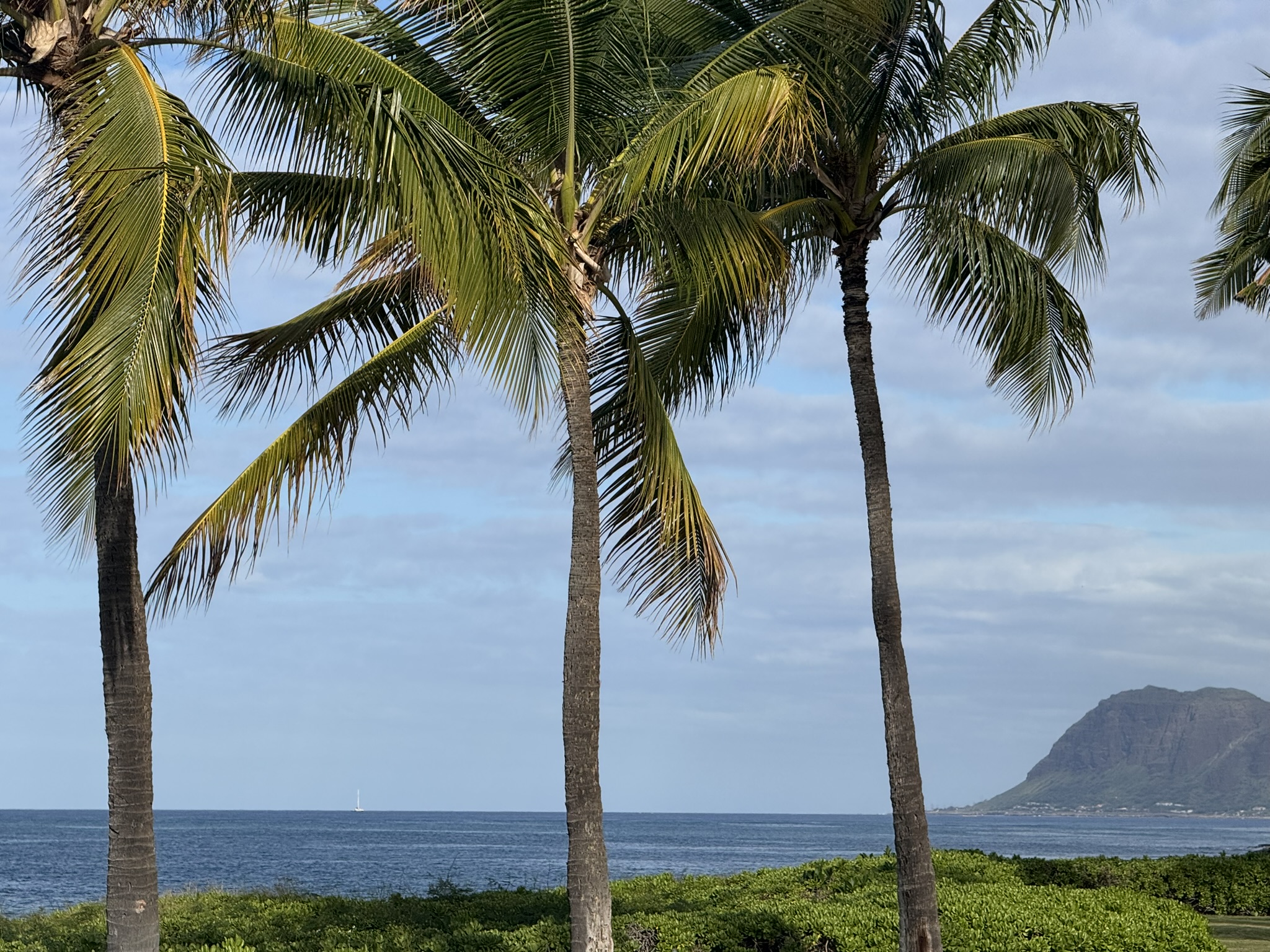
A few more palm shots. Same trees, different light each time I walked past. I took a lot of these.
The drinks
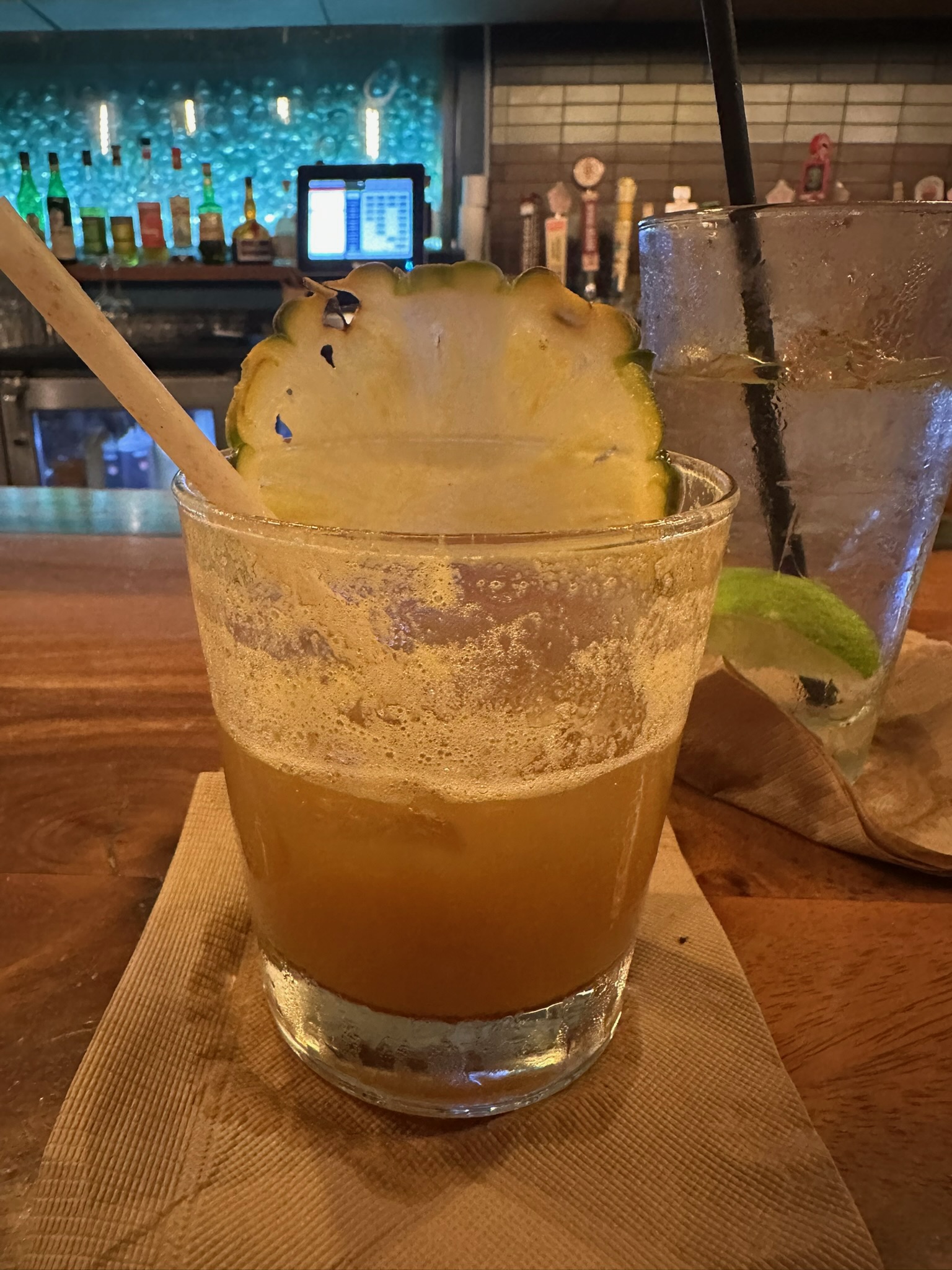
You aren't really in Hawaii until you've had one or two of these. The Monkeypod Kitchen Mai Tai is the one you can't skip — house rum blend, fresh lime, orgeat, and a honey-lime foam on top, garnished with a pineapple wheel. They go down easy. Probably too easy.
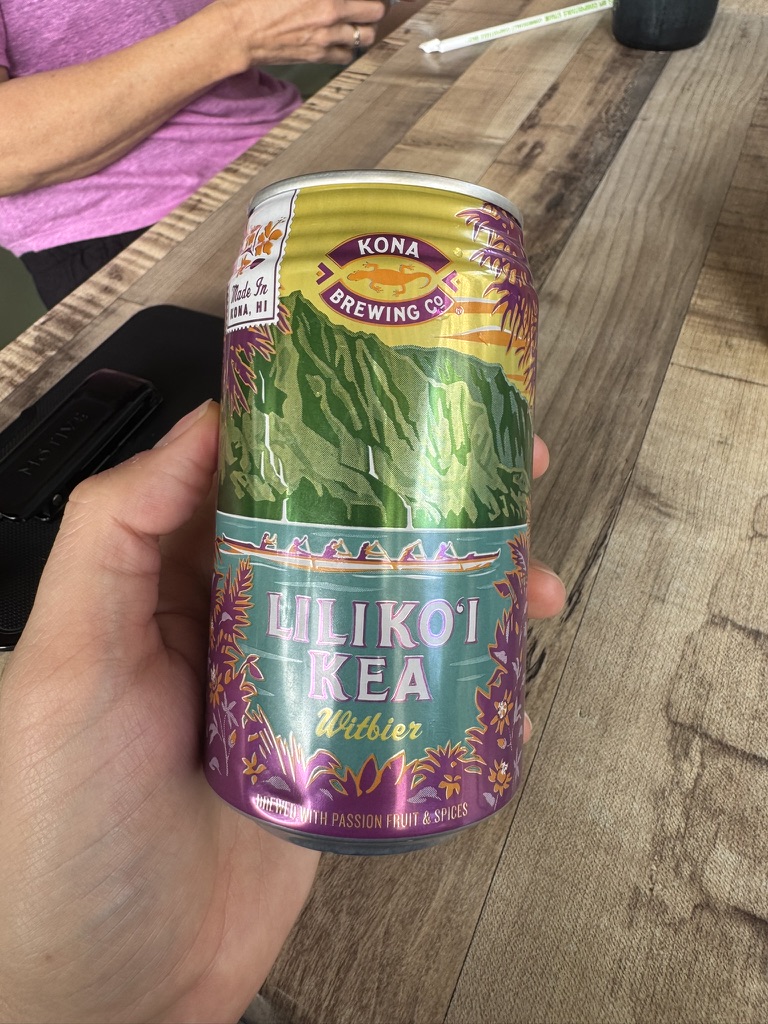
The local pour from a beachside table: Liliko'i Kea — liliko'i = passion fruit, kea = white. Kona Brewing's witbier, hard to argue with in the sun.
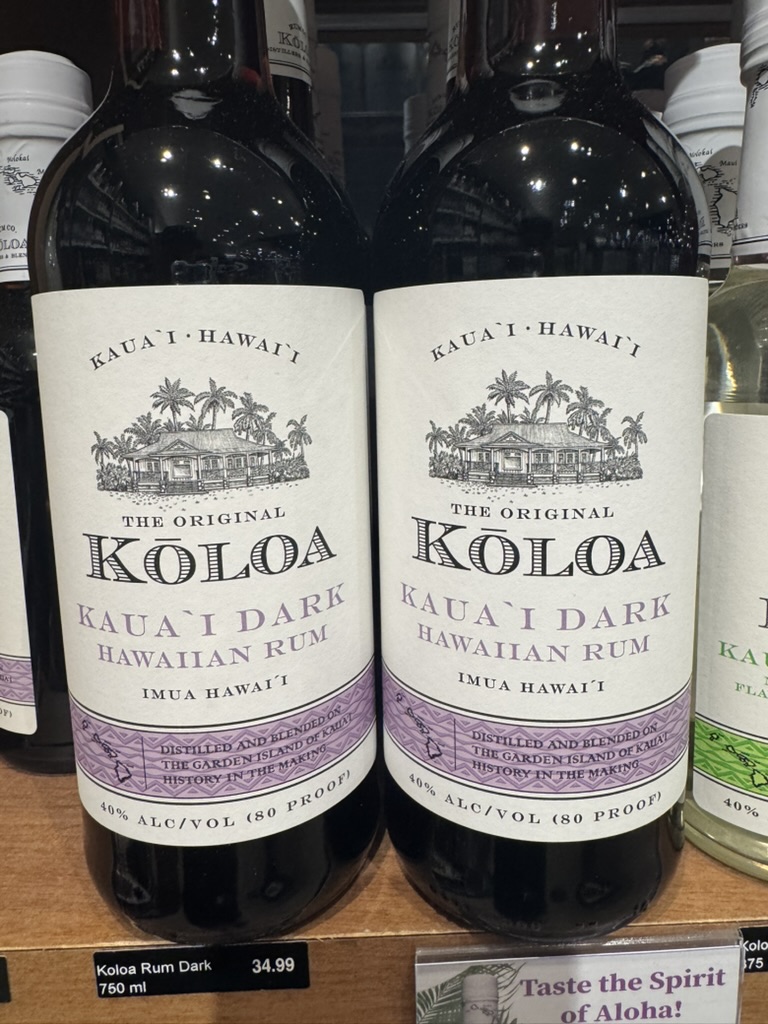
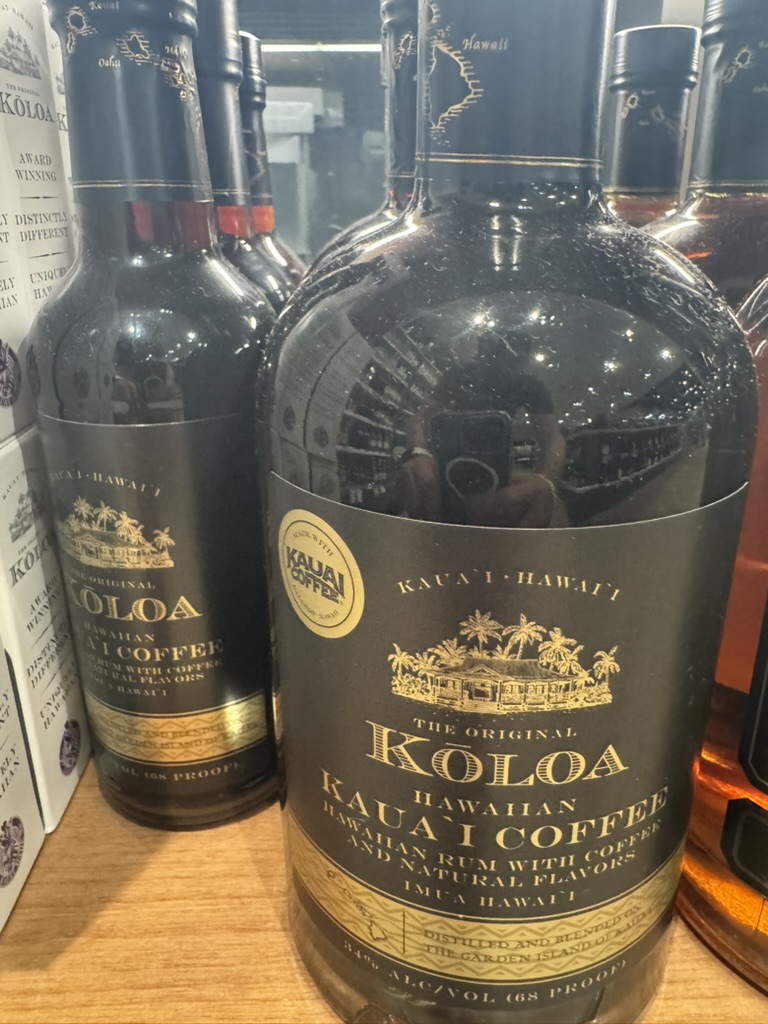
And a couple of Kōloa Rum bottles for the long way home — the Kauaʻi Dark is the one you actually drink; the Kauaʻi Coffee edition is the one you buy as a gift and then keep.
Mahalo
A few thanks worth putting on the page.
To the staff at Marriott's Ko Olina Beach Club — front desk, housekeeping, the bartenders who somehow remembered orders across multiple sittings, the grounds crew who keep an actual tropical resort actually tropical (not a small job, in case you've never tried). You set the tone for the whole week, and the tone was relax, we've got the rest. That's a hard tone to maintain when you're doing it for thousands of guests at a time, and you maintained it. I noticed. I appreciate it. Thank you.
To the people of Oahu. I know the islands didn't ask to be a tourist destination, and I know the tradeoff between the visitor economy and the rest of life there is more complicated than any of us coming and going actually understand. The locals I crossed paths with were unfailingly kind in spite of every reason not to be — helpful when we were obviously lost, generous with directions, gracious when we ran out of small Hawaiian words faster than they ran out of patience for our pronunciation. I don't take that for granted. The least visitors can do is keep their footprints small, follow the signs (yes, including the monk seal one), tip well, and leave. We tried.
And to whatever the spirit of this place is. I don't think I'm qualified to define it, but I know what it does: it slows you down. Makes you notice ridge light instead of checking your phone. Turns surf into something you can fall asleep to. Makes a chicken on a doormat funny instead of weird. After enough days of that, you bring some of it home with you. Not all of it — I logged back into Microsoft Teams on the plane like everyone else — but some.
On the vacation club
On the home page I describe my vacation club as "equally stupid and awesome," and that line is half-joke, half-completely-accurate. It's expensive — meaningfully expensive, the kind of expensive that takes years and isn't done being paid off. There's a version of me who runs the math, looks at the alternative uses for that money, and concludes I should have skipped it.
But that version of me also doesn't put his feet in the Pacific each year. Doesn't watch the sun fall behind a Ko Olina headland from a balcony. Doesn't get an A380 on the runway as the unrequested side dish to a resort breakfast. Doesn't end the year ready to go again because he's had a real, full week of not work baked into his calendar by financial gravity.
There is more to life than the keyboard — even good work, even work I genuinely like. The points are how I make sure I keep remembering that. They're a forcing function: I've already paid for the trip, the only thing left is to actually take it. If that's a stupid way to enforce balance on yourself, it's at least stupid in a direction I can defend. And I can keep coming back here to take photos like the ones above and write little posts like this one.
Thanks for reading. If you've been putting off your own version of this — the cabin, the road trip, the long weekend with nothing scheduled — take that as the soft nudge it's meant to be. The work will be there when you get back. The light won't.
Aloha.