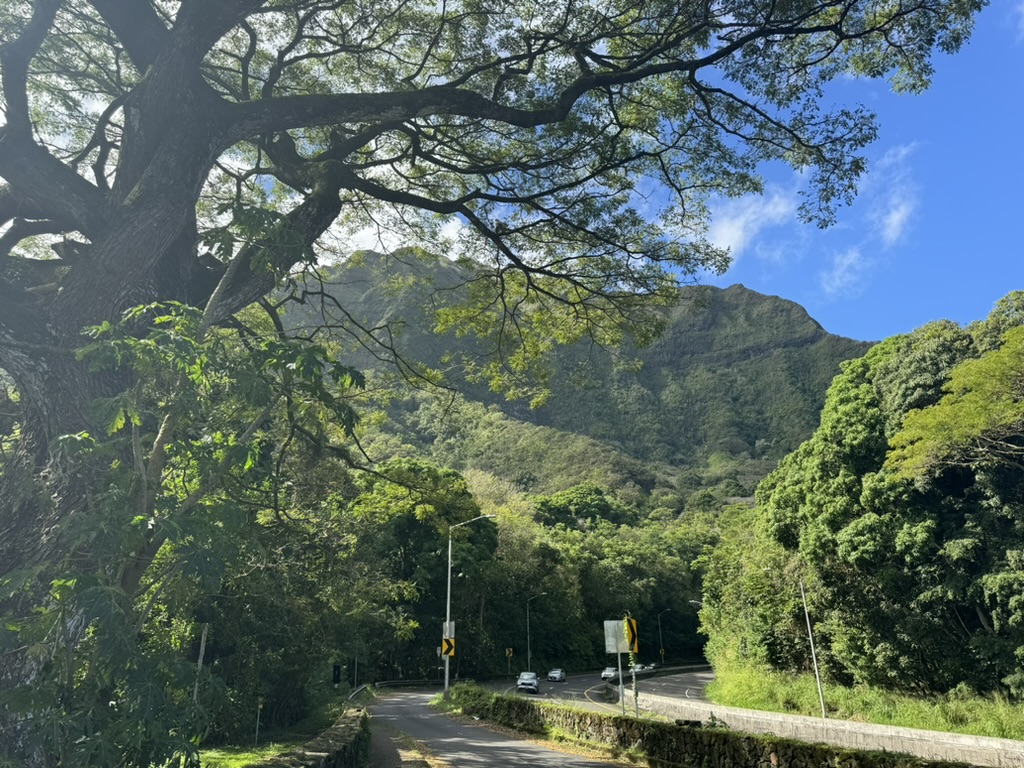
This is the trip that justified the Vacation Club ownership I'd bought into a year earlier. First time using the points, first booking on the 13-month window I'd paid the developer premium for, and — as it happened — first trip since starting at Edge Autonomy (now Redwire) the previous summer. The resume penciled at gate 8 in Honolulu in January 2023 had become a job, and the job had become long enough hours that I genuinely needed the points to make myself stop.
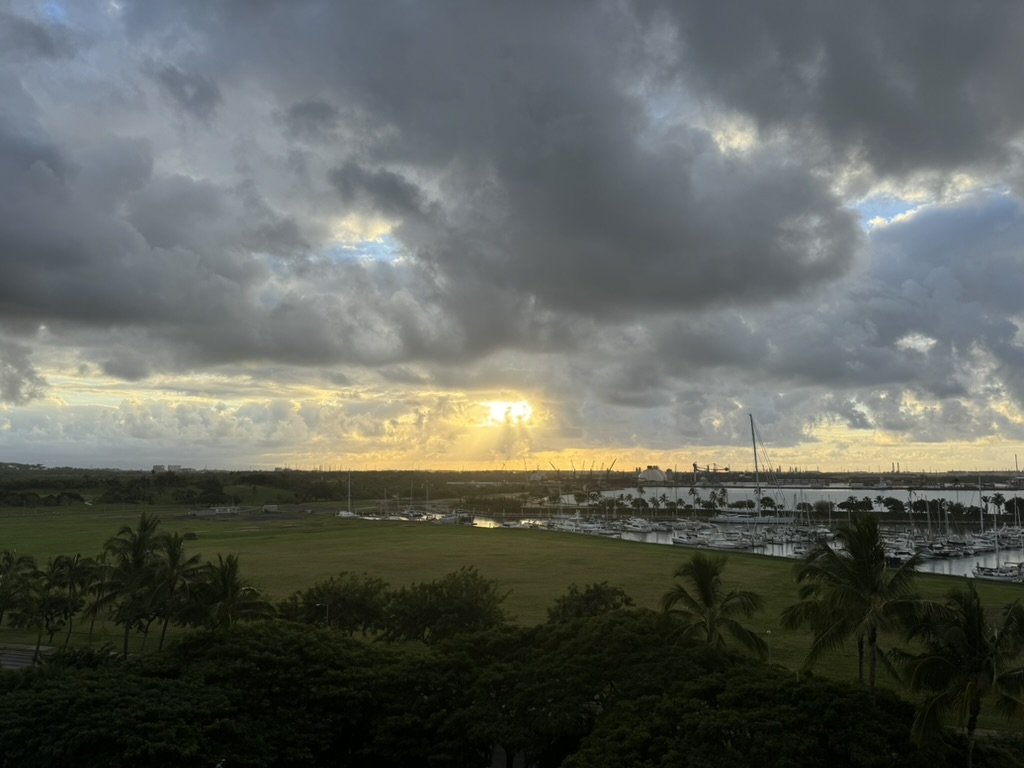
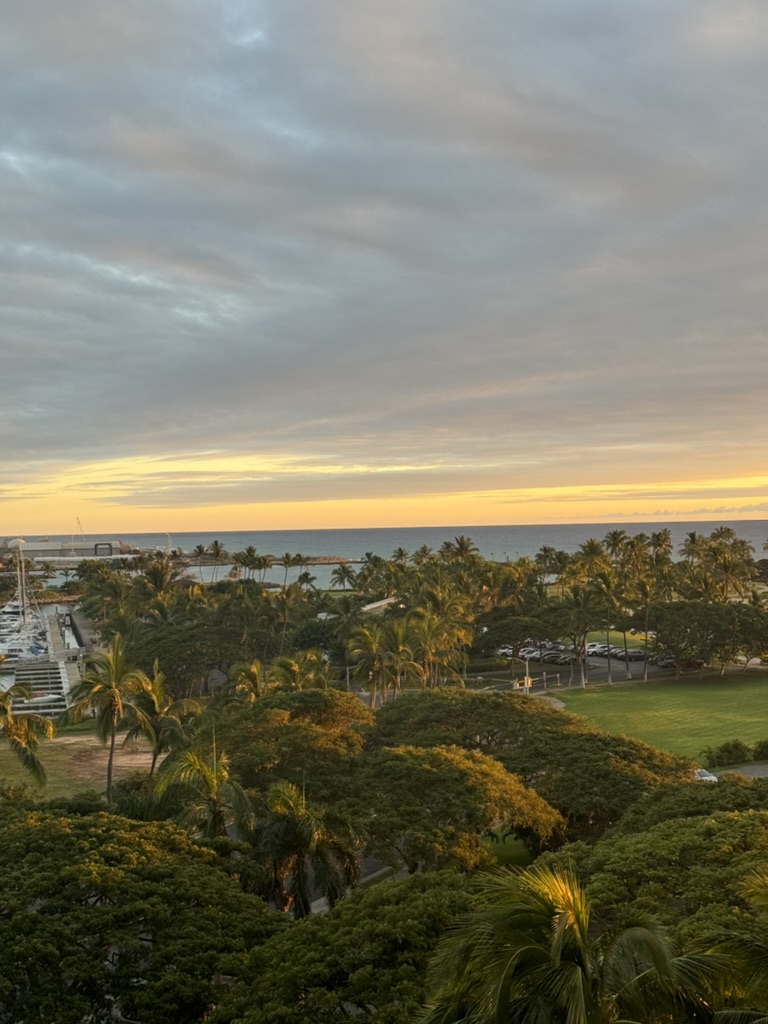
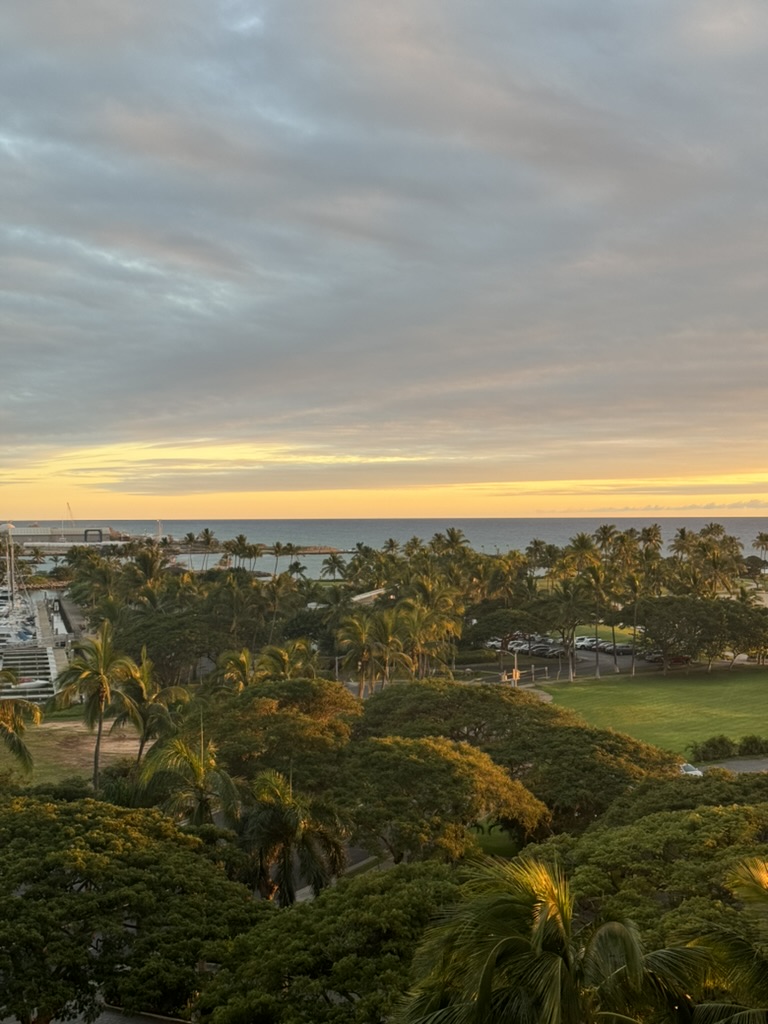
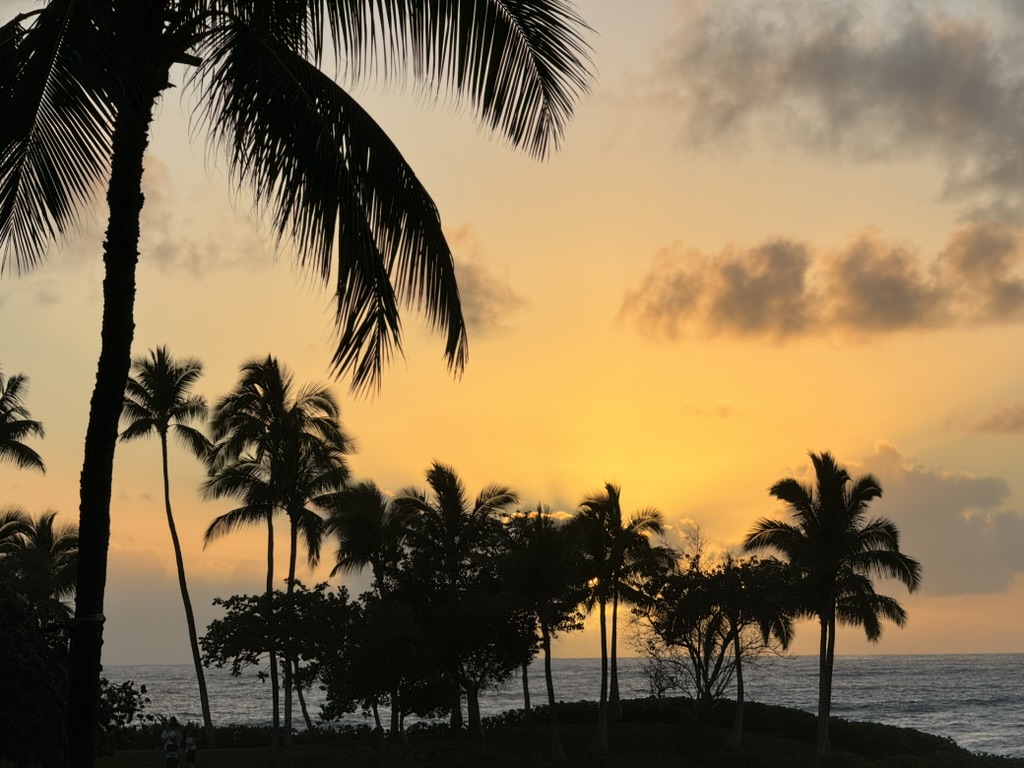
The other piece — and the part of this trip that mattered most — was that I brought my grandfather along. He'd never been to the islands. For a man of his generation that's a lot of life lived without a particular kind of light, and twelve days didn't feel like enough to make up the difference, but it was what we had. My parents came too. We took a Marriott's Ko Olina Mountain View unit, which sounds like the budget category but in practice meant an east-facing balcony over the marina with the Waiʻanae range closing the view in the distance. Most morning light came up against us, leaving us in the shade in the evening. Most evenings the crepuscular rays came in through the cloud deck and the marina turned gold.
Coming in over the Pacific
The flight in is its own thing now. There's a stretch — somewhere west of the Big Island — where the cloud cover thins and the volcanoes break the horizon as low silhouettes a hundred miles out, and you start counting them: Mauna Kea, Mauna Loa, Hualālai. The Big Island is so big it shows up on the horizon before any of the chain it belongs to does.
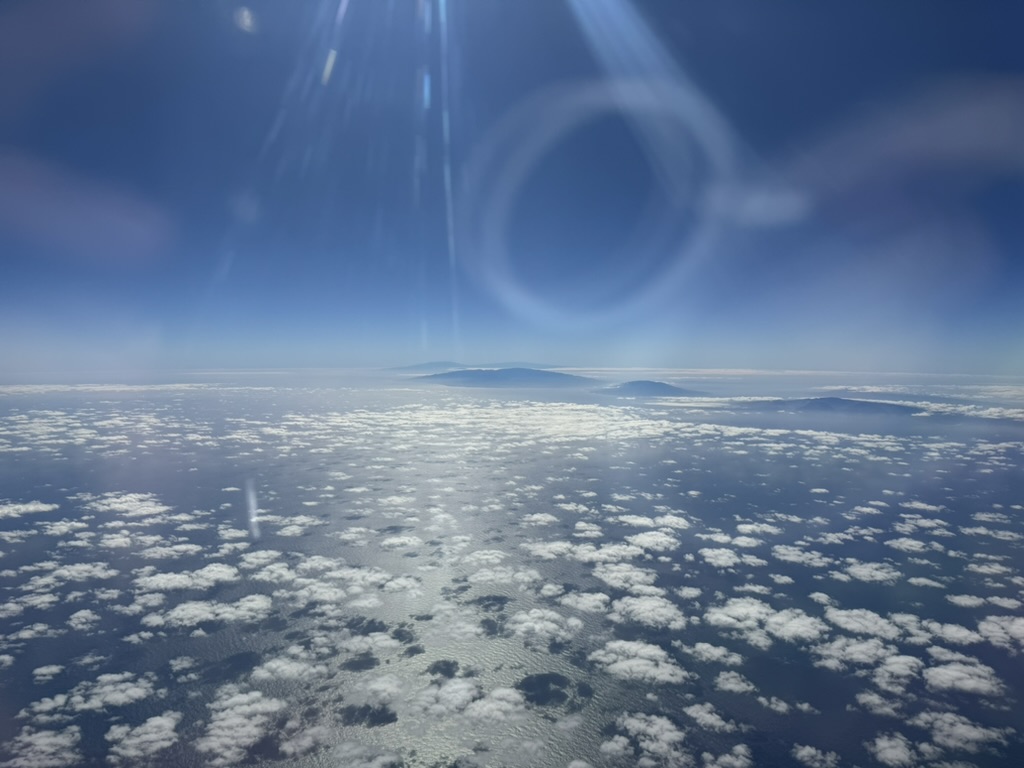
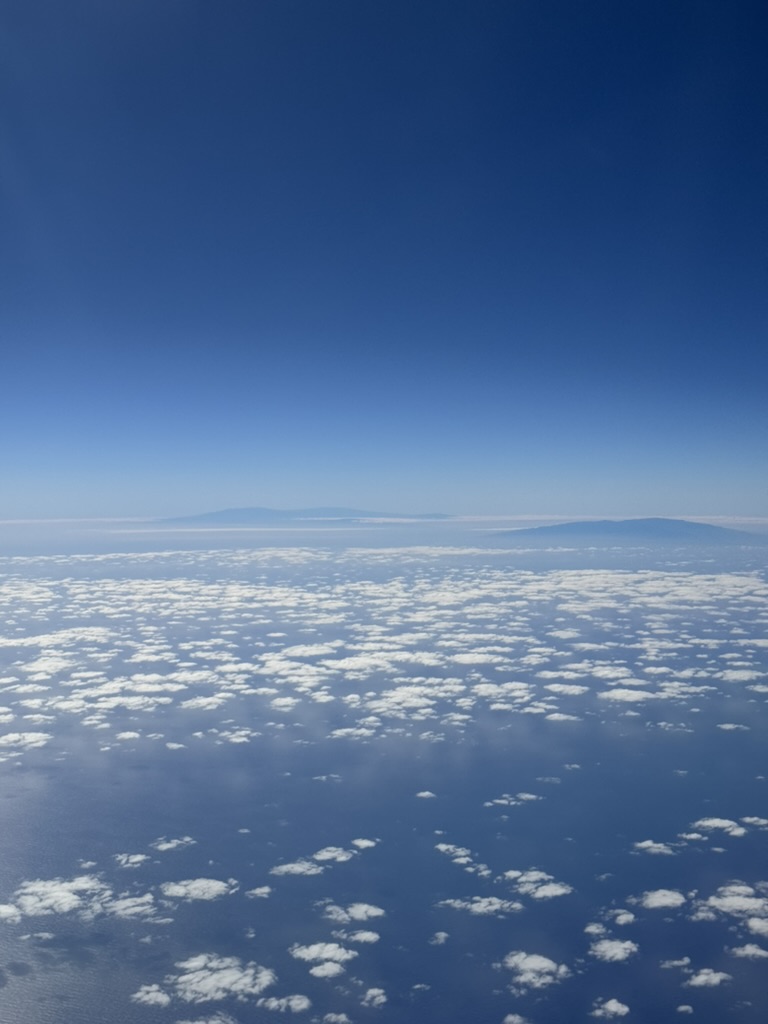
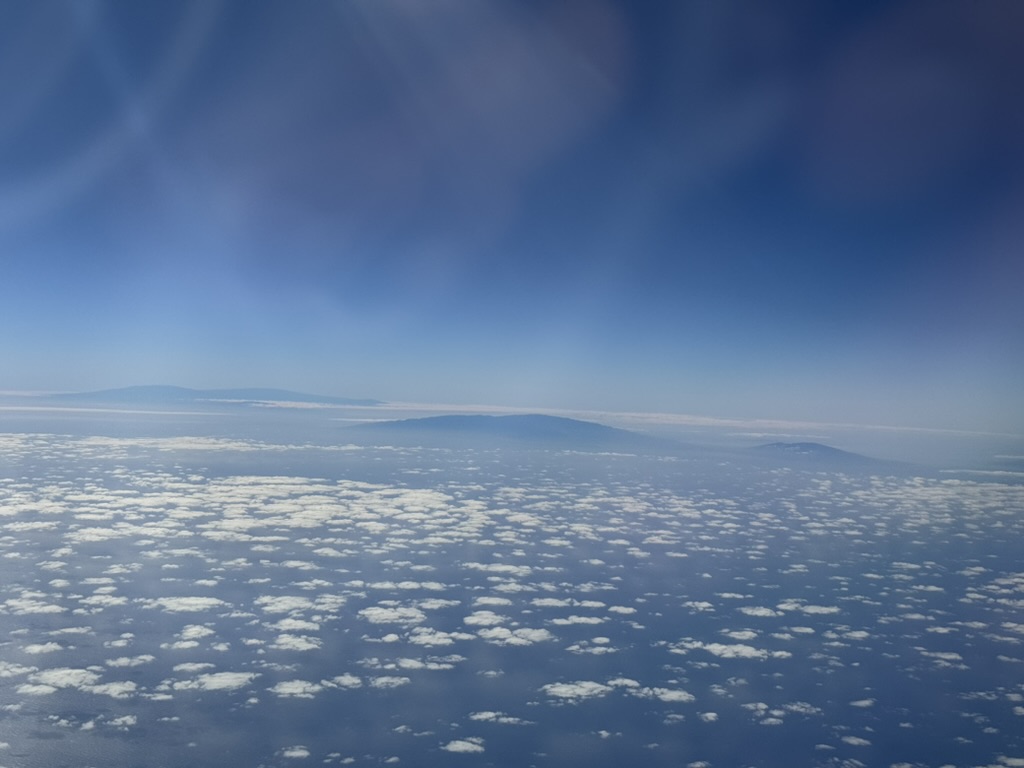
The other thing about the leeward landing into Honolulu is the route. Final approach takes you the long way around the south side of Oʻahu — past Diamond Head, the city beneath you, the Koʻolau ridge breaking through the cloud deck on the far side of the valley. It is a flagrantly unfair view to have through an airplane window:
The Diamond Head crater shows up about a minute in. The city below it is essentially the entire south coast of the island, which from cruising altitude is a useful reminder of how much of Oʻahu is not the parts you fly into.
Pearl Harbor
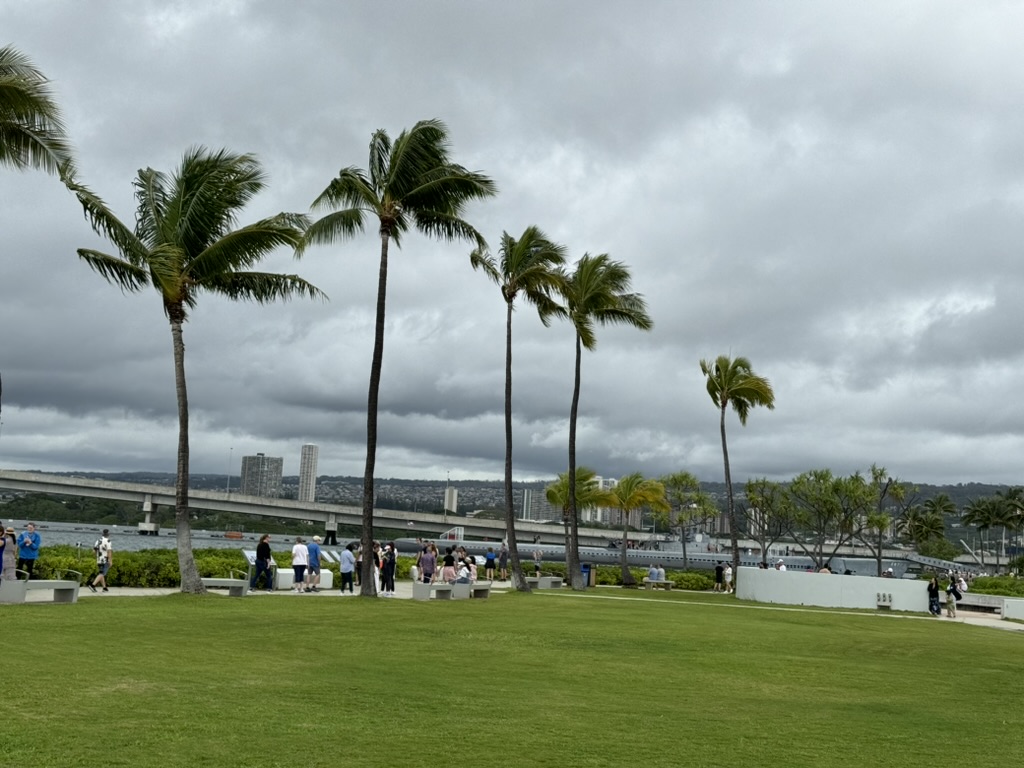
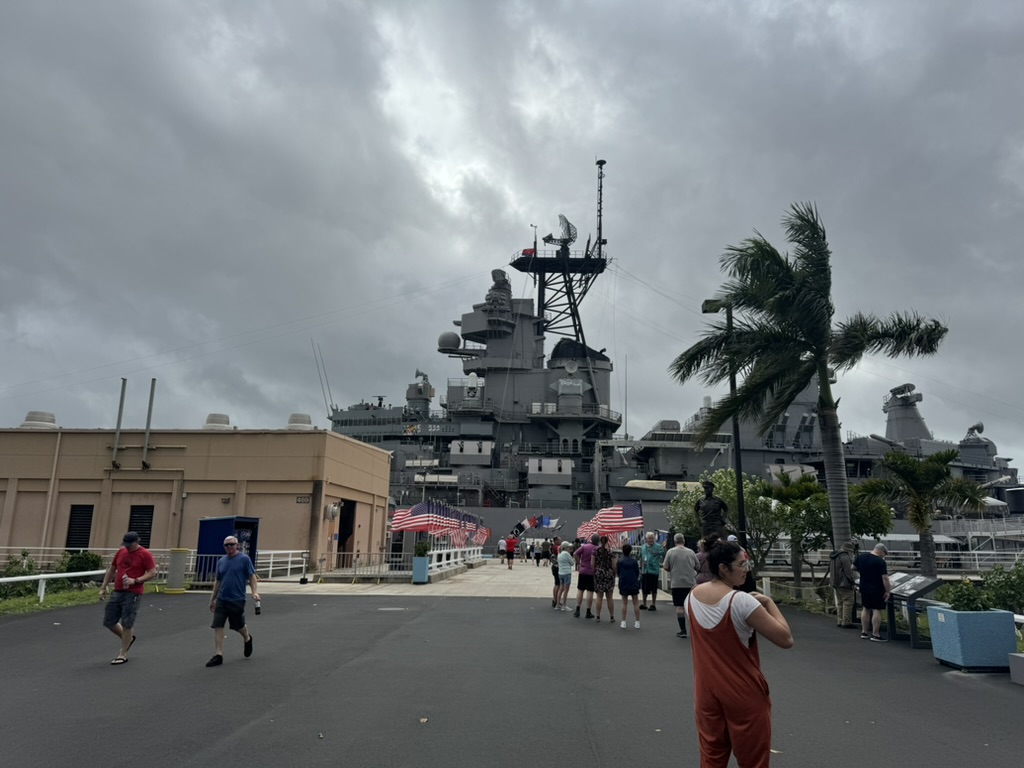
We took my grandfather to Pearl Harbor on the third day. He's of the generation that grew up after the war but inside the long shadow of it, and bringing him to the place itself — to the Arizona Memorial, to the USS Missouri on whose deck the war ended — was the kind of thing I won't try to write up cleanly because it didn't land cleanly. He took it in for a long time. We didn't talk through most of it. There are days that stay with the people who were there.
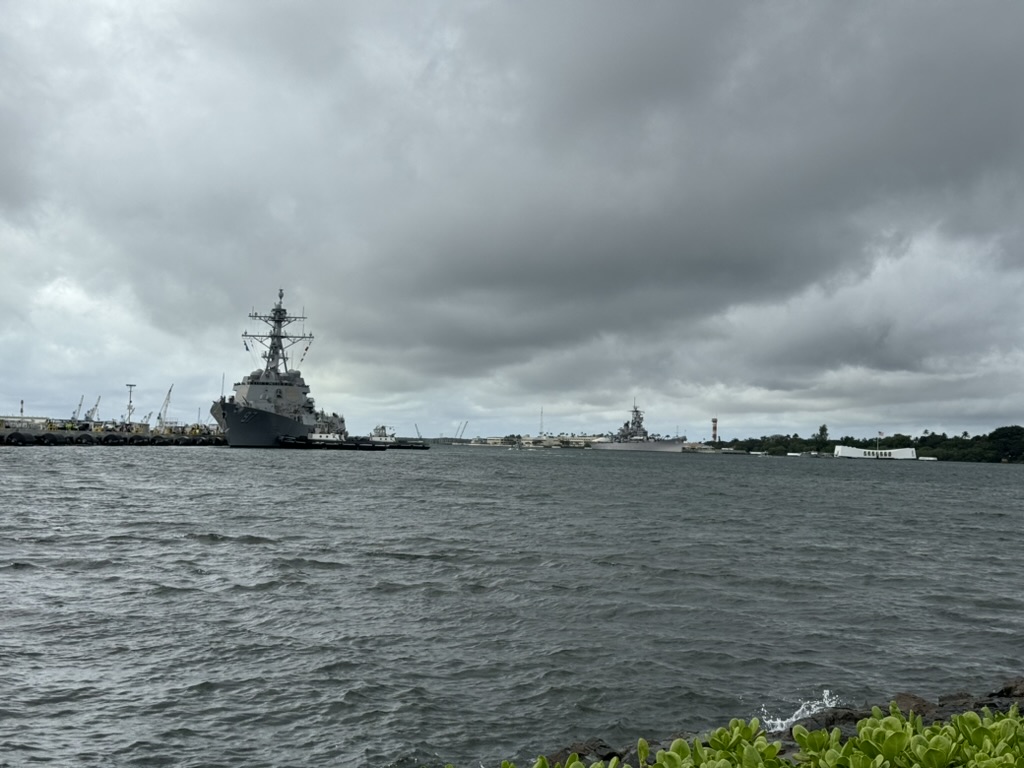
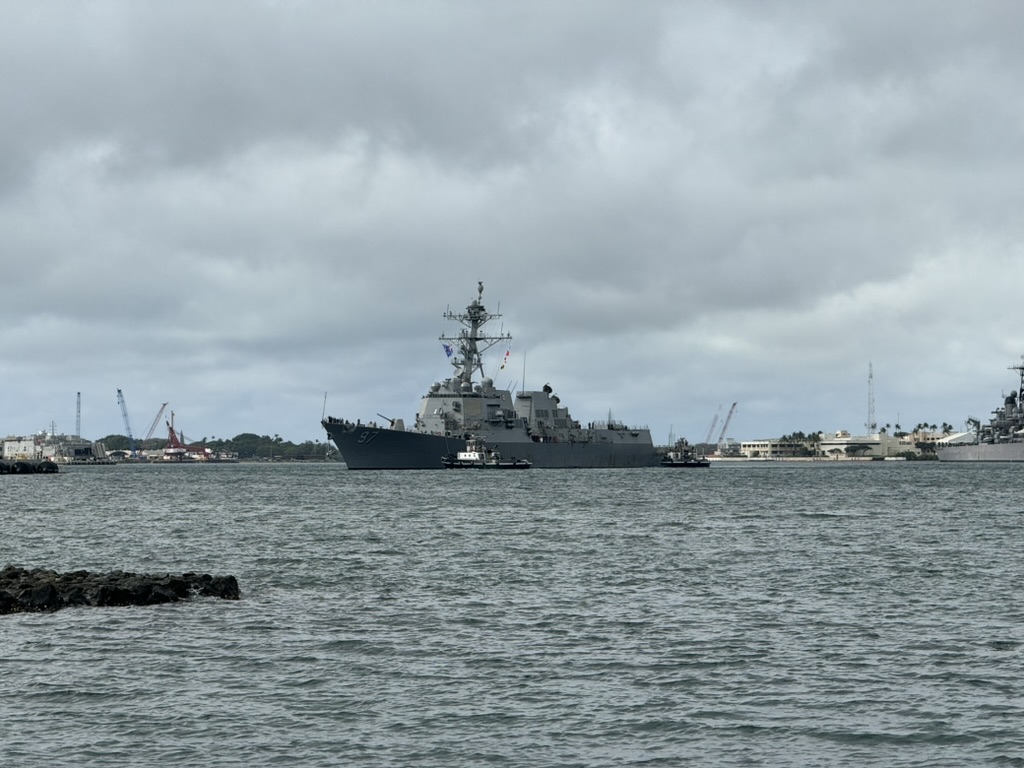
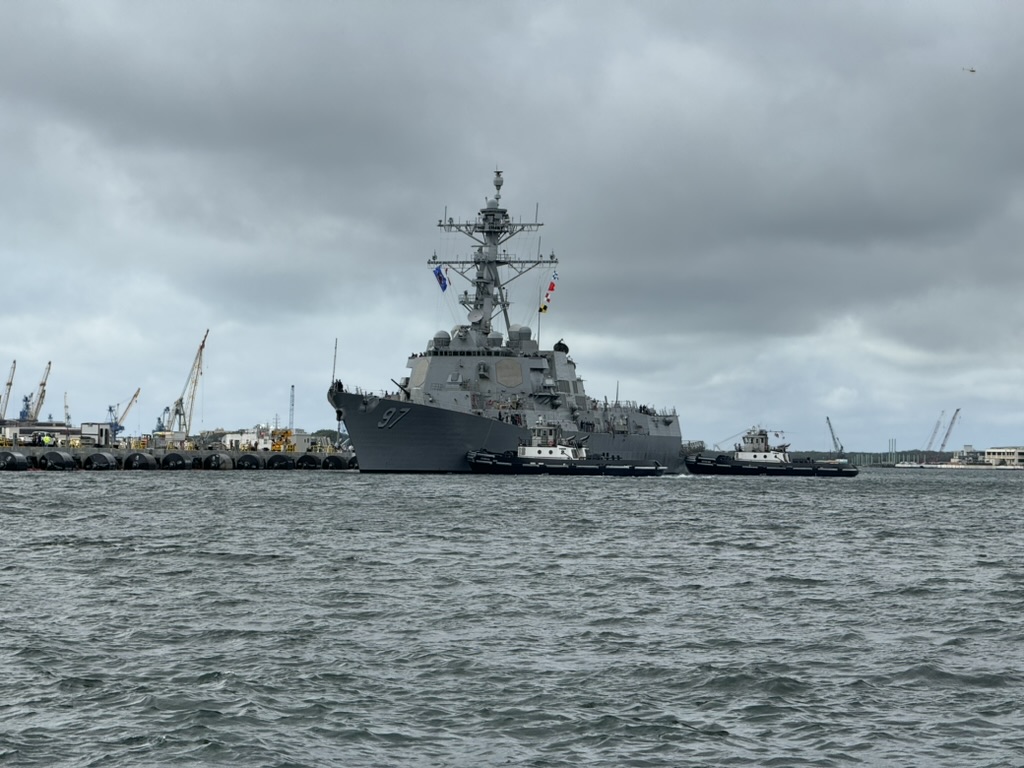
The morning we visited there was an active fleet movement going on across the channel. The destroyer being walked out by tugs is the USS Halsey (DDG-97) — an Arleigh Burke-class guided-missile destroyer homeported at Pearl. They run pretty regularly out of Joint Base Pearl Harbor–Hickam, and you can sometimes catch one being moved if the timing's right. The tug team brings them in and out broadside — the Halsey itself is unpowered for the maneuver, just sitting between two harbor tugs that walk her down the channel like a moving truck through a parking lot.
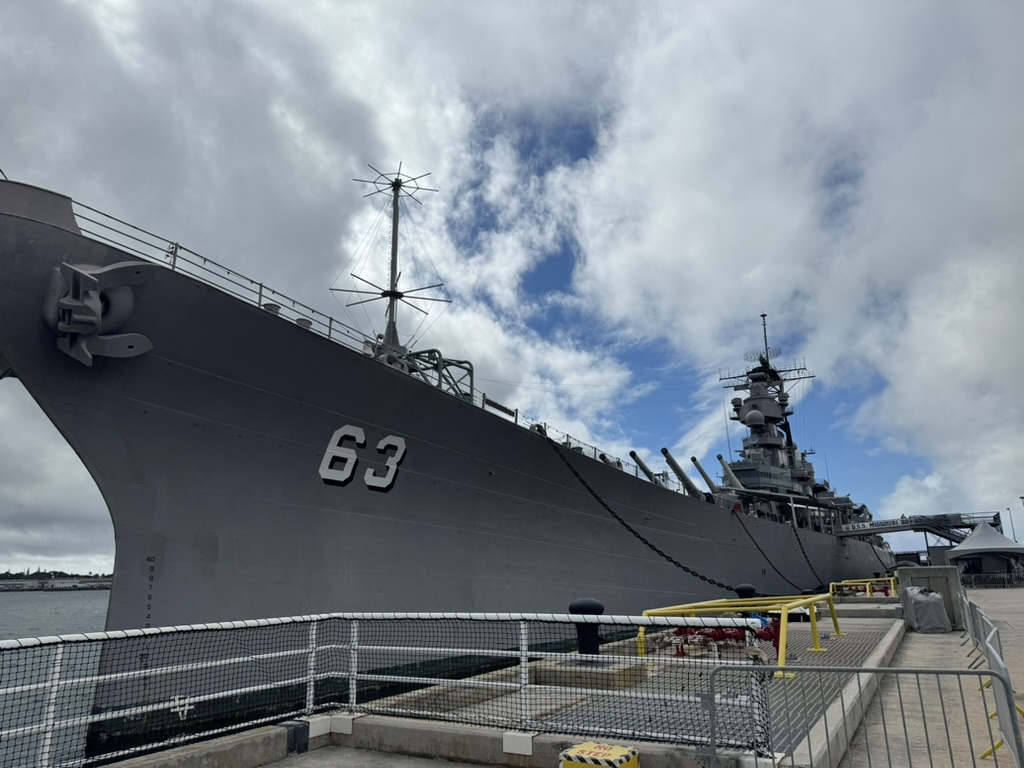
The Missouri is still iconic in person — bigger than every other thing in the harbor, even now, and the bow with the "63" painted on it is the shot you take whether you meant to or not. The flag-lined gangway is the public entry; the surrender-deck plaque is up near the back of the superstructure.
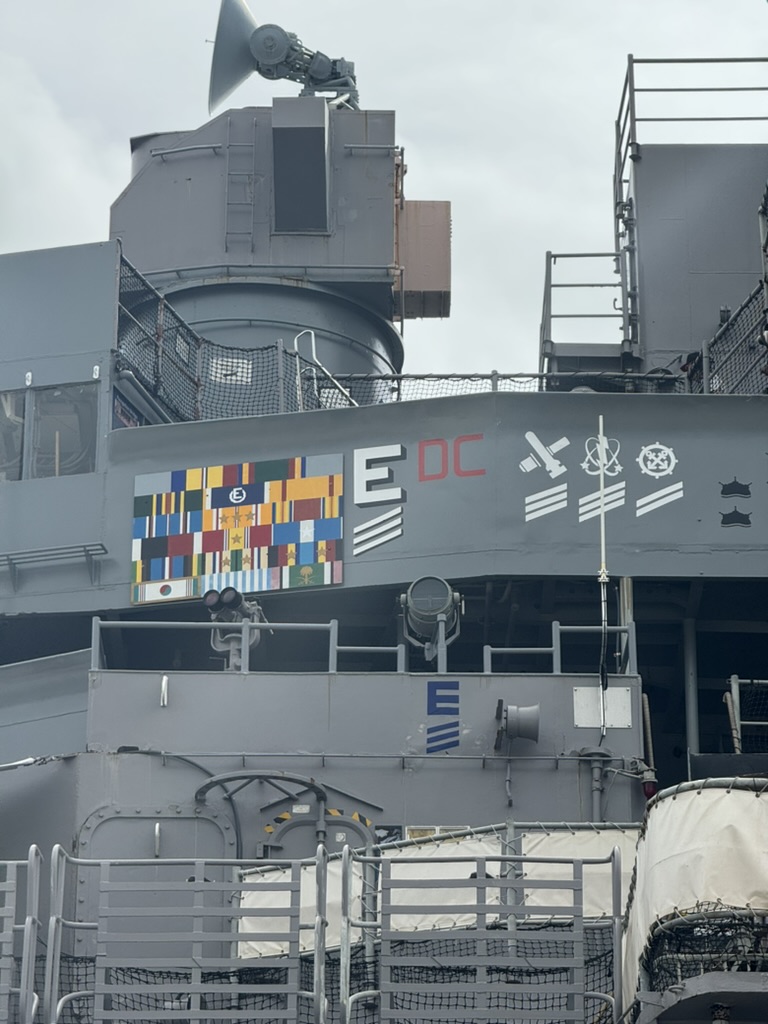
The detail I'd never noticed before was on the side of the bridge structure: a battle effectiveness "scoreboard" showing the unit awards the ship has earned over its career — a column of country flags from the Korean War and Gulf War service, the big stylized E for the Battle "E", the little symbols denoting which department earned which department-level award. The "DC" next to the E is the Damage Control award. The radar/ASW/missile etc. icons under it are the other department-level pennants. I didn't know any of this when I took the photo. I read the whole thing when we got home.
Pali Lookout, and the windward coast
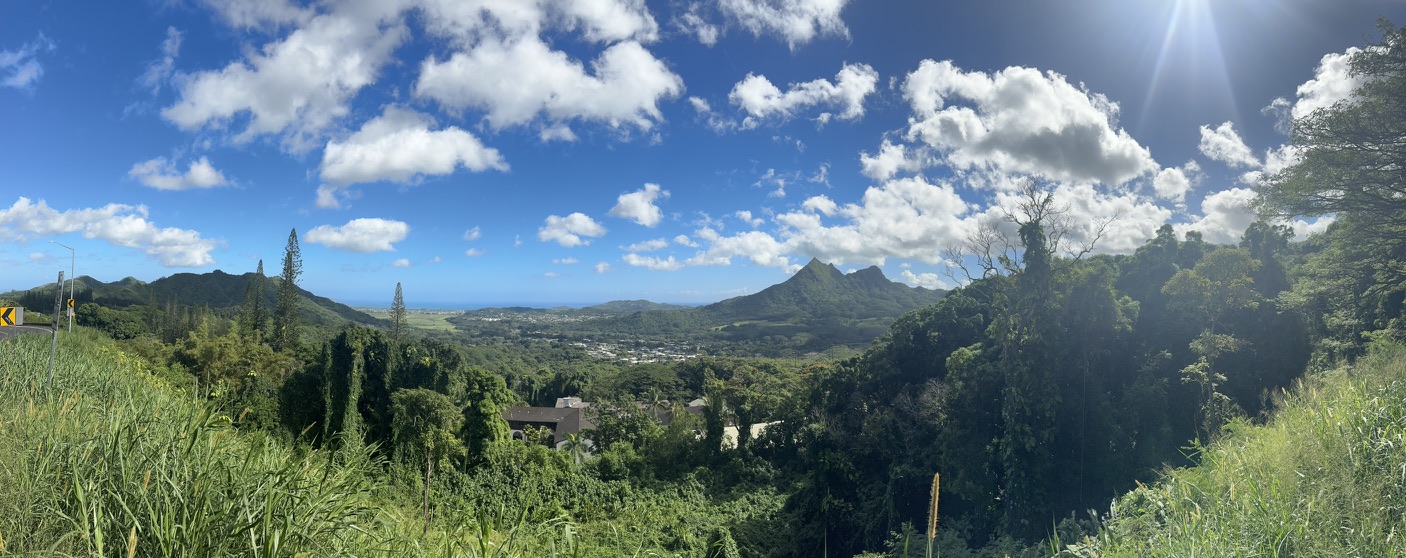
The Nuʻuanu Pali Lookout is the easy day trip from Ko Olina — about forty minutes across the island, a short walk from the parking lot, and one of those spots where the wind picks up enough that you stop trying to keep your hat on. The view drops away to the windward coast: the Koʻolau range running diagonally across the frame, Mokoliʻi ("Chinaman's Hat") visible offshore on a clear day, and Kaneohe sprawling across the floor of the valley.
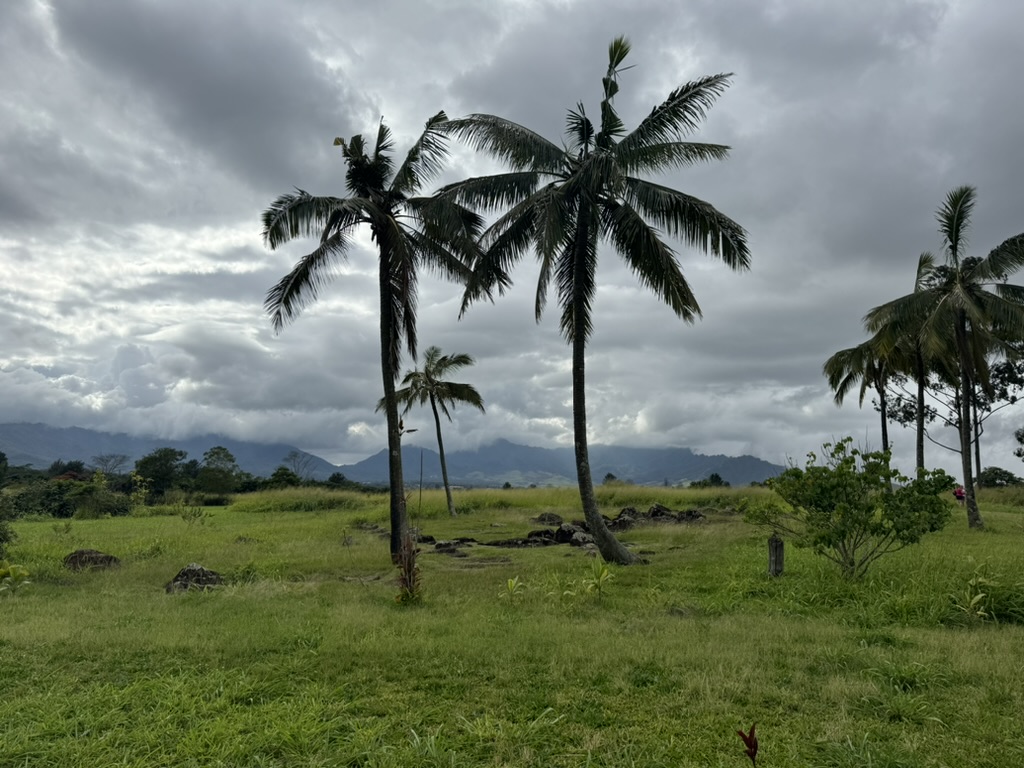
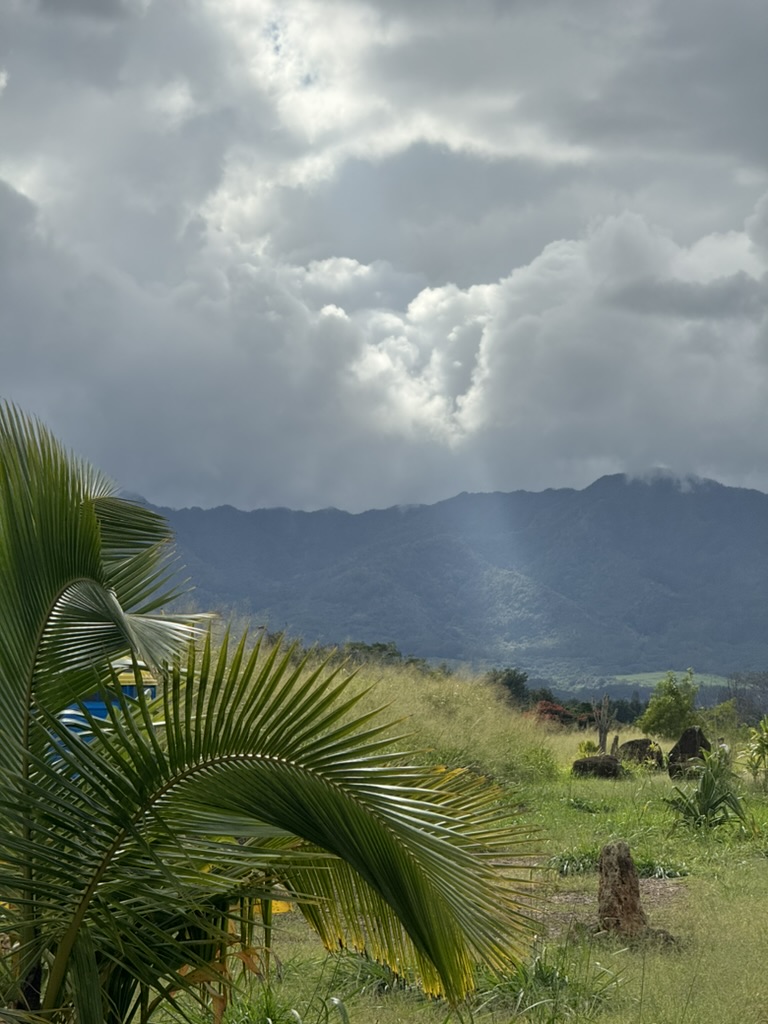
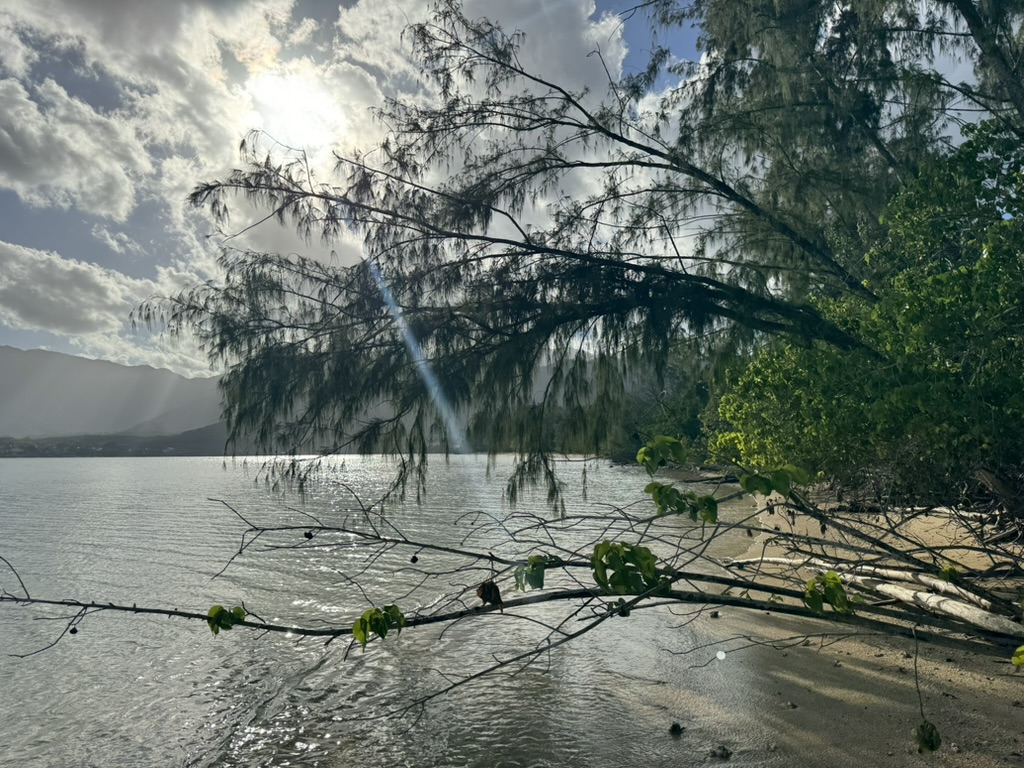
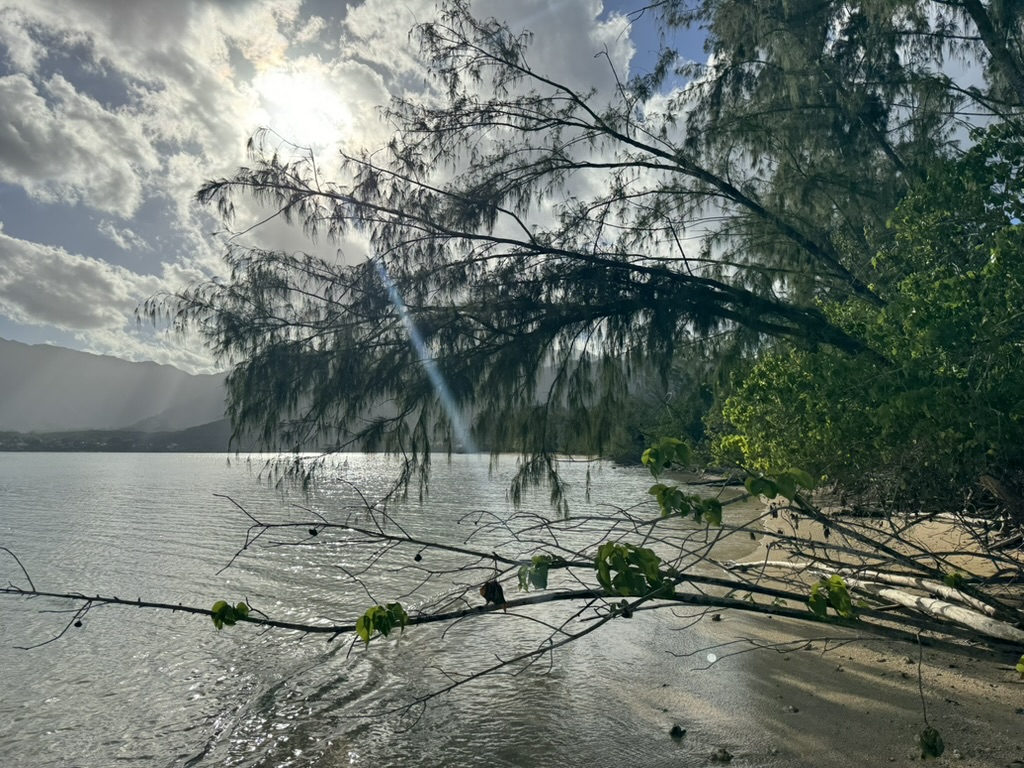
We took the long way back along the windward coast. Past Kāneʻohe Bay the road turns into one of those drives where you keep wanting to pull over — every turnout is a different cropping of the same ridge, every stretch has a different wash of weather running across it. The quiet beach below was somewhere along Kualoa — the casuarina (ironwood) trees grow right out into the sand, and the wind off the bay pushes them sideways into the shape they take.
Lanikai, and the ones called the Mokes
Old stomping ground. Lanikai Beach was on the 2023 trip and it was on this one too — there's a version of "going back to a place you know" that gets accused of being unimaginative, and there's a different version that just acknowledges the beach is that good and doesn't owe an explanation. Lanikai is the second kind. The two islands offshore are the Mokulua Islands — locally the Mokes — and the water really is that color, every time, and the sand really is that white, every time, and you really can see your own feet through the surf. The beach itself is residential — there's no parking lot, you walk in through a public access between two of the hillside houses — and that filter alone keeps the crowd manageable.
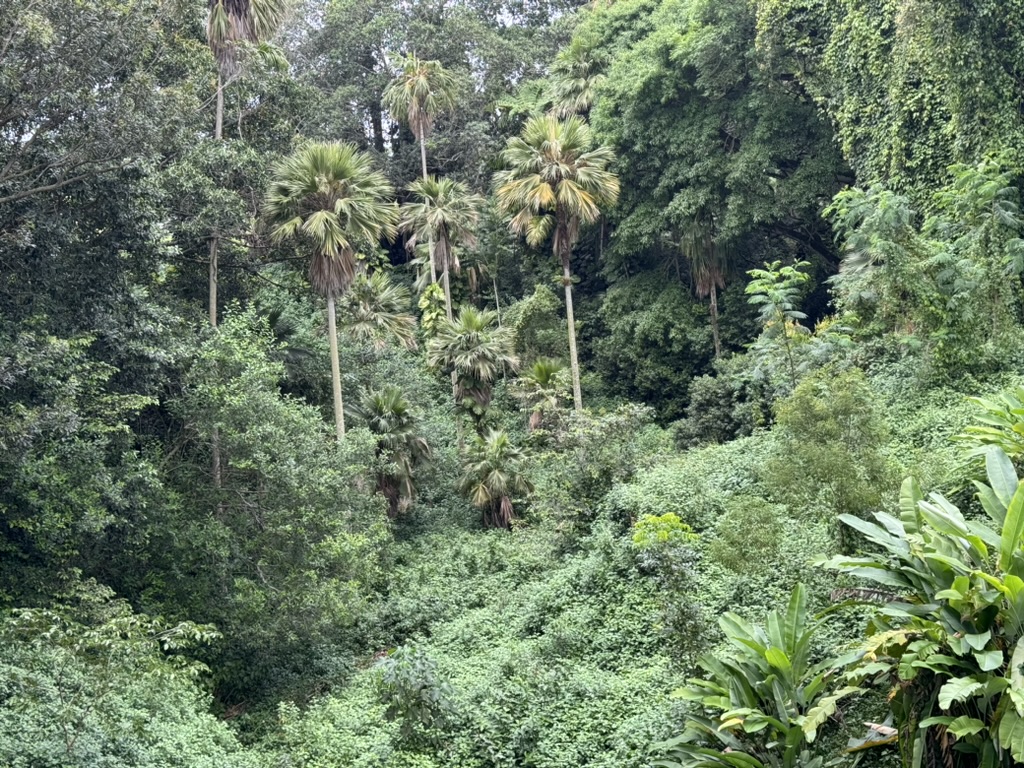
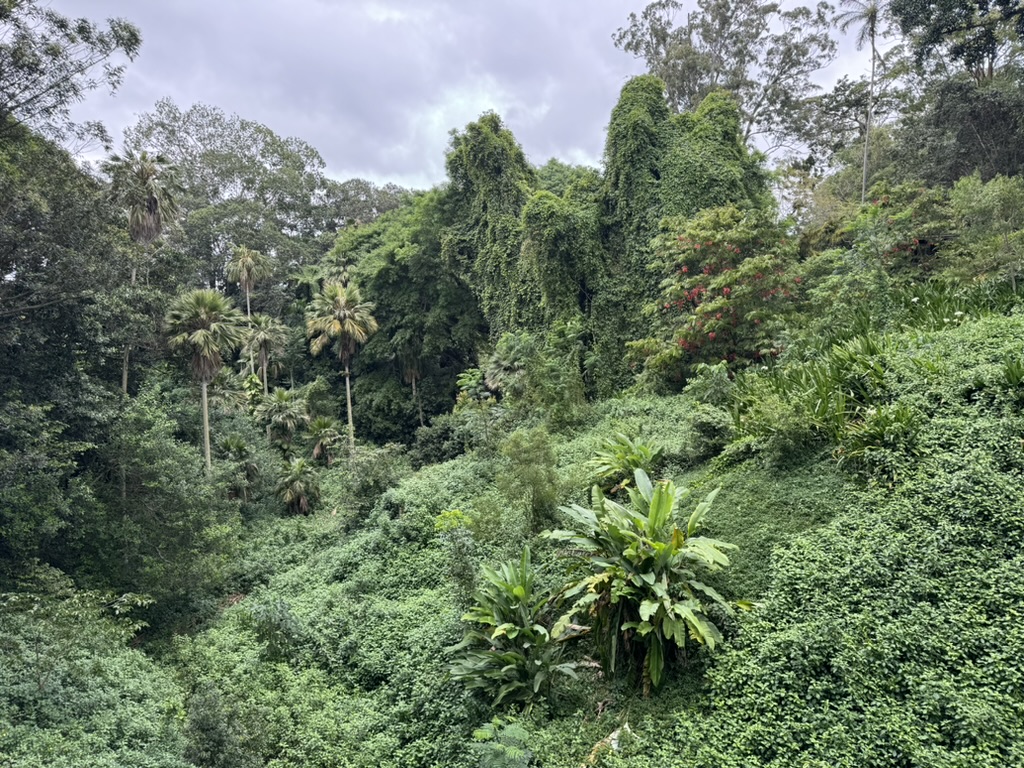
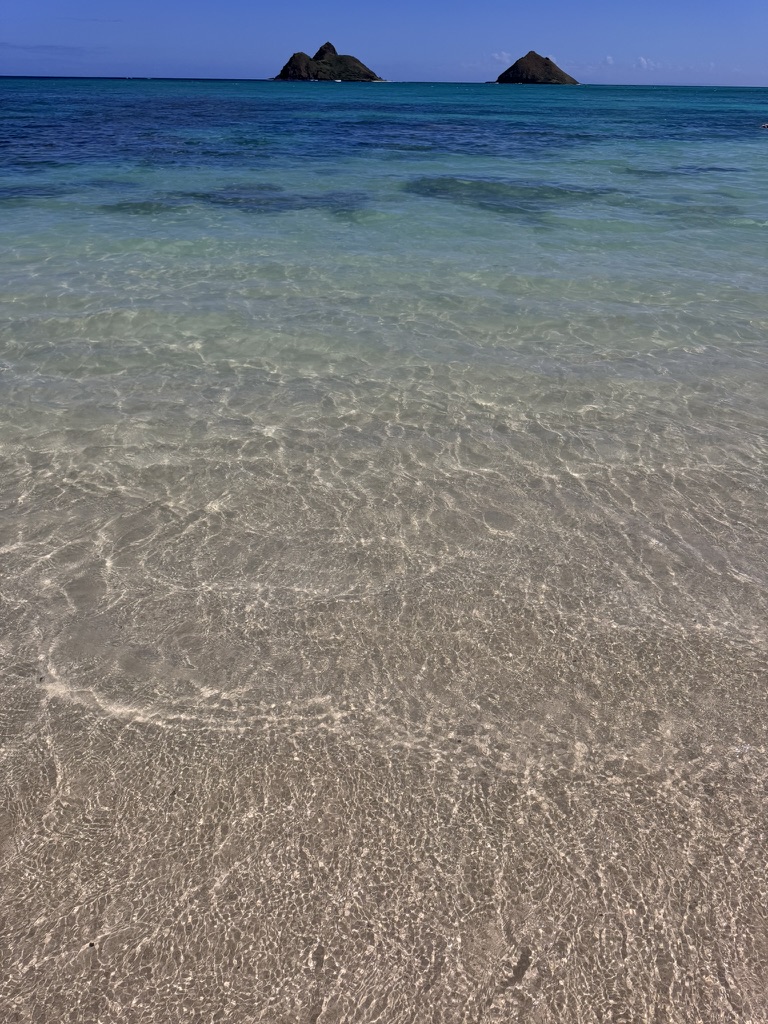
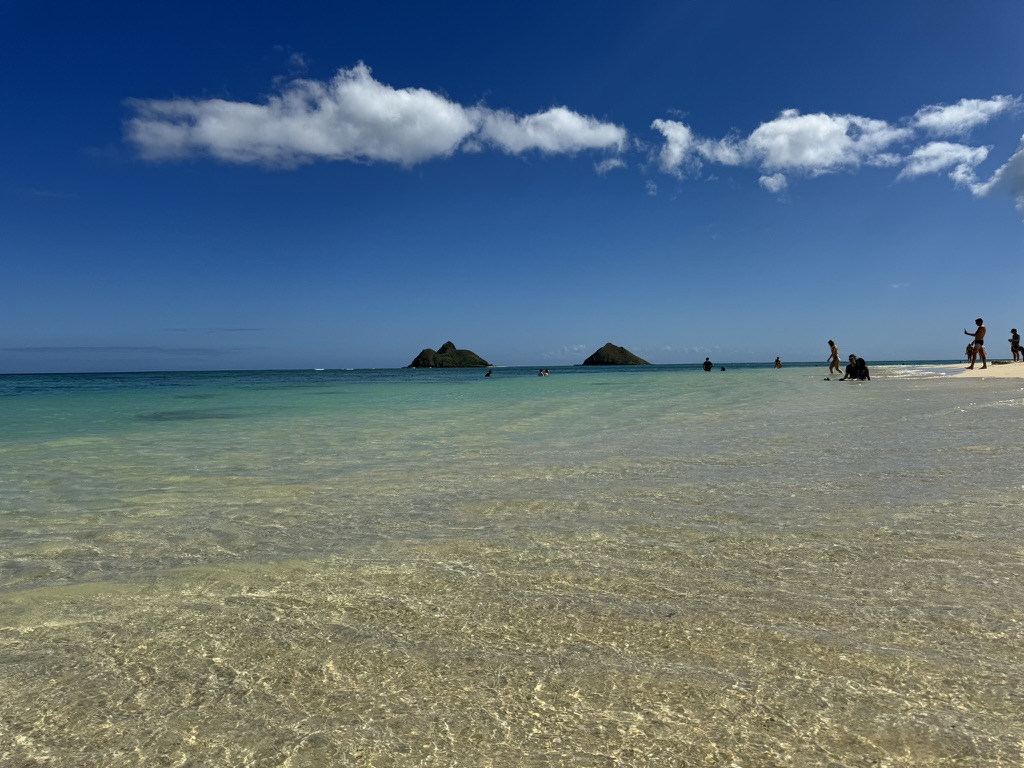
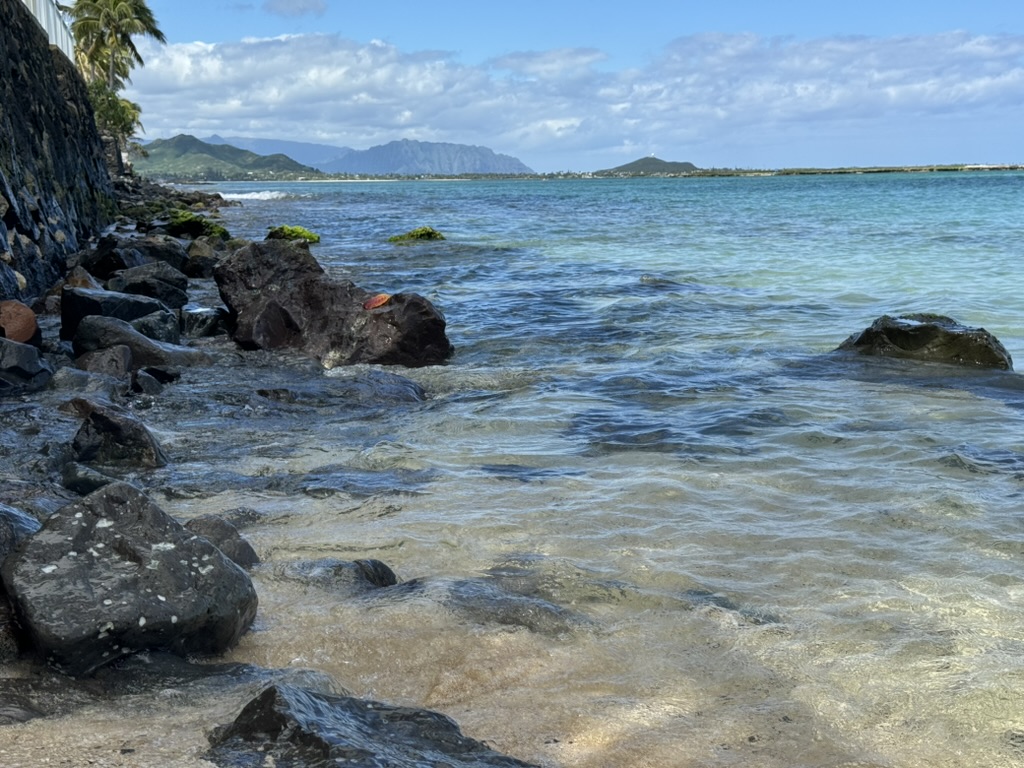
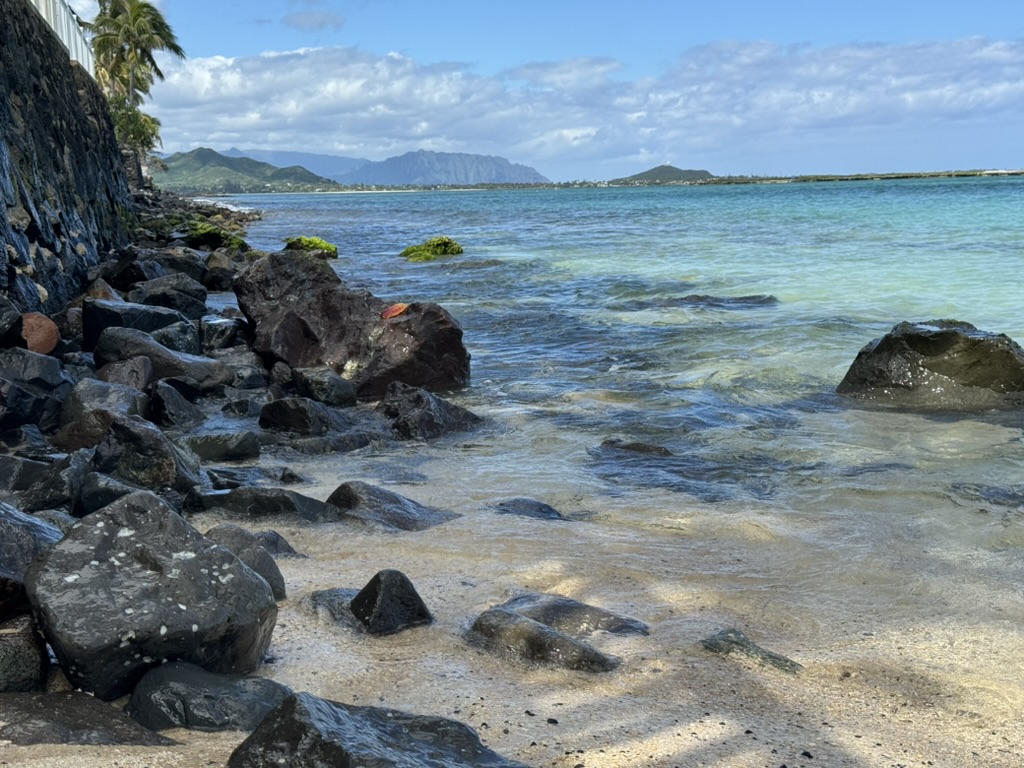
A little further down, at the Kailua end of the windward coast, the shoreline turns rocky and the Koʻolau ridge sits across the back of the frame. Tide pools, reef, a coconut washed up here and there. Same ocean, very different beach.
Makapuʻu, and the cliffs at the eastern point
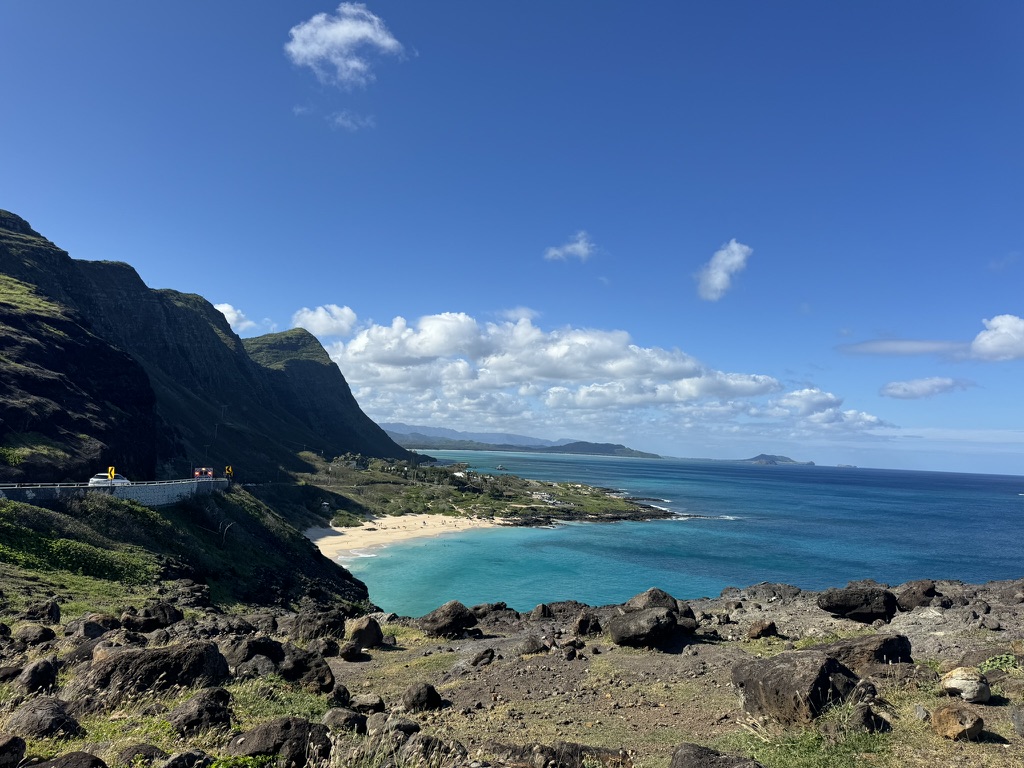
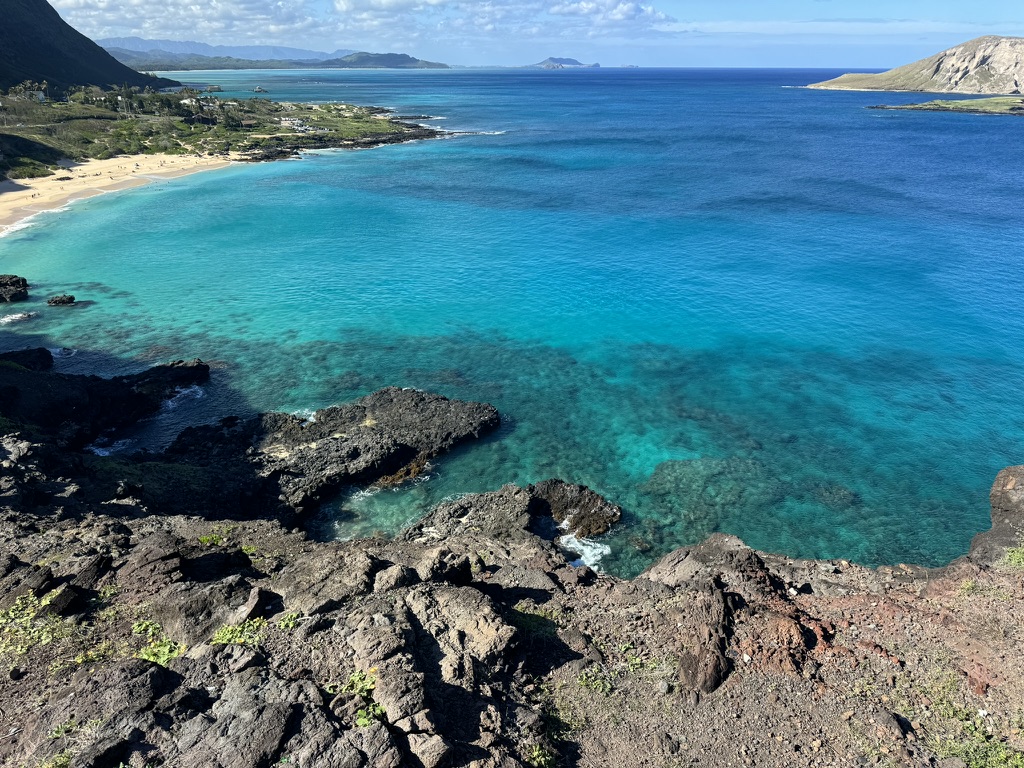
The eastern tip of Oʻahu is where the island runs out and the open Pacific takes over. The Makapuʻu Lookout is a short pull-off above Makapuʻu Beach and the Mānana ("Rabbit") and Kaohikaipu islets just offshore. The water down there reads emerald even on an overcast hour because the reef structure is shallow and full of light — the green isn't a color cast, it's the sand and reef showing through.
Diamond Head
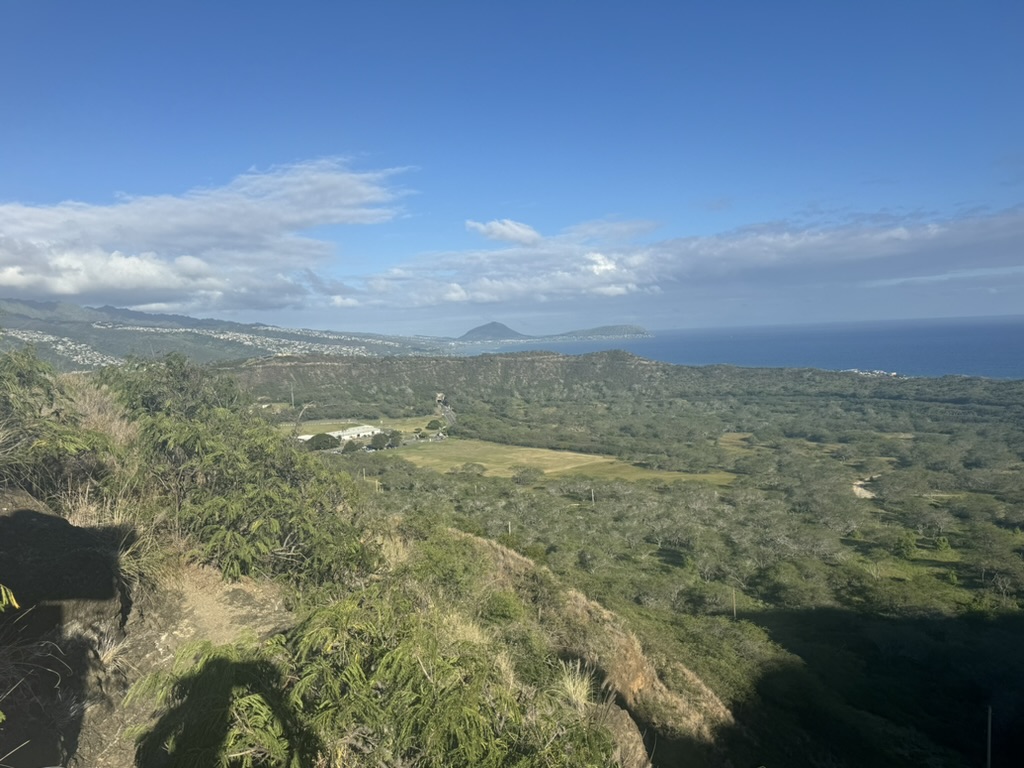
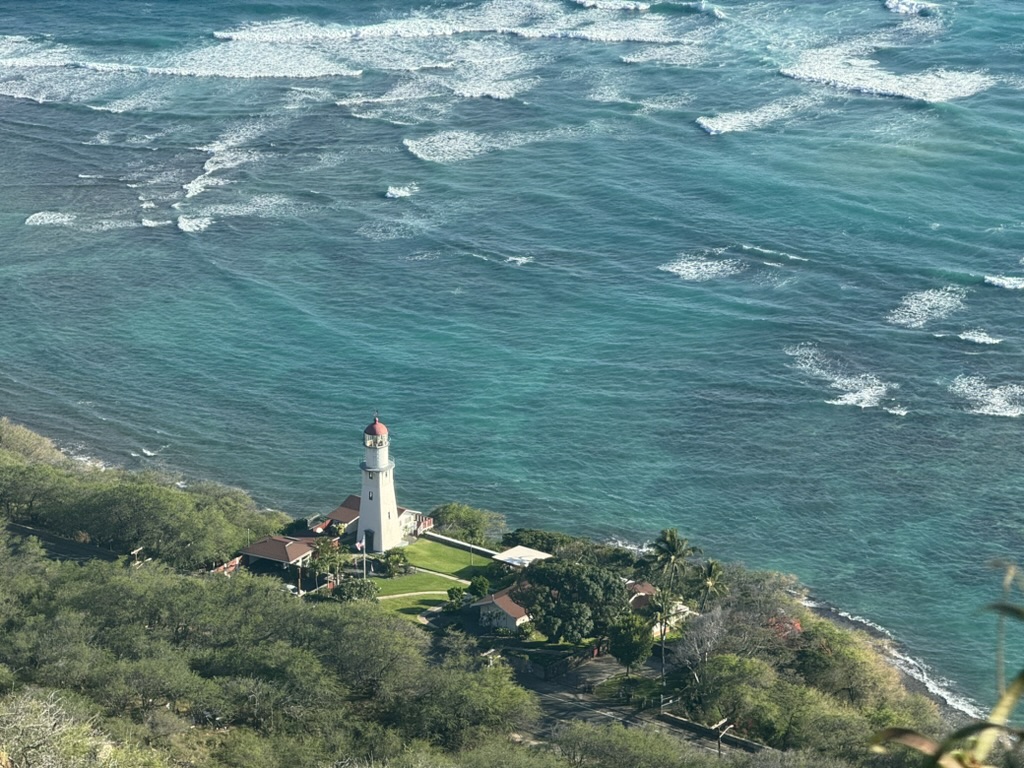
Then we drove back across the island and walked up Lēʻahi — Diamond Head — late enough in the afternoon that the trail crowd had thinned out and the light was starting to soften. It's a steep little hike to the rim — a series of switchbacks and a few flights of metal stairs through old Coastal Defense System bunker structures left over from the 1900s — and the payoff at the top is the view that's on every postcard from Honolulu, plus the views behind you that aren't.
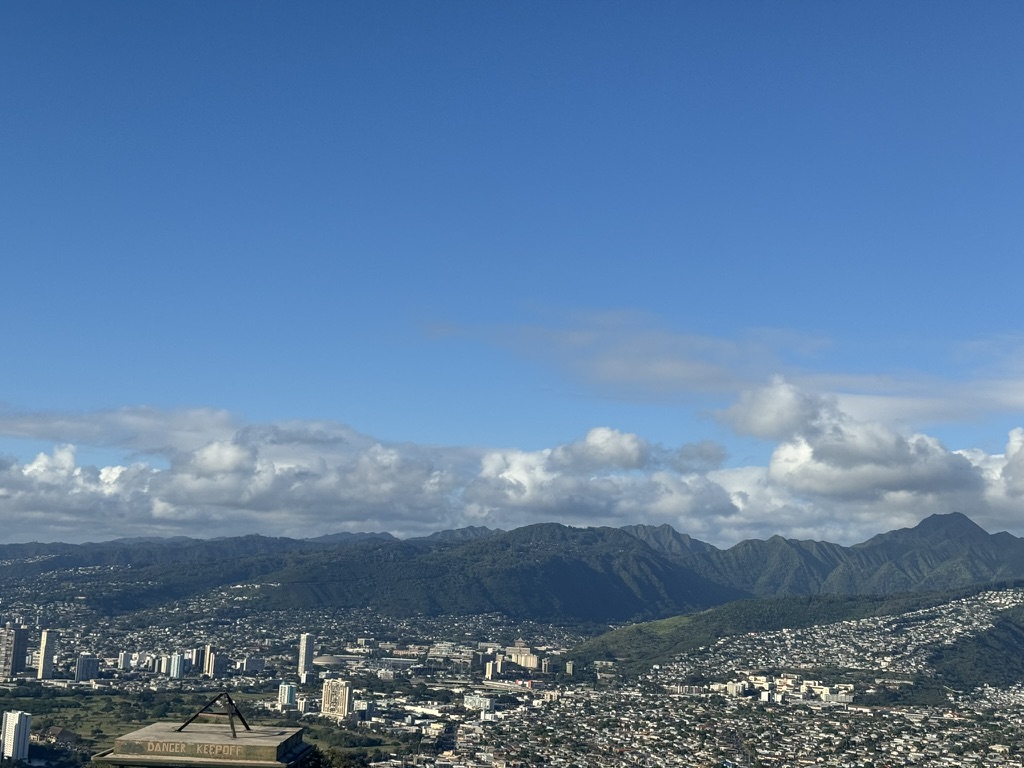
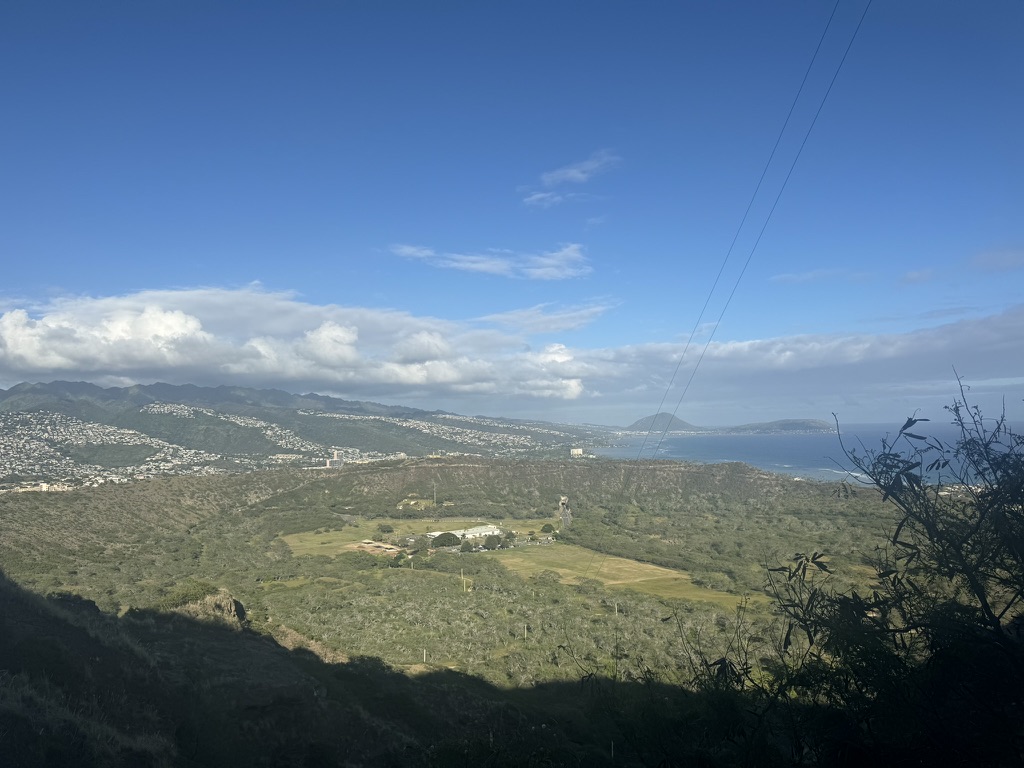
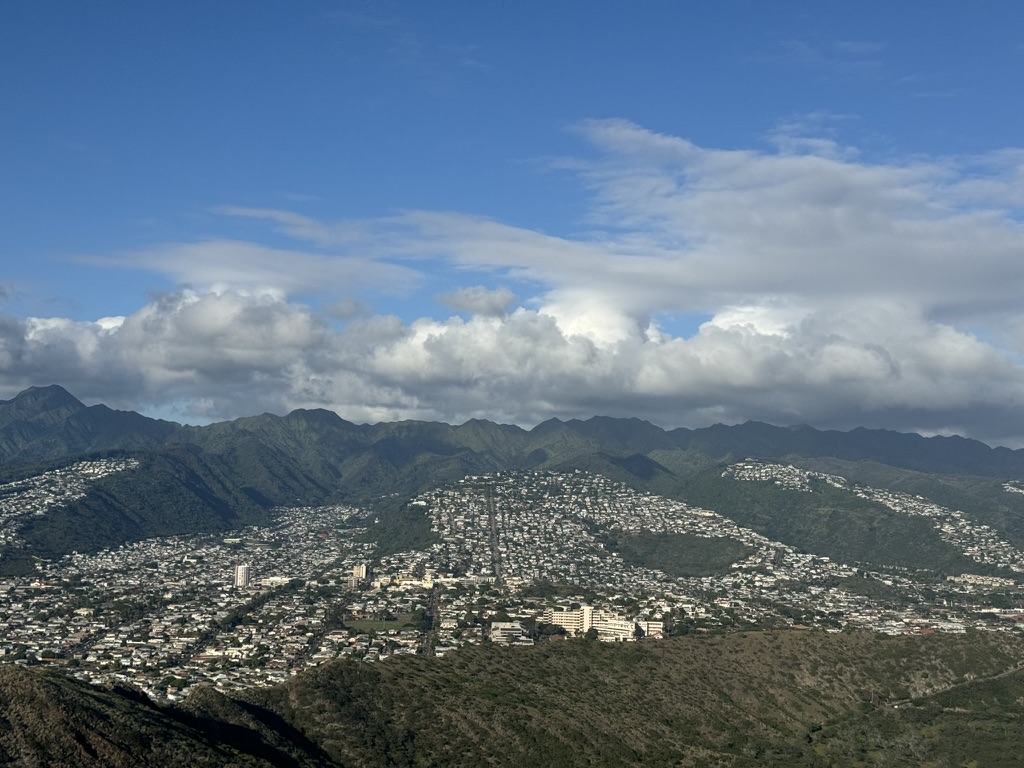
The "behind you" view is honestly the better one. The city of Honolulu spreads out across the floor of the Mānoa Valley and the Koʻolau range rises wall-of-green behind it. From the rim it reads like a model — you can pick out the Punchbowl crater, the Aloha Tower, the white blocks of Waikīkī if the haze isn't too thick. Diamond Head is the photo. Honolulu is the place.
The room, and the marina
The Mountain View room category at Ko Olina is the budget-conscious tier on the booking flow, and the rooms themselves are sometimes a little smaller, but the view actually kind of works for me. The Kalaeloa marina sits at the foot of the property; the harbor cranes a few miles further on; the Waiʻanae range walls off the back of the frame. The sun rises and sets in places that aren't the ocean side, but the light still does most of what makes you want a Ko Olina balcony — gold at dawn over the marina, soft pastels at dusk against the mountain, and the harbor out there sitting still while everything around it shifts.
The koi pond, and the bartender
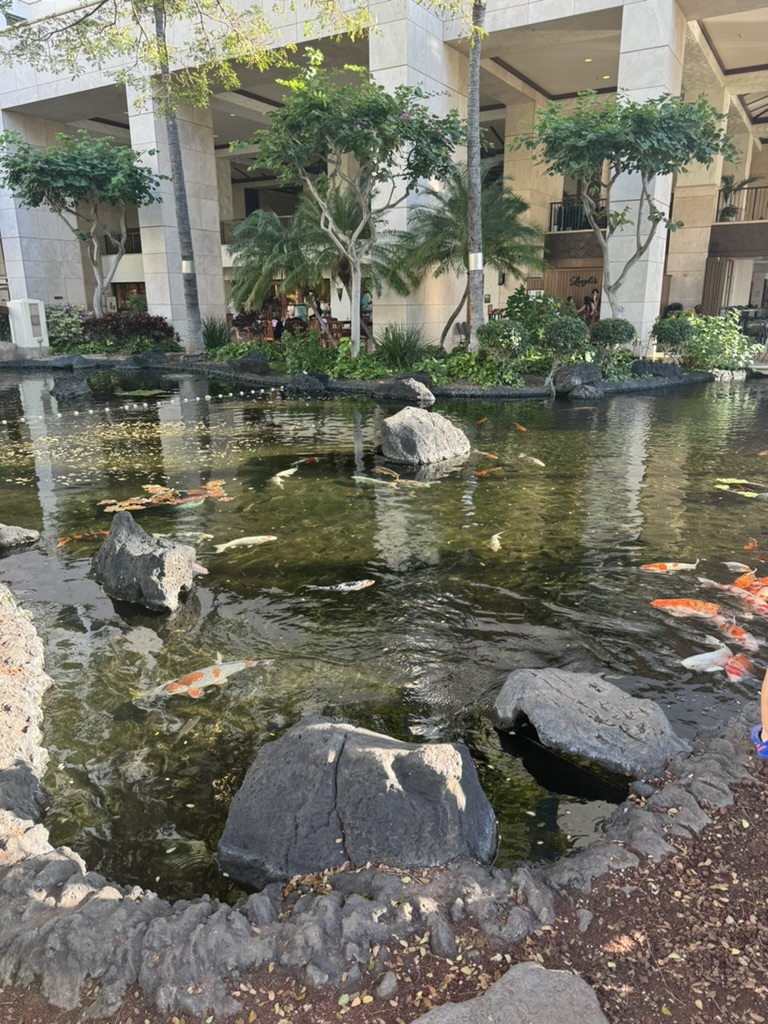
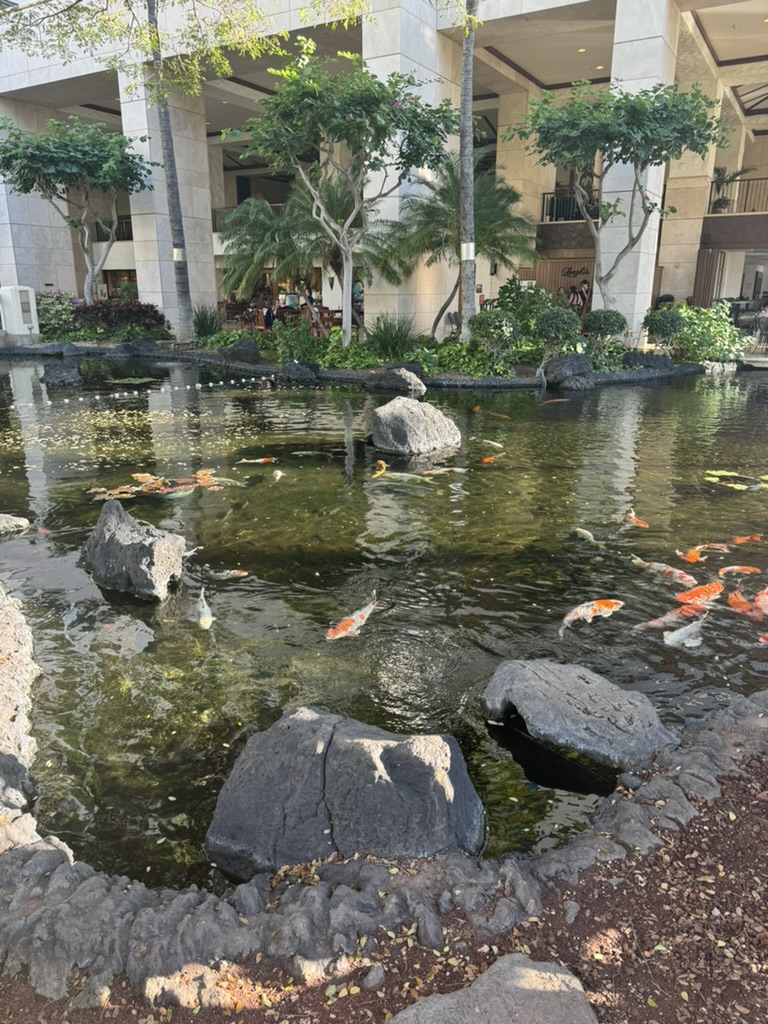
The resort lobby has a koi pond running between the two main building wings. It's one of those little design choices that doesn't seem load-bearing on the brochure but ends up being the place you find yourself stopping every time you walk through. The koi don't do much. That's the point.
The other piece of the resort that quietly turned out to be the best part of the trip was the small bar by the pool. My grandfather is not a man who chases the spotlight — he's spent most of his life in plain trades and quiet rooms — and he found the bartender there immediately. They hit it off the first afternoon, and from then on most evenings he'd walk down with a book or without one and the bartender would already be pouring whatever it was they'd settled on. They didn't have a lot in common on paper. They had a lot in common at the bar.
There's something about Marriott's staffing tradition at properties like this — the bartenders, the front-desk crew, the grounds staff — that makes the place feel less like a resort and more like a small town with a long memory. They knew his name by the second night. They asked about him on the morning we left. I have not stopped thinking about that moment since.
Sunset, every day, for a week and a half
The leeward side of Oʻahu makes a particular kind of sunset. The lagoons face roughly west, the rocky outcrops are exactly where you want them, the trade winds usually leave you with enough cloud structure to give the colour somewhere to land, and you end up taking a hundred sunset photos a week without meaning to. I'm not going to apologise for that.
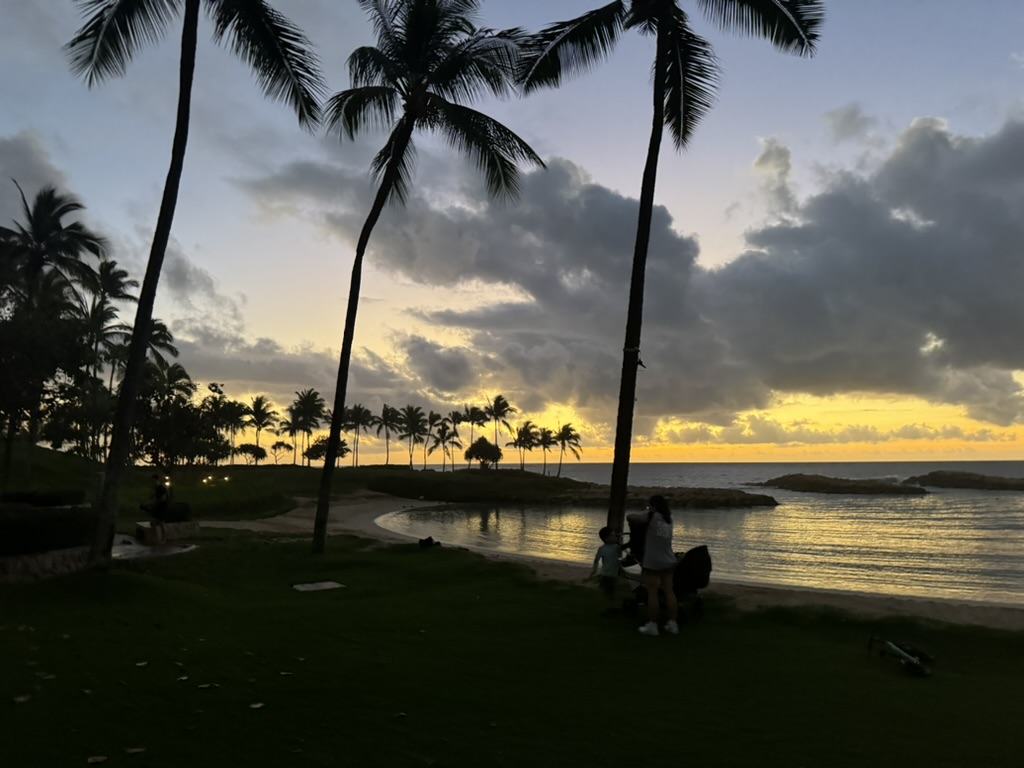
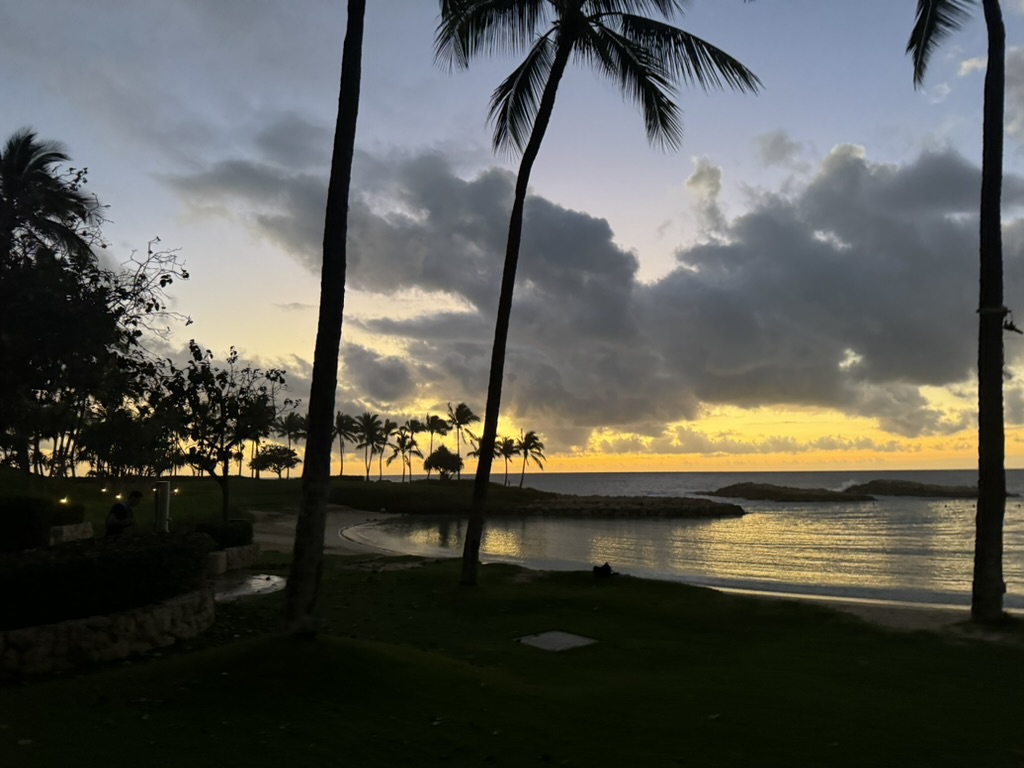
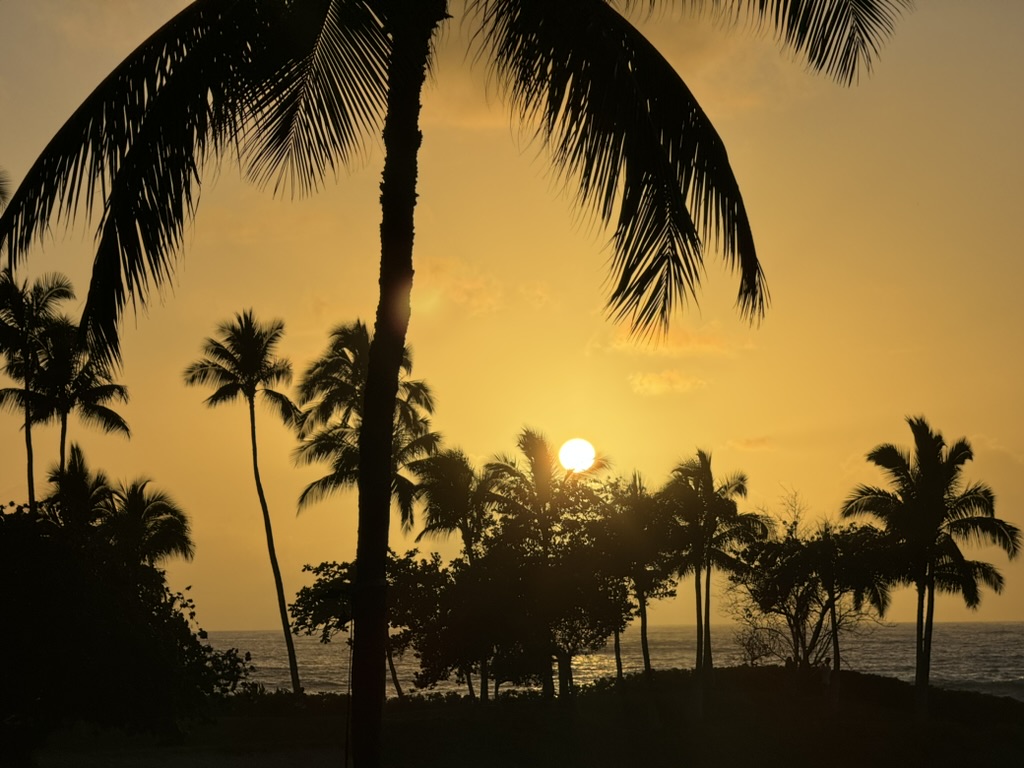
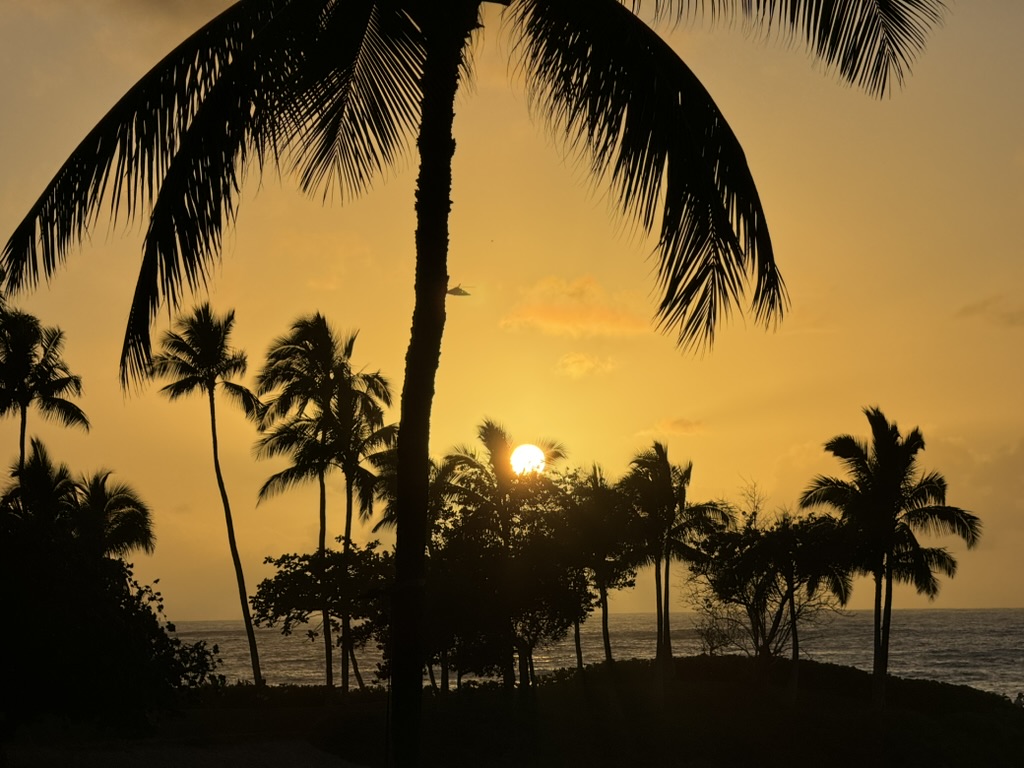
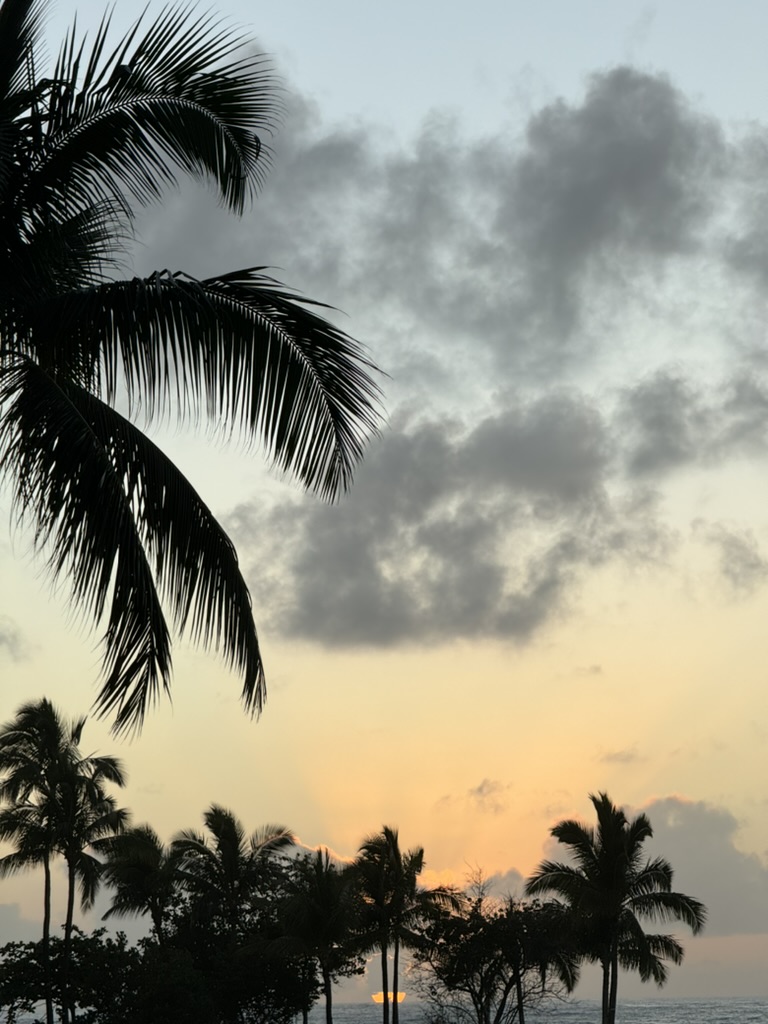
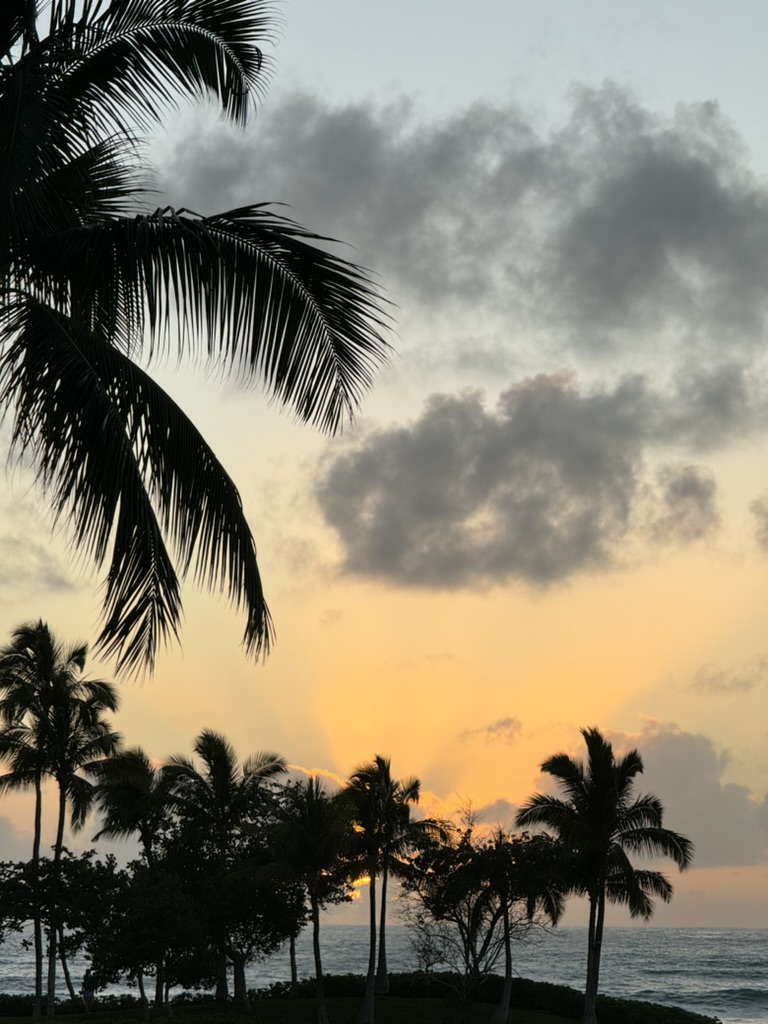
A short clip from one of those evenings — the sky still working through its colour wheel after the sun went under, the surf rolling in soft, the lagoon going dark in stages.
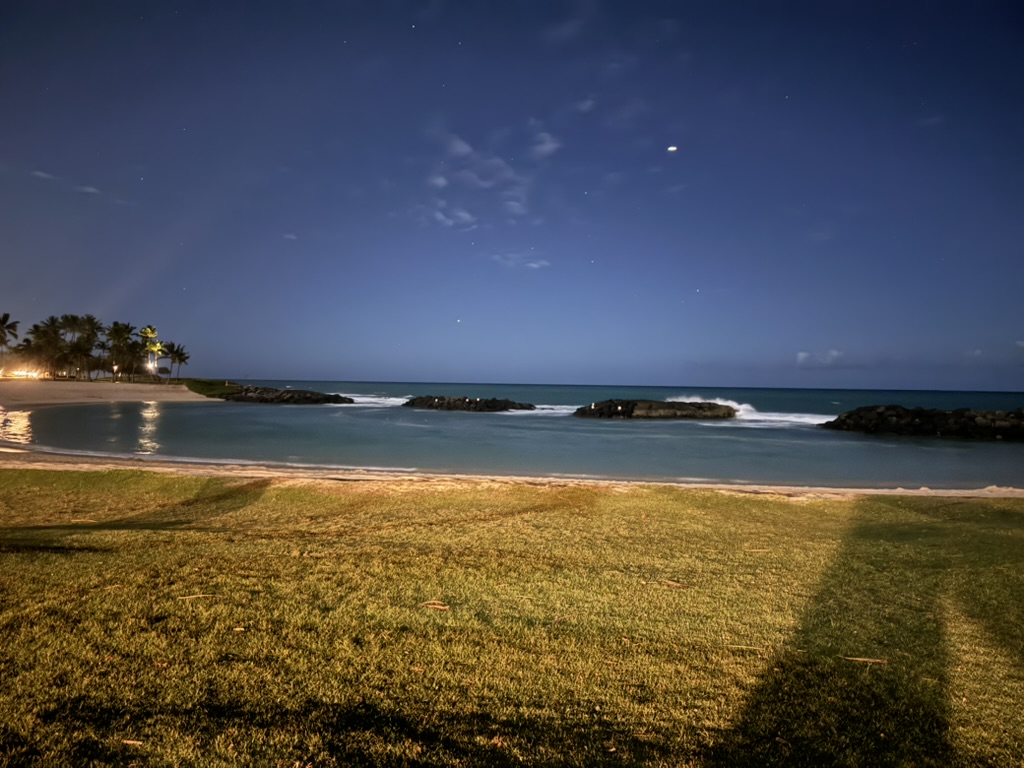
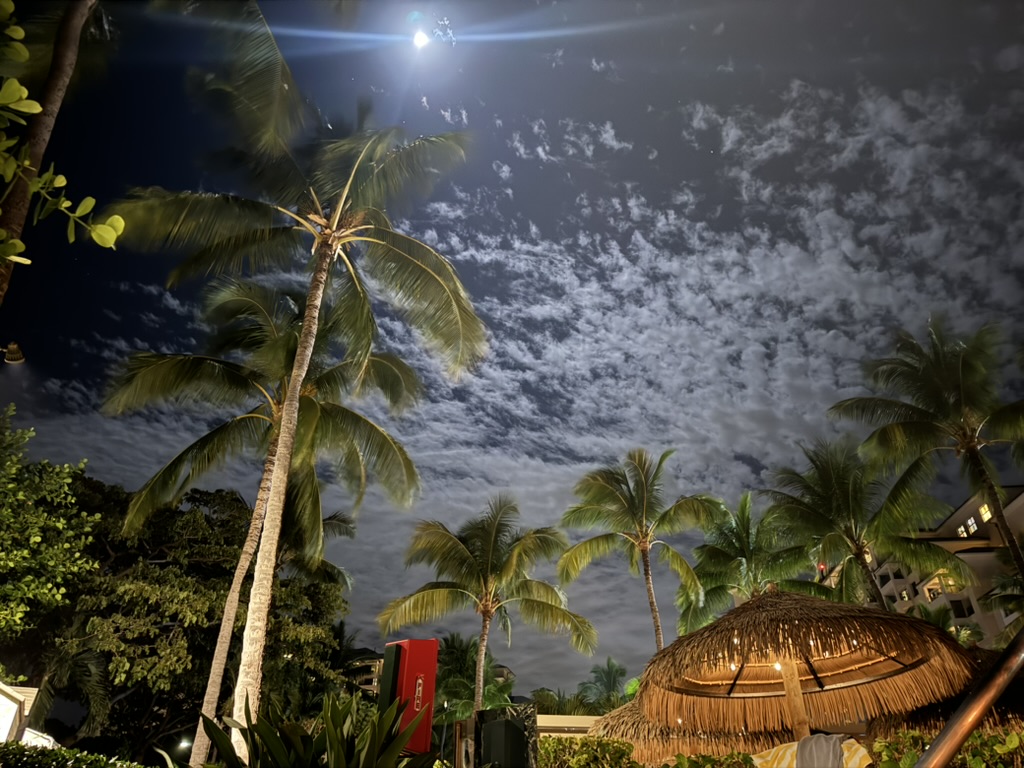
By the moon-out hour, the lagoon turns into the kind of low-light scene that the iPhone is suspiciously good at — long-ish exposure, a trace of grain, the moon a hard pinpoint over rolling water. I left the camera out a few minutes longer than I usually would and got a frame I keep coming back to.
Foster Botanical, briefly
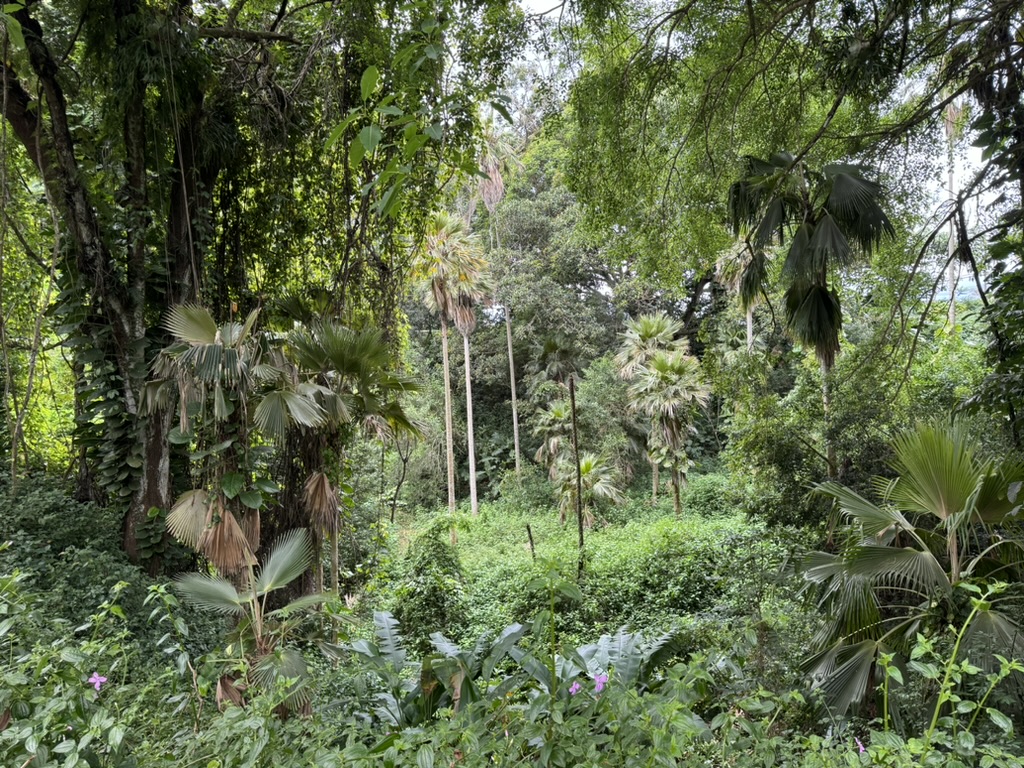
We took a quiet morning at Foster Botanical Garden in downtown Honolulu — same place we'd stopped on the 2023 trip. The garden hasn't changed, and that's the point. You walk in past traffic and you walk out two hours later thinking about trees. The fan palms are taller than they look in any photograph; you only really get the scale standing under them.
The last image
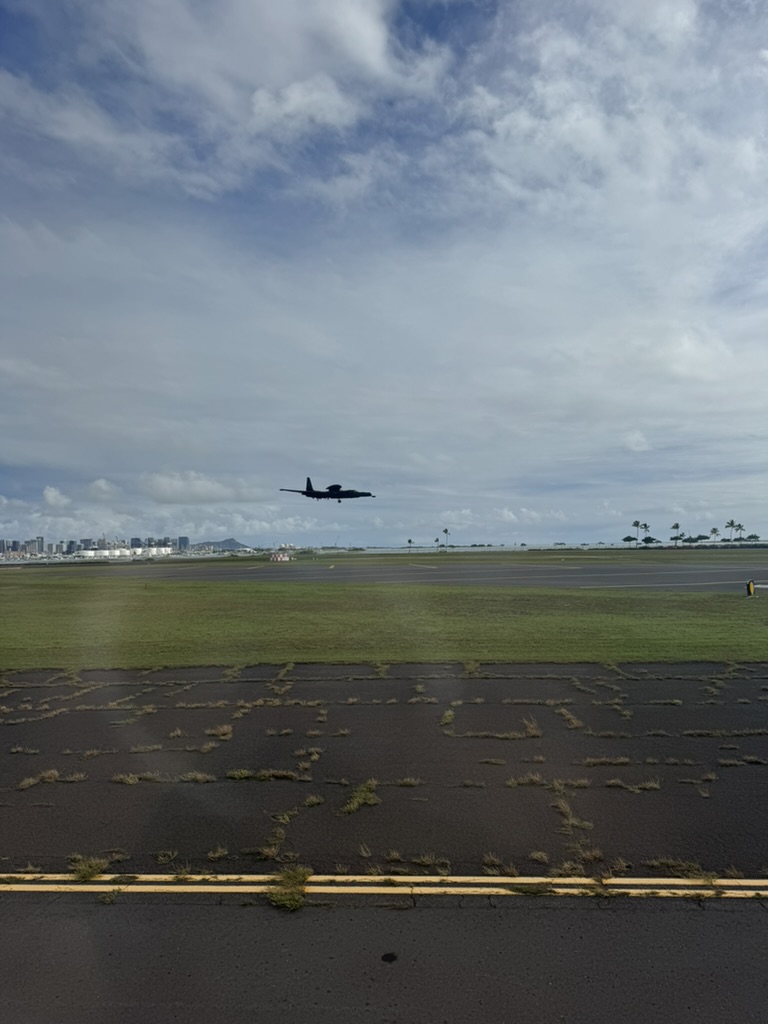
The flight home is out of Daniel K. Inouye International, which shares a runway complex with Joint Base Pearl Harbor–Hickam. Last image of the trip from the gate: a Hawkeye — twin-prop, big disc-shaped radar dome on the dorsal — coming in over the airport on what looked like a training run, the Honolulu skyline and Diamond Head behind it. A military aircraft against the city you're about to leave, the same kind of frame the 2023 post closed on. Different plane. Same airport. Different reason.
Closing out
This trip was dominated by natural beauty. I keep using that phrase even though it sounds like it belongs in a brochure, because it's the most accurate description I have. Pearl Harbor was its own kind of weight. Pali was the view I'll keep. Lanikai was the water. Diamond Head was the climb. The bartender was the moment I'll keep thinking about for longer than any of the rest of it.
It was also the trip that made the vacation club make sense. The math is the math; the math doesn't change. What changes is that you actually go. You bring the people you should bring before you can't anymore. You sit them by the bartender. You let them watch the moon over a bay they hadn't seen.
Mahalo to the people of Oʻahu. Mahalo to the staff at Ko Olina, especially the one at the small pool bar. Mahalo to the trade winds for putting on a sunset every night without being asked.
And to the man I brought with me — thank you. For all of it.
Aloha.