Hawaii 2023 was a happy accident. My family had a unit booked at Marriott's Ko Olina Beach Club and an extra room going spare, so they asked if I wanted to come along. I said yes the way you do for things you don't think much about, and a week later I was on a plane to a place that ended up rearranging more of my year than the trip itself.
I came back with a Marriott Vacation Club ownership I didn't know I was going to buy, a working theory that I needed more time for myself than I'd been giving myself, and — most unexpectedly — a call mid-trip asking me to submit a resume, which I drafted at the gate on the flight home and which turned into my next job at Edge Autonomy. For a "spare room" trip, it turned out to be the year's loadbearing one.
San Jose → Honolulu, in front of the curtain
The whole thing started well. I'd never flown first class on a long-haul before — the upgrade landed me in the front cabin on Hawaiian Airlines' SJC → HNL flight, and the experience was the kind that recalibrates what you expect from a flight afterwards.
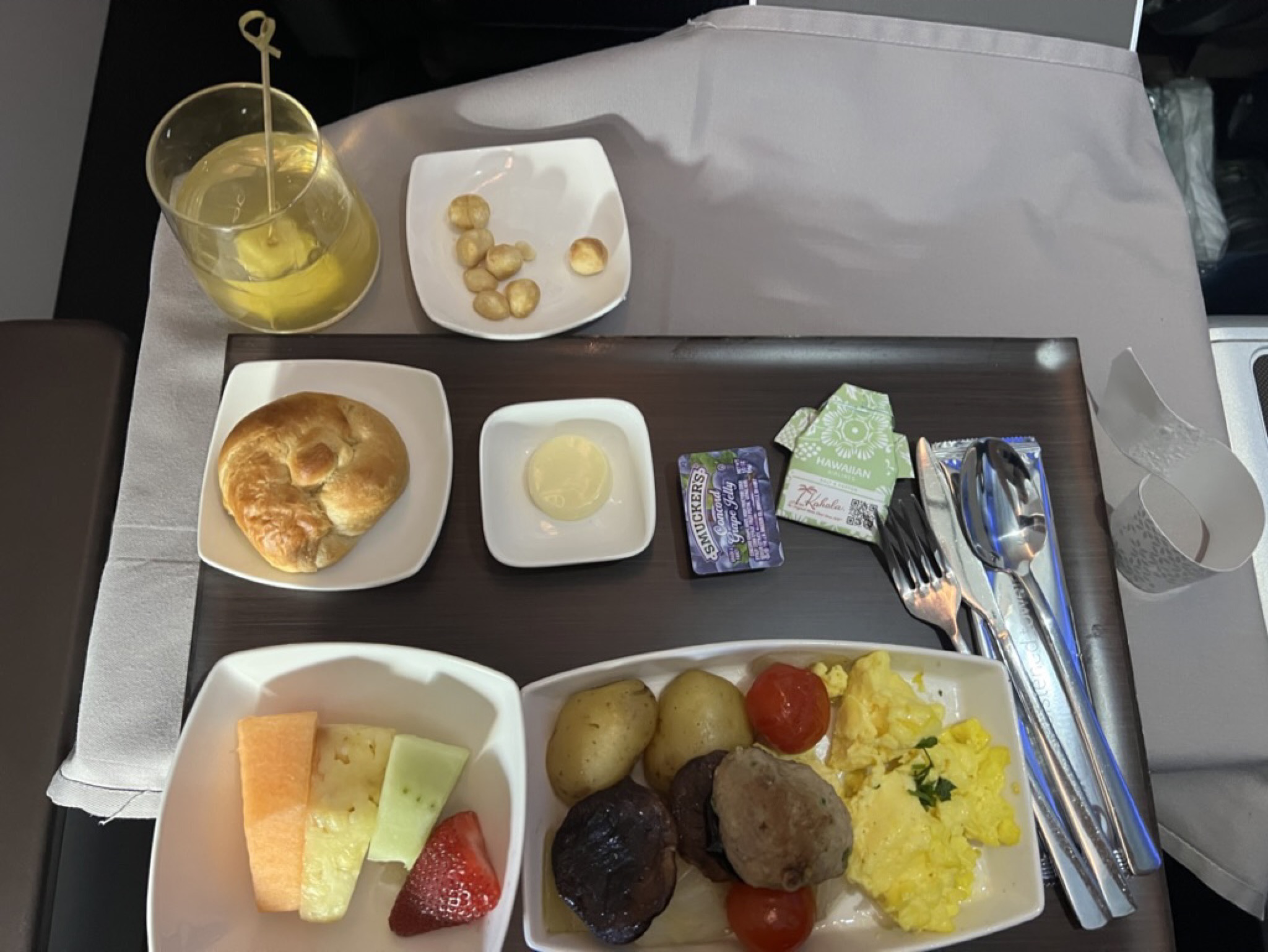
That's the moment I learned I really like a Mai Tai. The crew brought me one before we'd even left the gate — handed it over while the rest of the cabin was still boarding, which is the kind of small thing that sets the tone for an entire flight. I didn't have a strong opinion about Mai Tais going in. By the time the trays came out somewhere over the Pacific I was on my second one and my opinion was set. (The "fall in love with rum cocktails" arc continues later in the post — keep an eye on the trip's monkey pod.)
The room
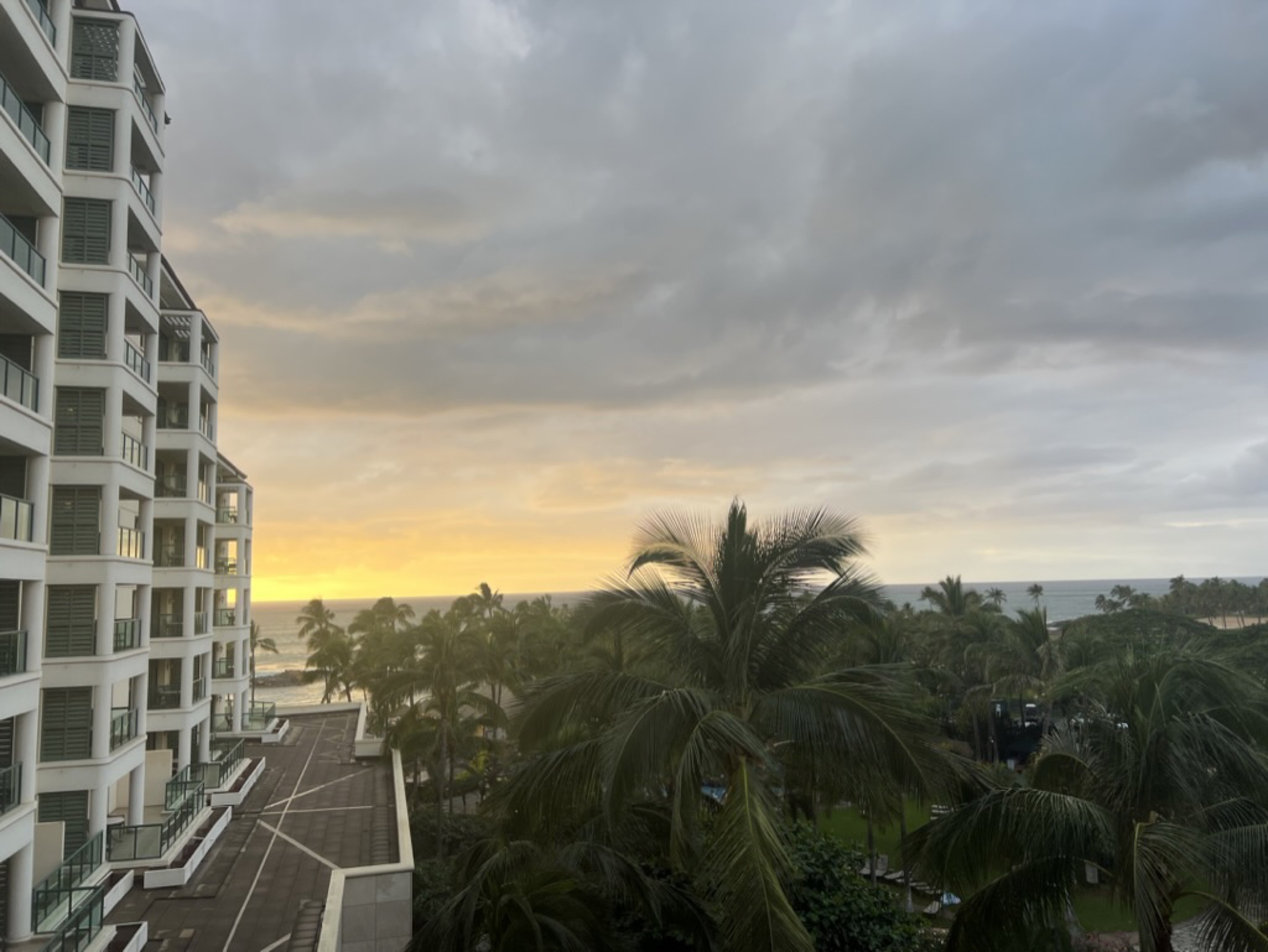
Ko Olina sits on the leeward side of O'ahu, about forty minutes west of Honolulu. The Marriott was built on top of the broader Ko Olina Resort development, which began carving its series of artificial lagoons out of the rocky leeward shoreline in the late 1980s; the resort buildings followed later, stepped back from the water in tiers so most of the rooms look out at the ocean with palms in the middle distance.
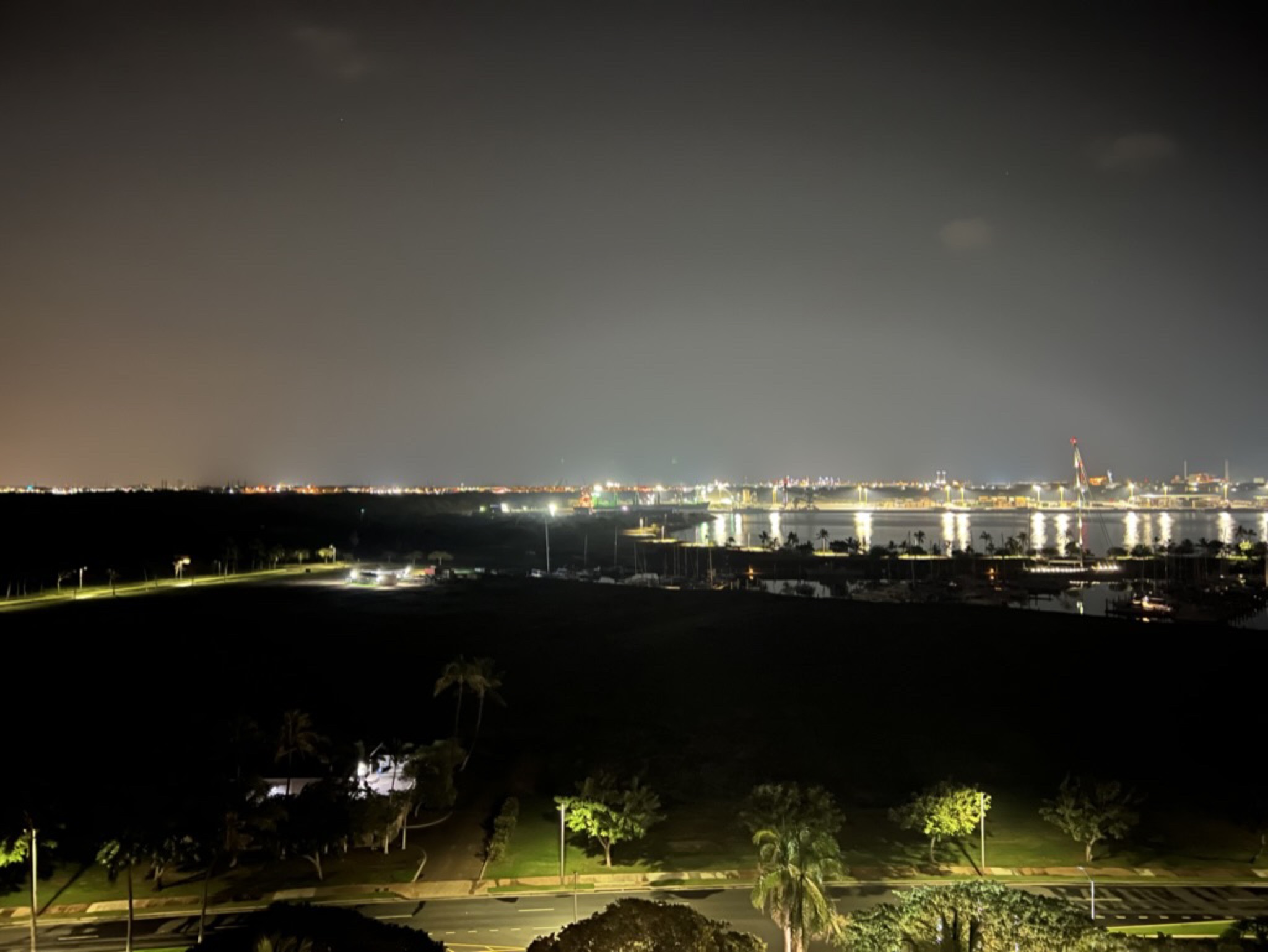
Ours was a Mountain View, which sounds like a category compromise but in practice meant we faced east and could see the lights of the Kalaeloa industrial harbor stretching across the horizon at night. The hero image at the top of this post is that view. It's the kind of thing you don't take a daytime picture of, because the daytime view is unremarkable; at night it's gorgeous. The breeze was warm, the windows were open, and the lights kept going for what felt like miles.
Pearl Harbor
Day three or four, we drove east to Pearl Harbor. It's a bigger site than I'd internalized from photos. The USS Arizona Memorial, the Battleship Missouri, the Pacific Aviation Museum, and the visitor centers between them — each one is its own afternoon if you want to do it right. We did the two ship visits and a long walk through the main grounds.
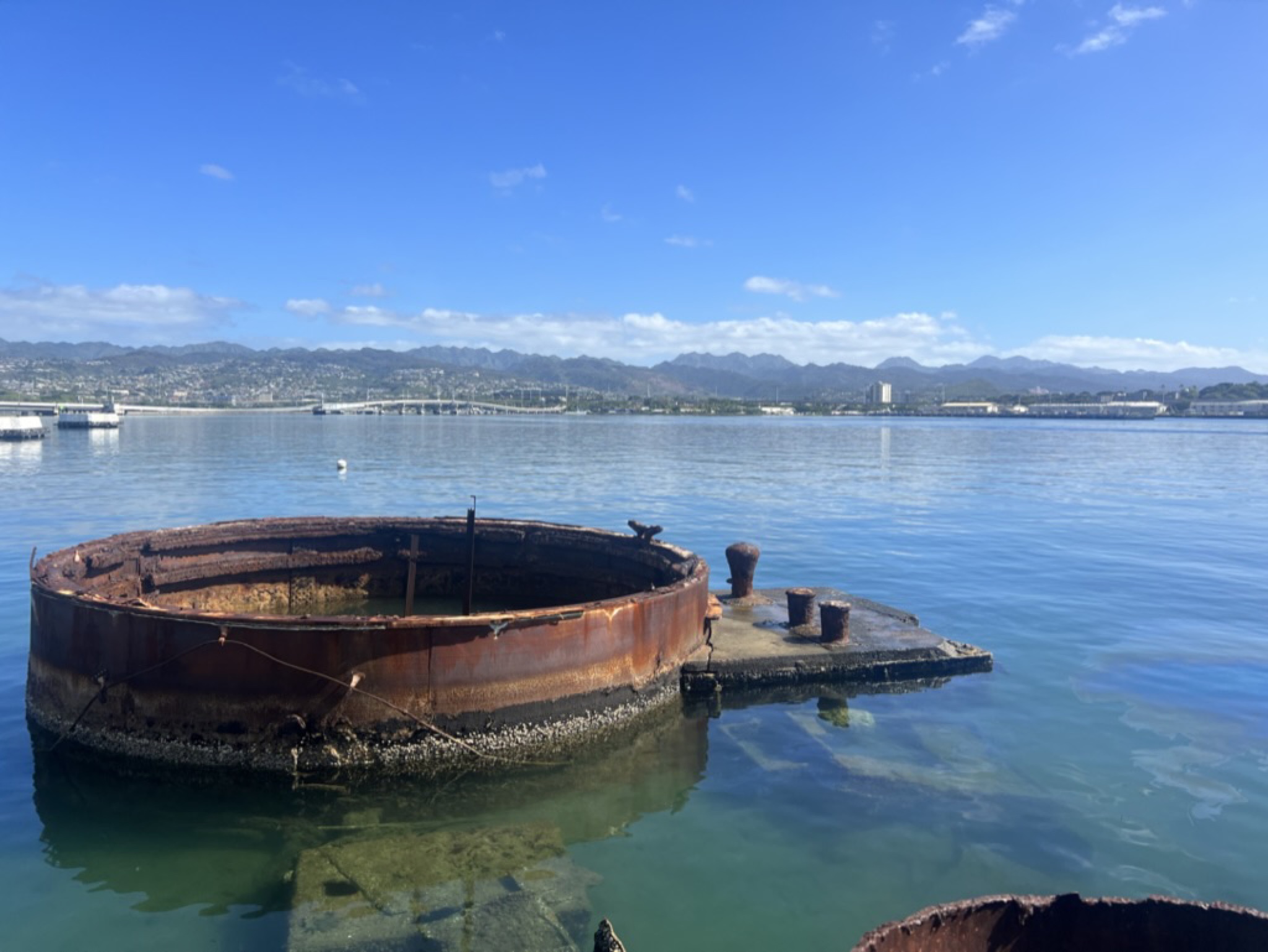
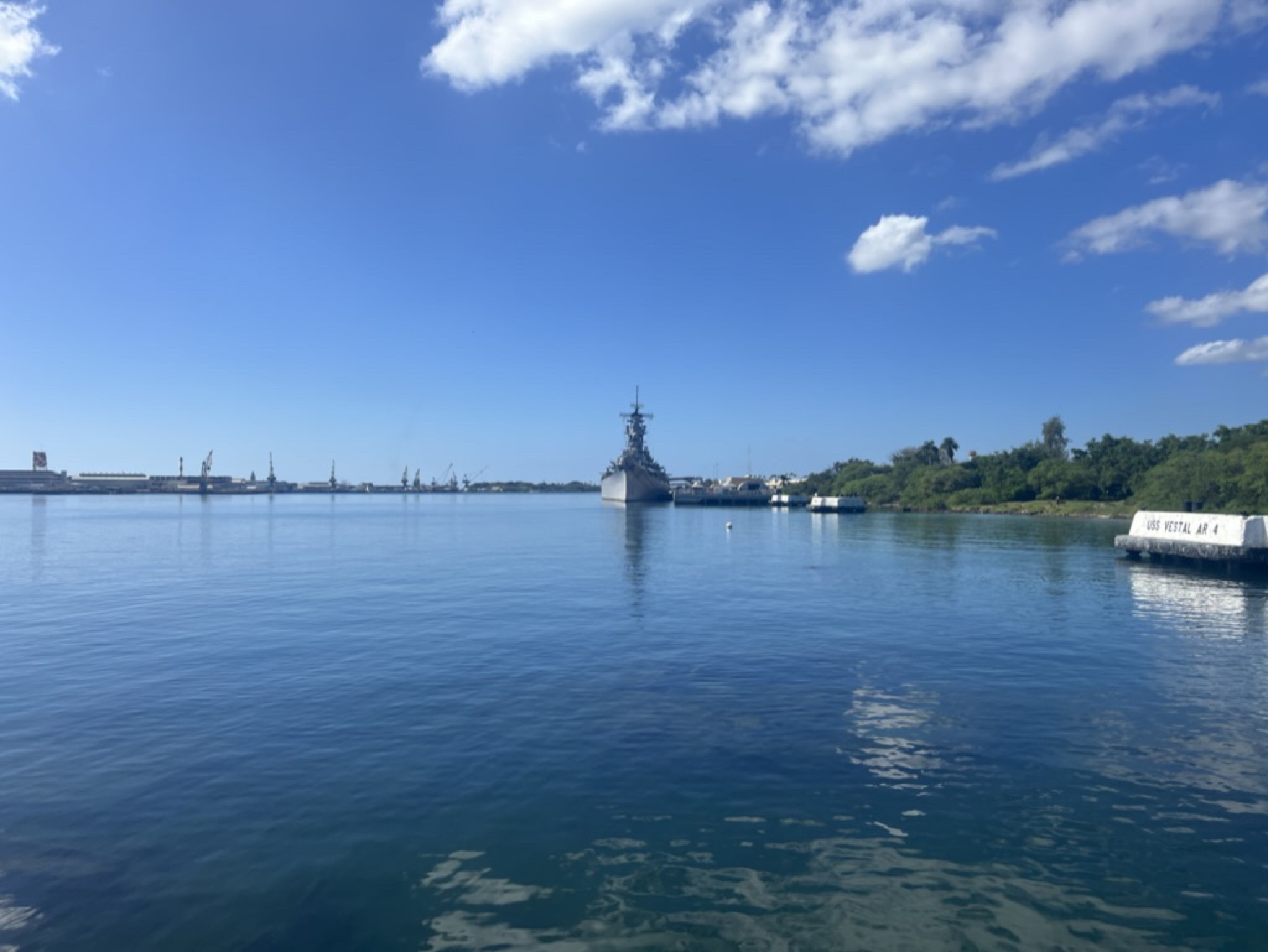
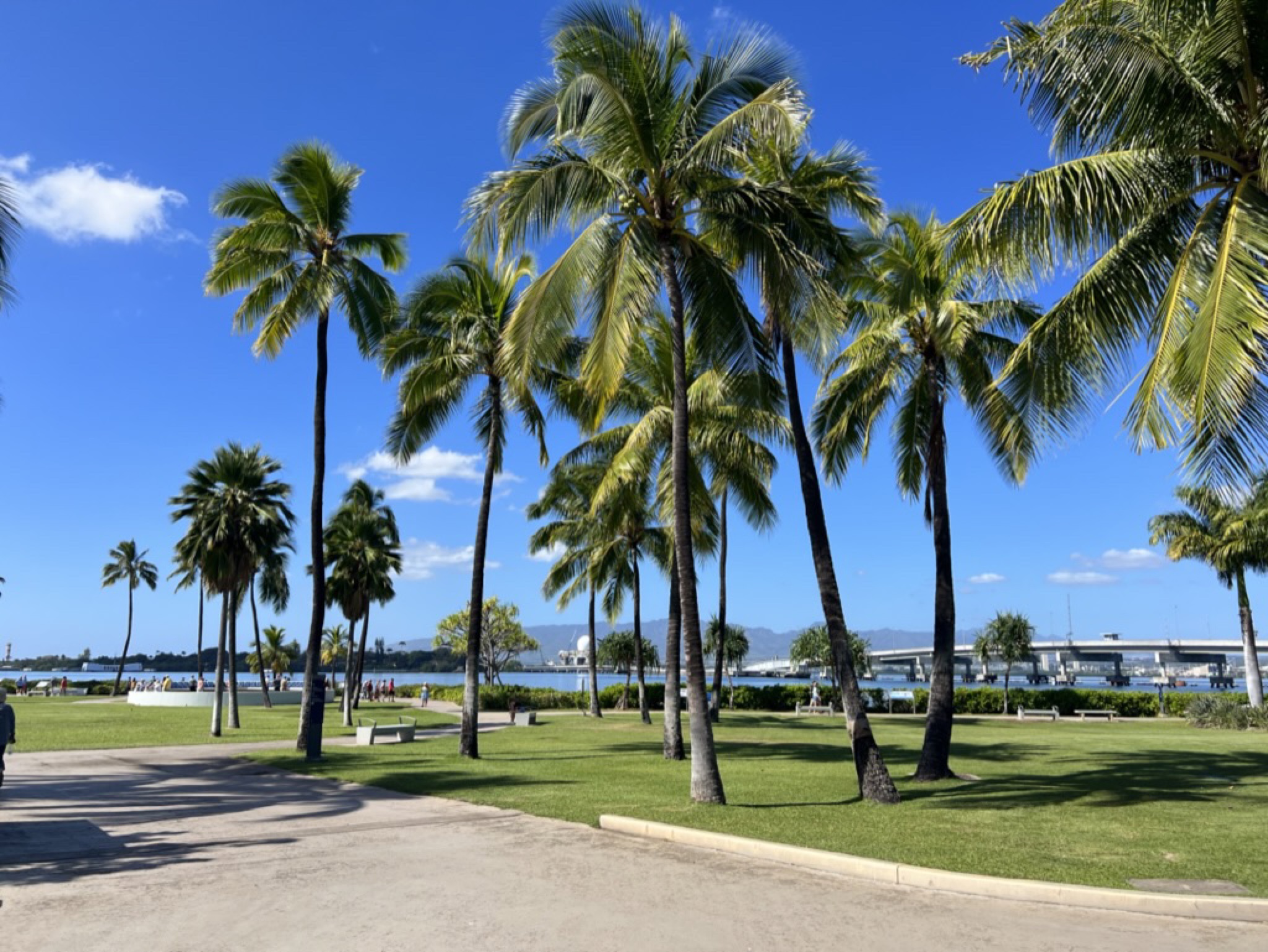
The Arizona turret in the first photo is the part that got me. The ship is still down there, and it's still leaking — daily drops of the bunker oil it carried into Pearl Harbor on the morning of December 7, 1941, surfacing more than eighty years later in what the Park Service calls the tears of the Arizona. And yet the turret still breaks the small harbour waves the way an active vessel does, like it's still standing watch over the Islands. Not behind glass, not at scale, just a piece of a ship doing the quiet work it was always going to do, with the city skyline behind it.
Byodo-In, and the koi pond that wouldn't end
Across the Ko'olau Range on the windward side of the island, tucked into the Valley of the Temples below cliffs that rise straight up out of nowhere, there's a small replica of Kyoto's Byōdō-in. It was built in 1968 to commemorate the centennial of the first Japanese immigrants to Hawaii. I went in expecting "tourist temple, take a photo, leave." That isn't what I got.
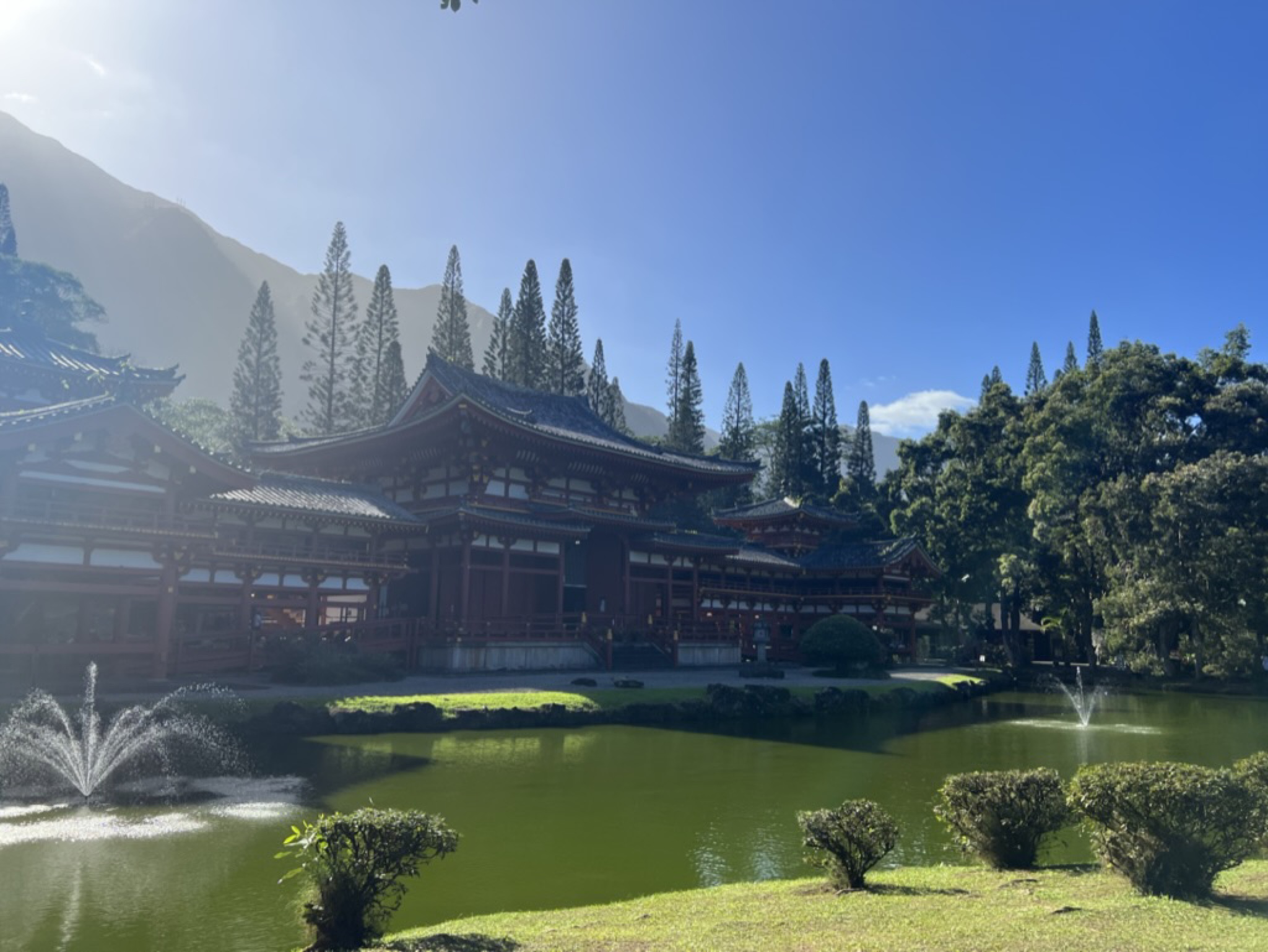
The grounds run a few acres up against the cliffs. The temple sits at the back of the valley with two ponds in front of it — and the ponds are full of koi. Not "a few koi for ambiance" full; full like the water moves on its own. You walk to the edge to look at one and find ten more underneath, and another ten under those, and you give up trying to count.
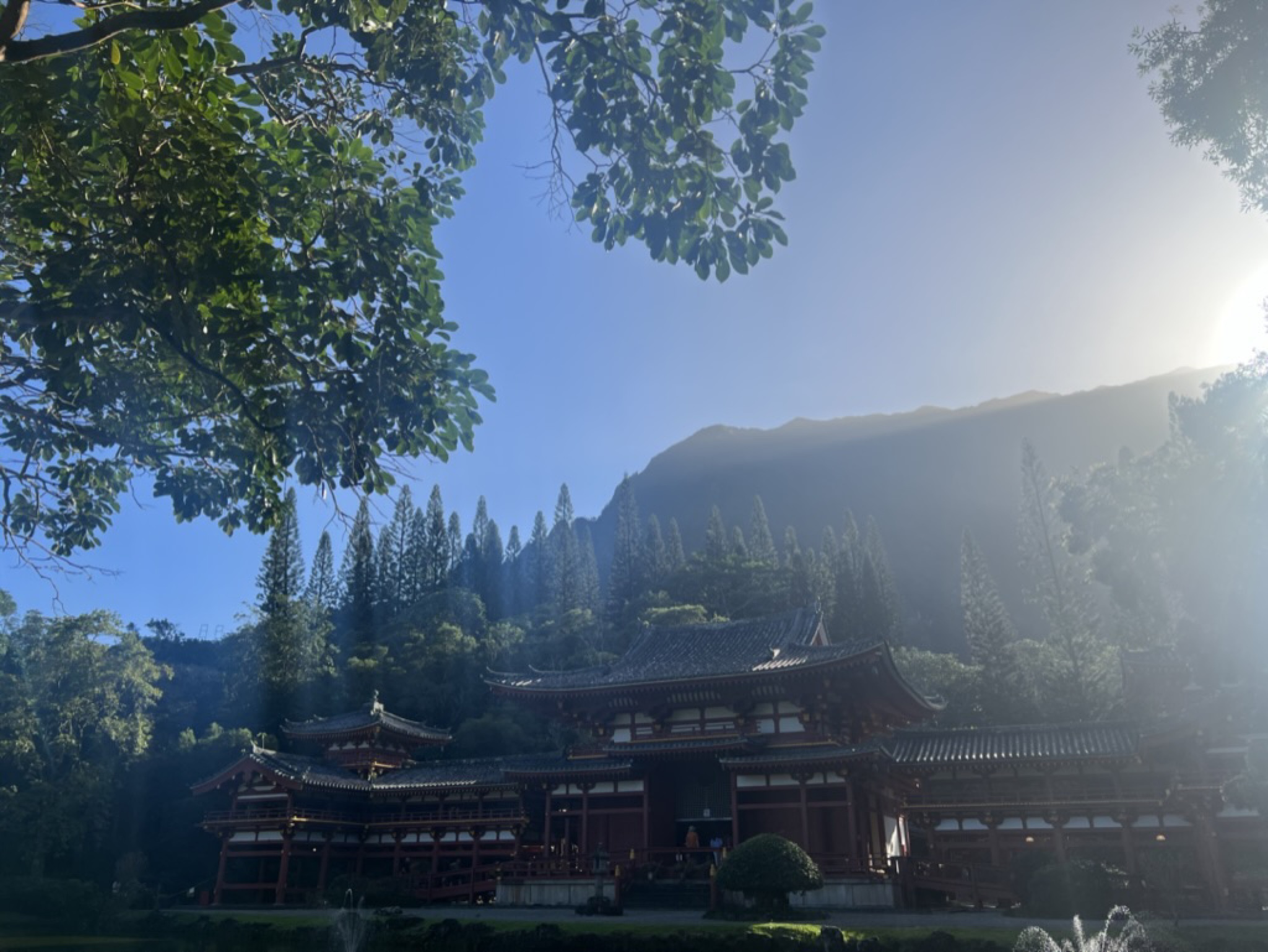
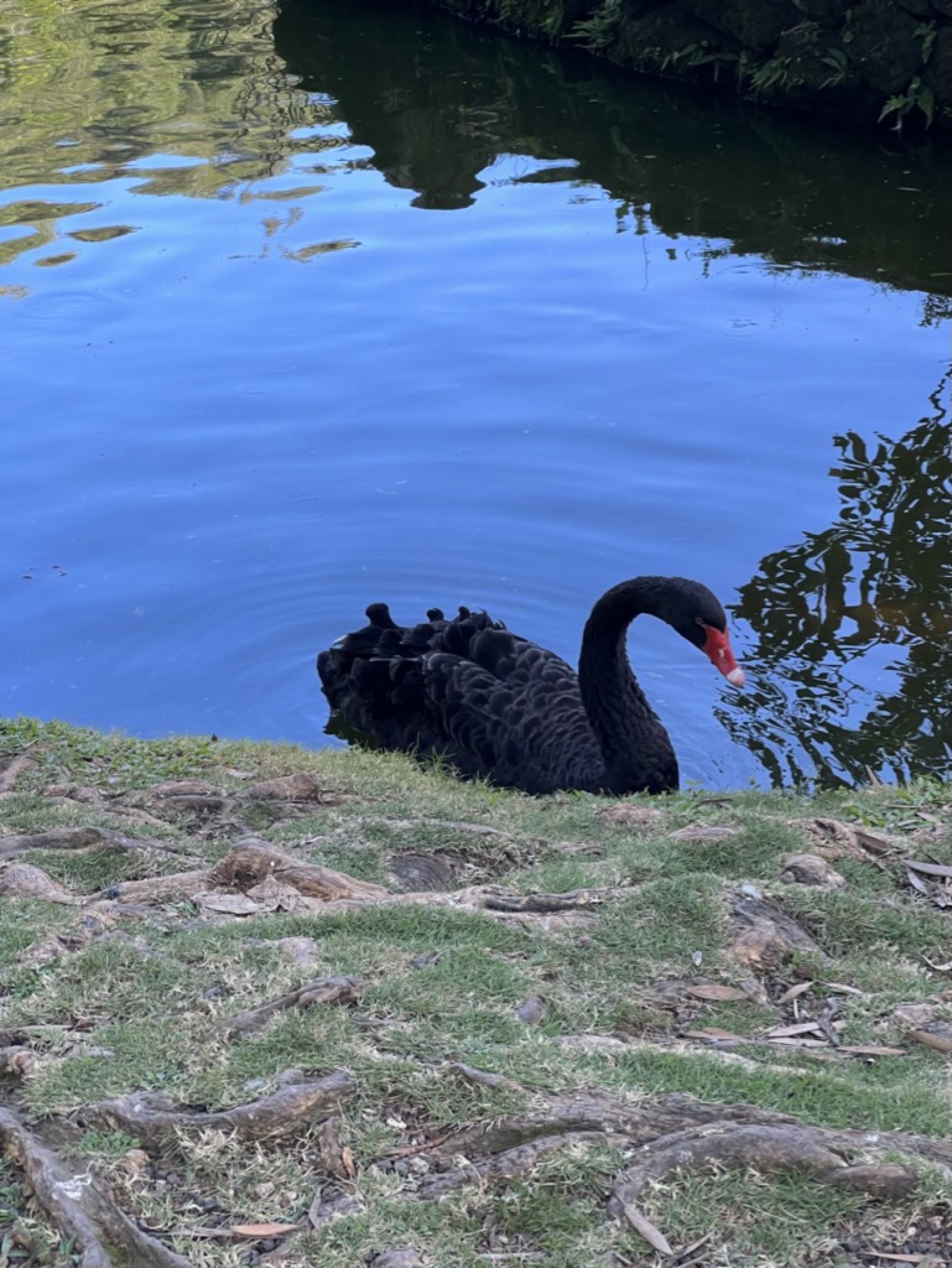
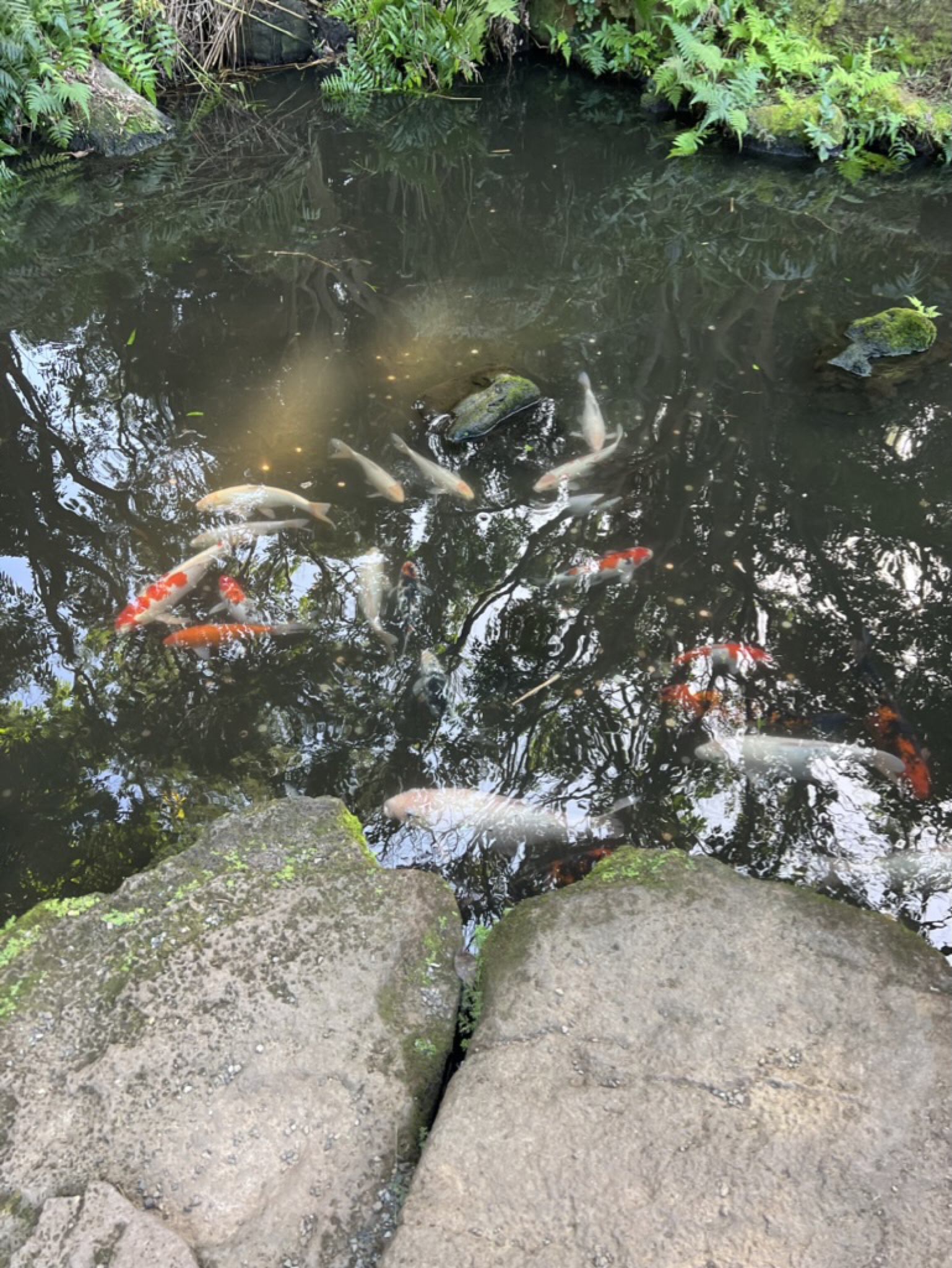
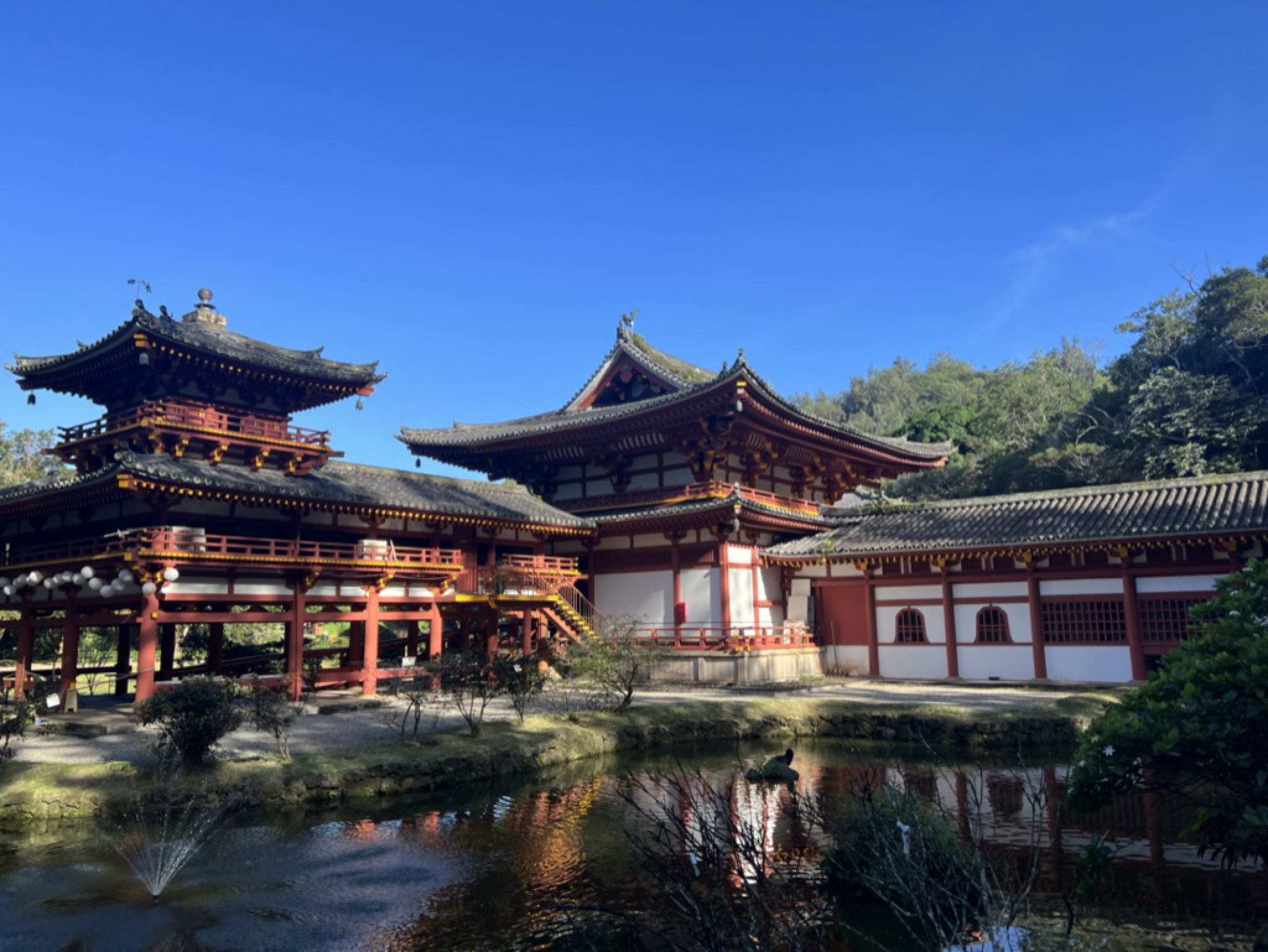
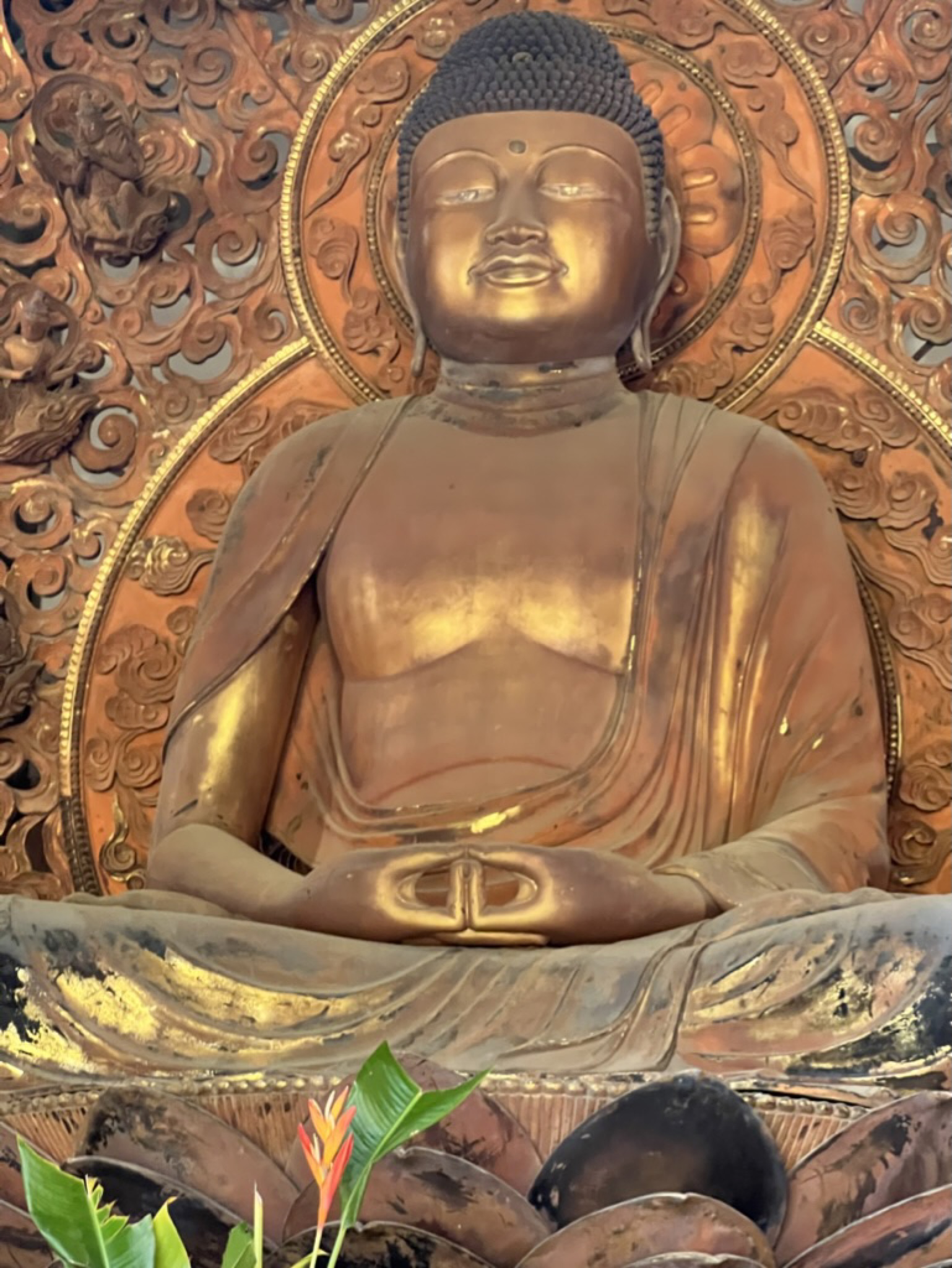
Inside the main hall there's a nine-foot gilded Amida Buddha, done in lacquered Japanese cypress — worth seeing, but it isn't what made the place land for me.
What did was the light. The valley was under a heavy ceiling of low cloud when we got there, the cliffs were in deep shadow, and the temple itself was sitting dim under all of it — and then somewhere in the middle of the visit the sun broke through the cover at exactly the right angle and dropped vertical shafts of light straight down onto the building, with everything around it still in shade. I'm not a religious person and I don't pretend to be one, but standing in the middle of that — koi in the ponds, cliffs going straight up behind, rays piercing the cloud onto a temple that had been hidden in shadow a minute earlier — was the first moment of the trip where I just stopped doing anything for a while. You can call it spiritual or you can call it being still in a quiet place where the weather happened to cooperate. Either way, it landed.
The sales pitch
Most timeshare resorts have a sales presentation, and Marriott is no exception. The structure is well known: you sit through a tour and a pitch in exchange for some perk, and at the end someone with a clipboard asks if you'd like to buy points. The pressure is real. The math gets walked through fast. The closer asks for "yes today" because they have a number to hit, and they make that into something it sounds like you should care about.
I did not enjoy the pressure, and I want to put that in writing. If you're considering Vacation Club ownership: buy on the resale market. The owner community over at the long-running TUG (Timeshare Users Group) forums is the right starting point — that's where actual owners trade notes on resale listings, what fair pricing looks like, and which transfer-fee gotchas to watch for. Resale points come at a fraction of the developer price, the same usage rules apply, and you skip the high-pressure room. There is no informational asymmetry that makes the developer price worth it; that gap is pure markup on the closing pressure.
That said — once I was past the pitch, the math on what I'd actually use over the next decade did work for me, even at the developer price. The specific thing that earned the premium was the 13-month booking window: owners who buy direct from Marriott can book 13 months out, where resale buyers cap at 12. For Ko Olina in winter — and Maui in winter, and anywhere else in the system whose calendar fills the moment it opens — that one extra month is the difference between getting the unit you want and getting whatever's left. I've used the points every year since I bought in, including my 2026 Ko Olina trip, an upcoming stay at Marriott Vacation Club Pulse San Francisco on a package deal I need to redeem by 17 October 2026, and the Maui Ocean Club trip in 2027 after that.
A future me would still buy resale, though. The next status tier above the one I'm at (Select) is Executive, and Executive's incremental perks are mostly hotel-side — Marriott Bonvoy elite, "Luxury Collection" upgrades, that kind of thing. I'm already getting two weeks in Hawaii a year on the timeshare side; whatever else a hotel chain wants to upgrade me to on top of that isn't on the wishlist. Resale gets you the same villa-side usage and the same Hawaii trade-in, and you stop paying a developer premium for perks you don't actually need.
Botanical gardens, and a tree I didn't have a name for
One day we drove into Honolulu proper to walk the Foster Botanical Garden — the oldest of the city's botanical gardens, started in 1853 on the edge of Chinatown, now sitting in the lee of the highway with skyscrapers visible over the canopy. It's a strange and good place. You walk in past traffic and you walk out two hours later thinking about trees.
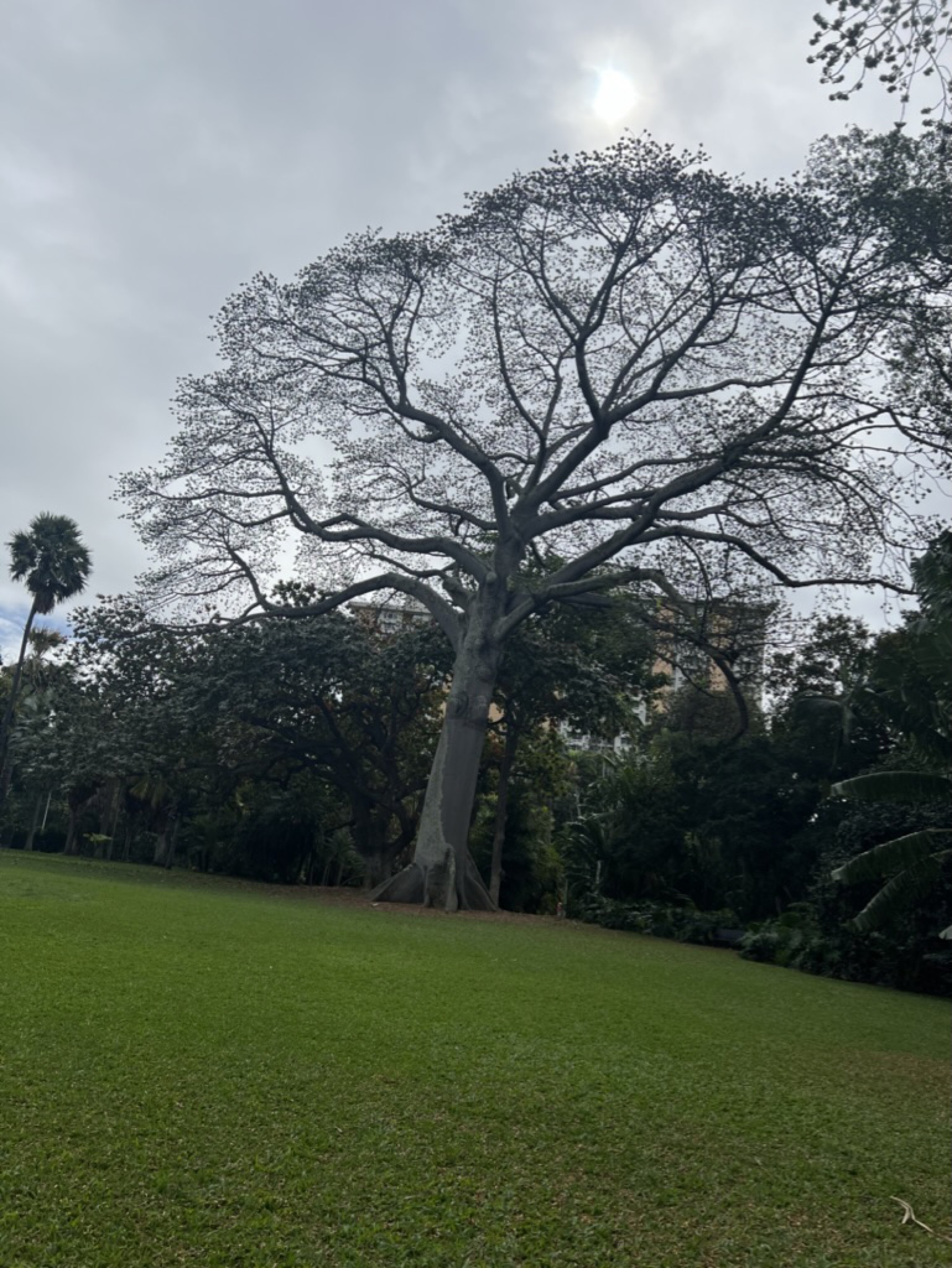
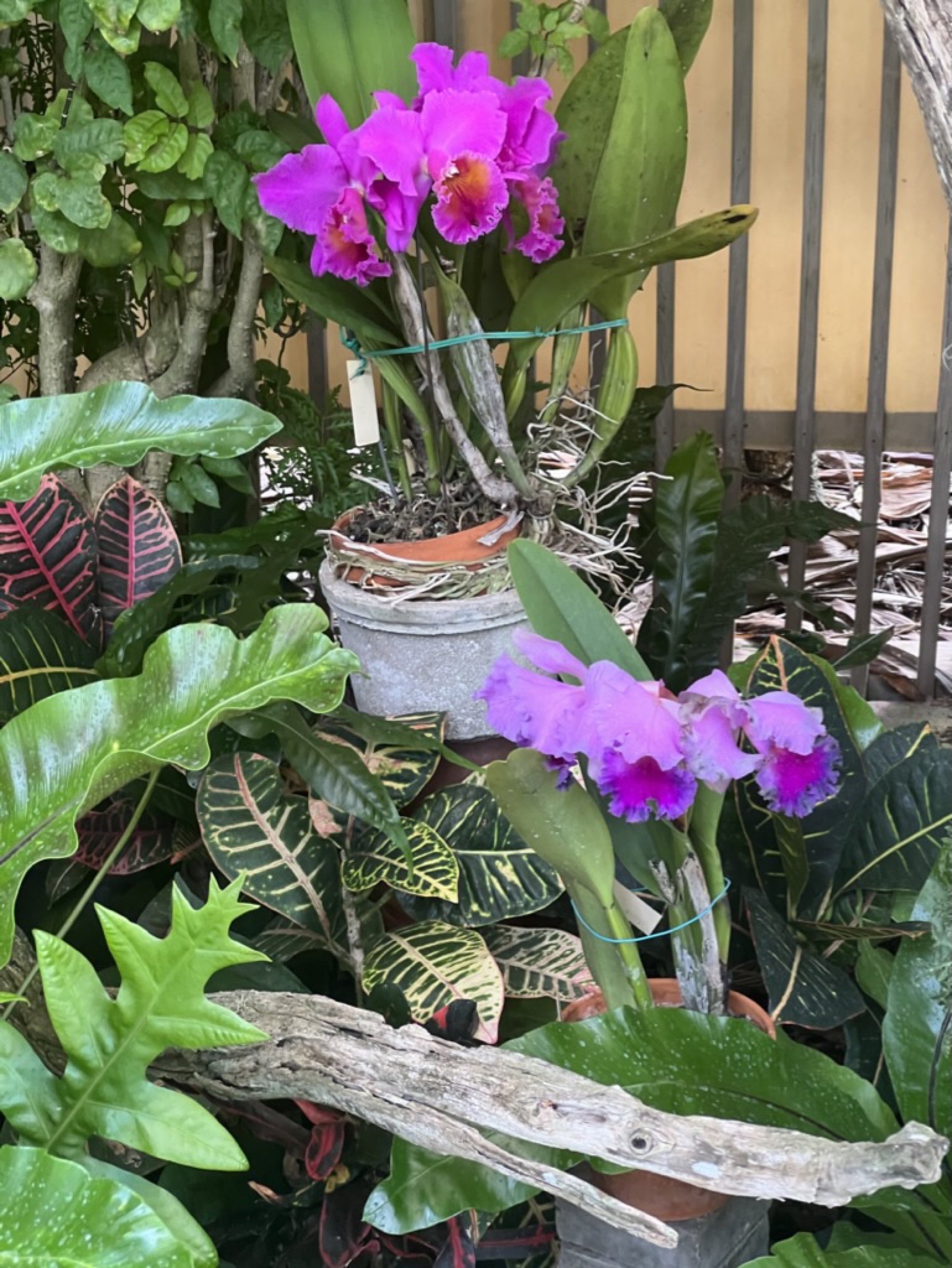
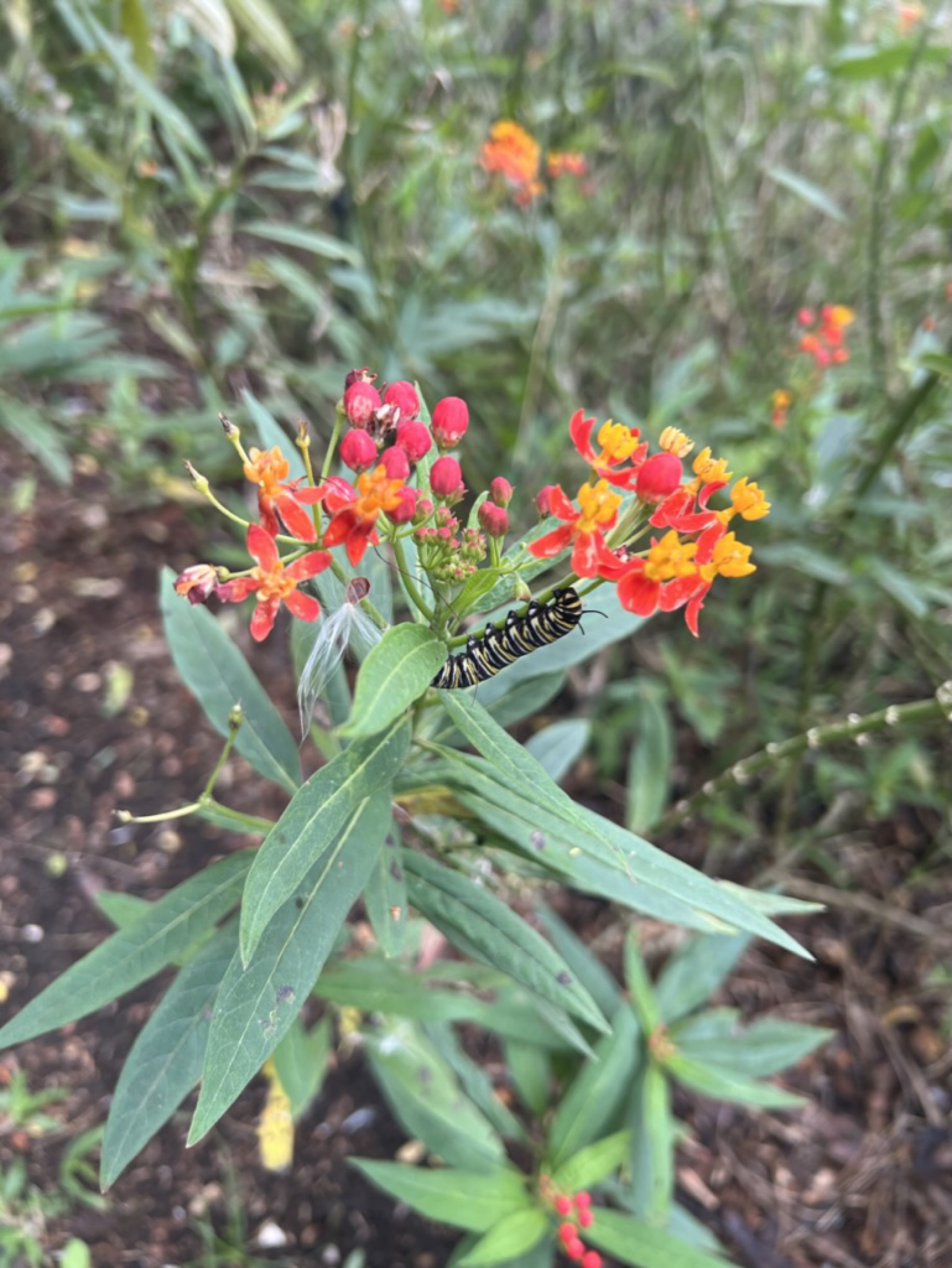
The first photo is a kapok tree — apparently several decades old, easily the largest tree I've stood next to. The bark is the colour of bone. The crown was bare in mid-January and it still looked like the most living thing in the park. The orchid house is its own thing; the monarch caterpillar in a corner of the butterfly section, methodically working its way through a sprig of milkweed on its way to becoming a chrysalis, was the kind of small detail you only get if you're walking slowly.
Up Tantalus, into a rainbow
The afternoon turned out to be ours, so we drove up Tantalus Drive — the switchback road that climbs out of Pu'u Ualaka'a State Park above the city. The lookout at the top is one of the best free views in Honolulu: the entire city laid out below, Diamond Head at the far end, the Pacific wrapping around. Locals walk it for exercise. Tourists drive it.
, and Diamond Head's crater rising at the far end of the coastline](/media/hawaii-2023/tantalus-diamond-head-pano.jpg)
On the way down, a brief shower passed across Manoa Valley below us, and the sun was in the right place to do this:
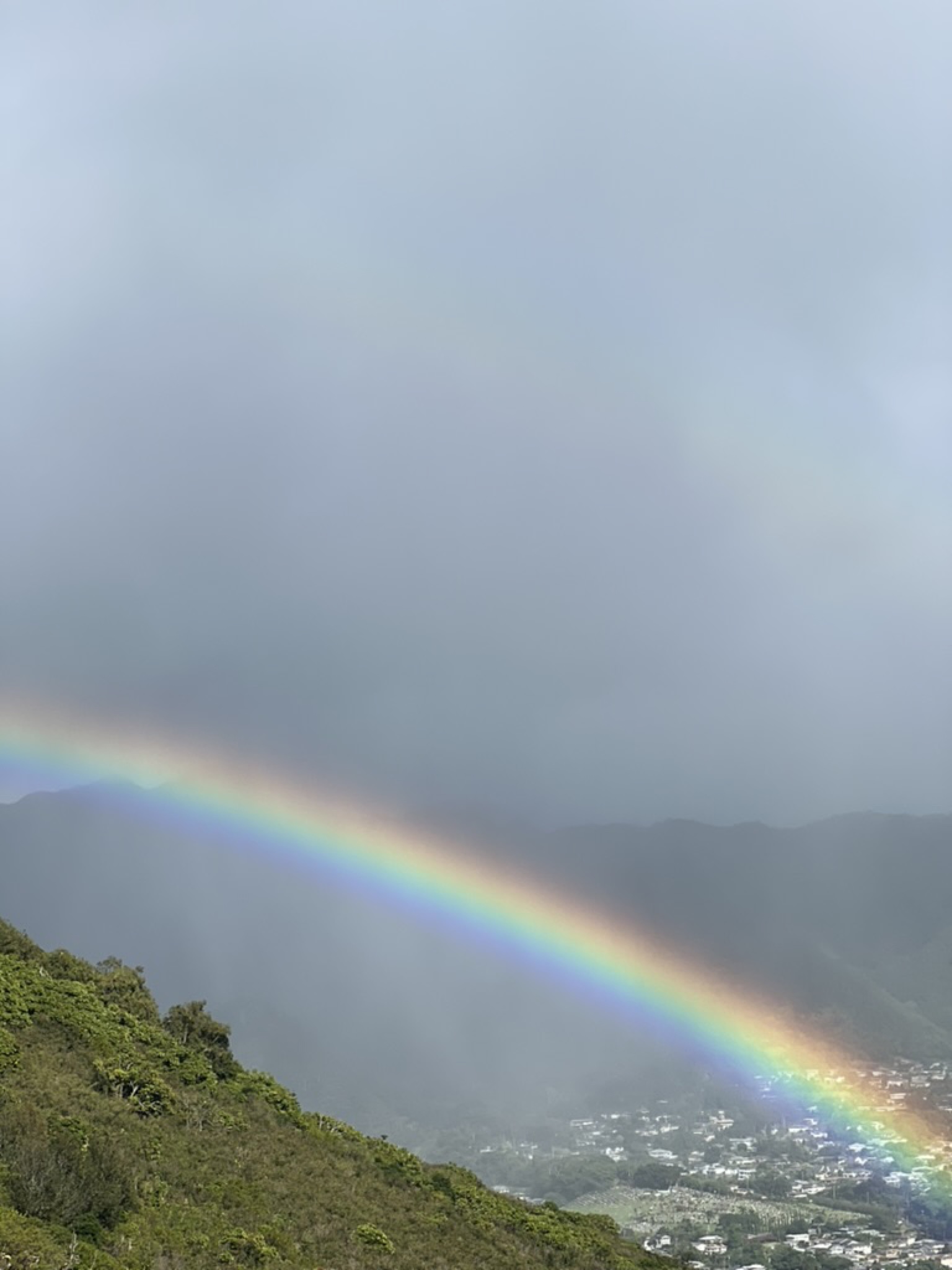
Hawaii will give you a rainbow at almost any opportunity — the islands sit in the trade-wind belt and the showers are constant and brief — but this is the rare one where the entire arc is in frame, with the valley underneath. I pulled over and sat on the hood until it faded, which took longer than I expected.
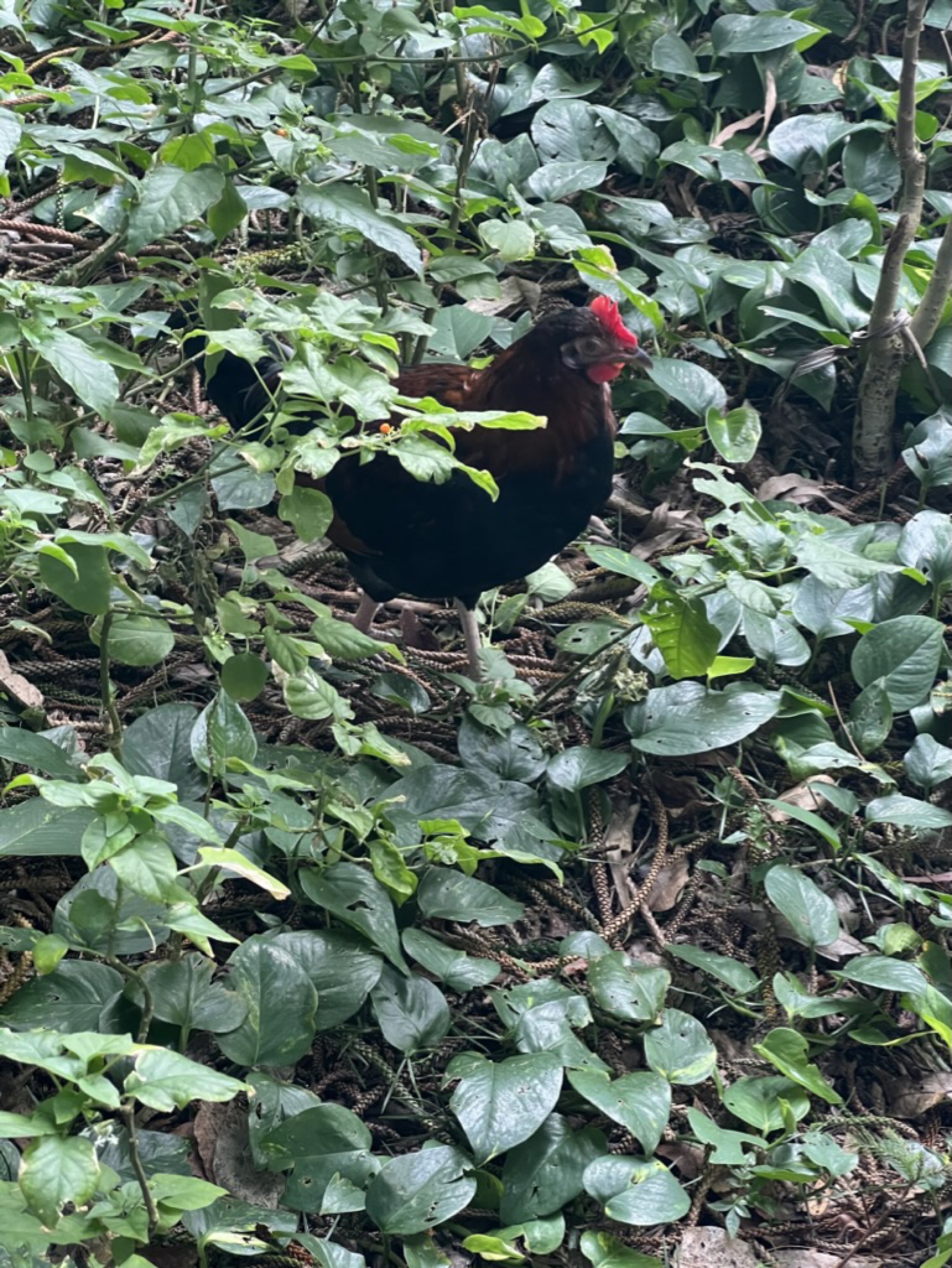
The roosters are a thing on O'ahu. The local population is descended from chickens that escaped during Hurricane Iwa in 1982 and Iniki in 1992, and they are everywhere — on hiking trails, in parking lots, occasionally on rental-car bumpers. The one above I met on the trail down from the Tantalus lookout. He was, frankly, more confident than I was.
Monkey Pod, and the Mai Tai I still chase
I'd discovered the Mai Tai on the flight in. What I didn't know yet was that there's a house Mai Tai at Monkey Pod Kitchen — the Peter Merriman restaurant with locations across the islands, including one walking distance from the resort — and that it would set the bar I judge every other Mai Tai against. The drink they serve has a lilikoi (passionfruit) foam on top, the rum is mixed at a ratio that hides nothing, and the result is the kind of cocktail that makes you start ordering a second one before the first one's done. I went back. I went back again. I looked up the recipe when I got home; it doesn't taste the same when I make it, which I now think is part of the deal.
I don't have a 2023 photo of the drink — the bar was dim, my hands were busy, the moment didn't lend itself. The shot below is from a 2026 return trip to the same restaurant, but the drink hasn't changed:
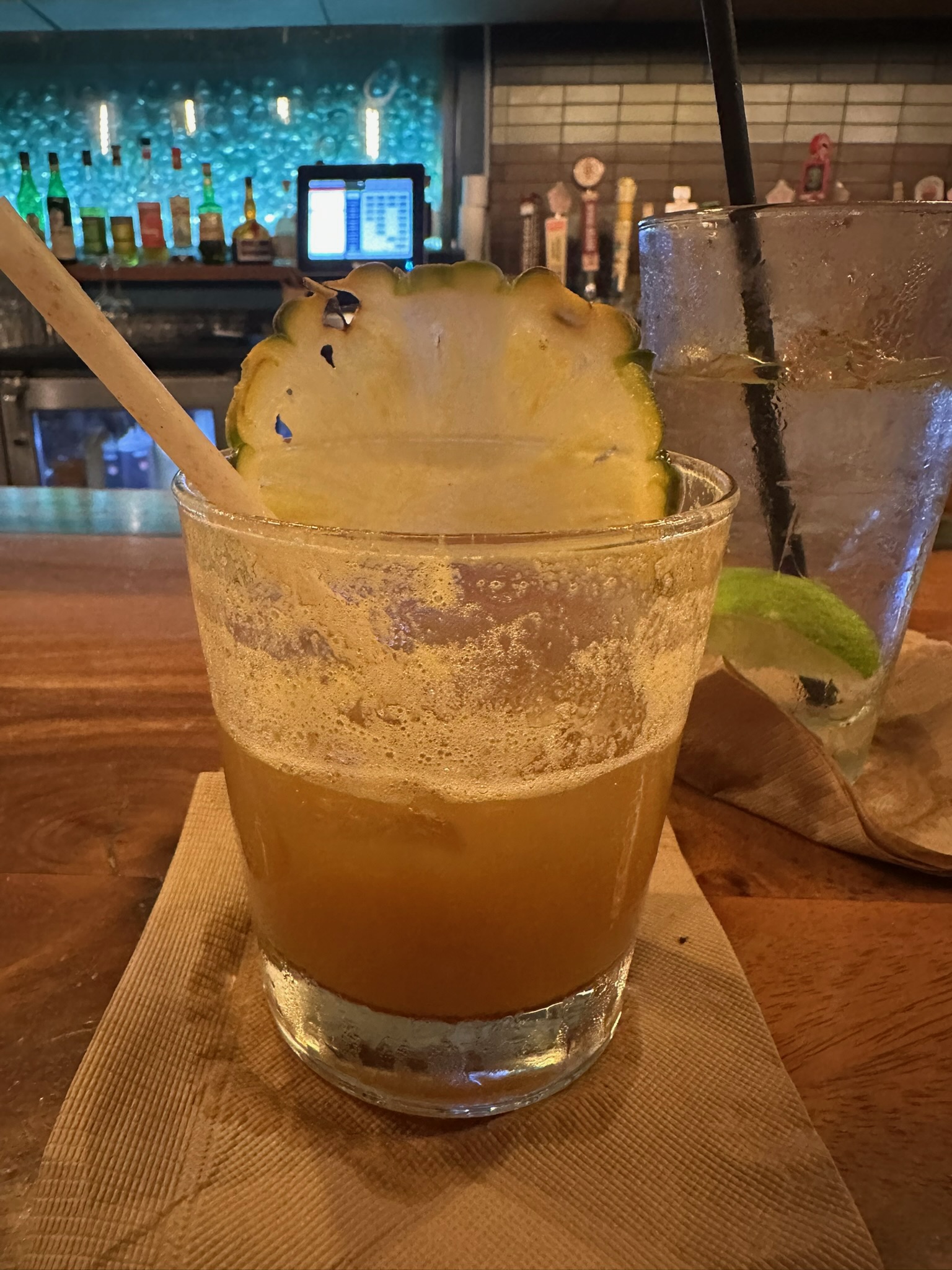
Same recipe. Same conclusion. Go.
The other food note worth recording: Manoa Chocolates, a small bean-to-bar operation up in Kailua on the windward side, makes a single-origin Hawaiian-grown chocolate that I'd never had anything quite like before. They run tastings and factory tours — small enough that you talk to the people who actually make the bars. We did the tour on a damp afternoon when nothing else was a good plan and it turned out to be the best plan we made that day. I came home with too many bars and they did not last long.
North Shore, briefly
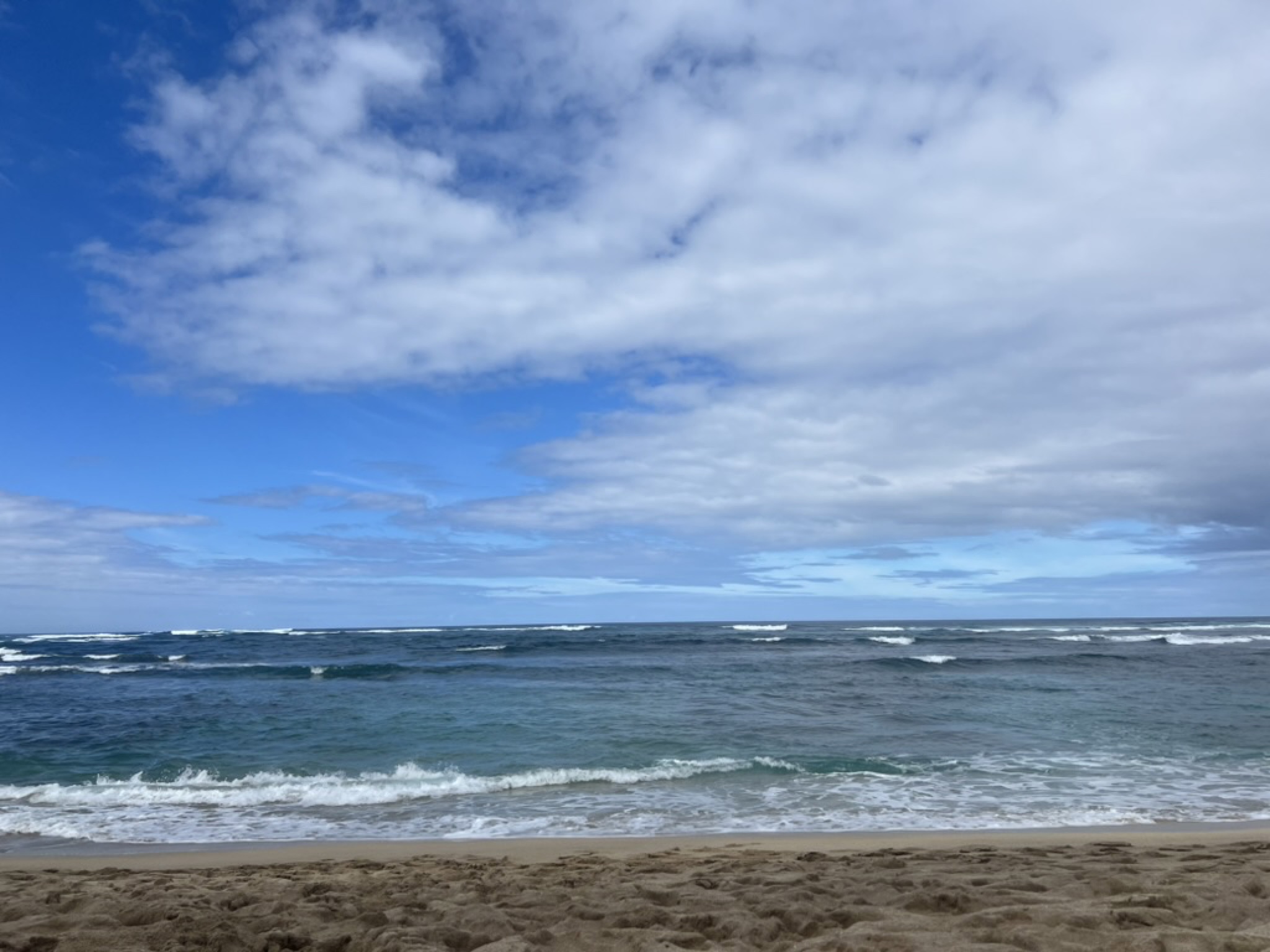
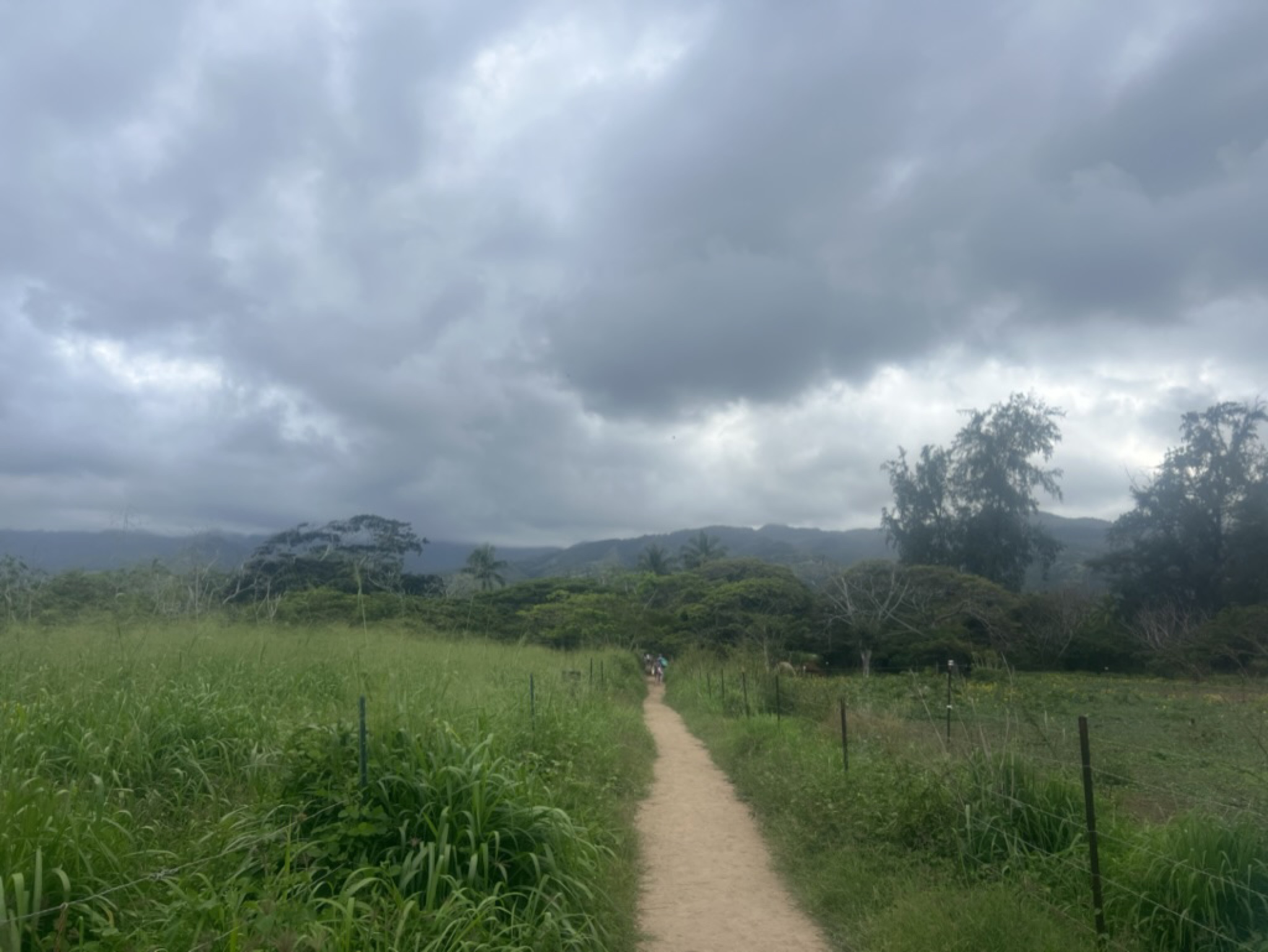
We did one drive across the island to the North Shore — the legendary winter-swell coastline, where the big-wave surf contests happen and the beach culture turns into something different from the resort side. January is the shoulder of swell season; the waves were running heavy and the parking at the better spots was full by mid-morning, so we mostly drove and pulled over and watched.
The sunsets
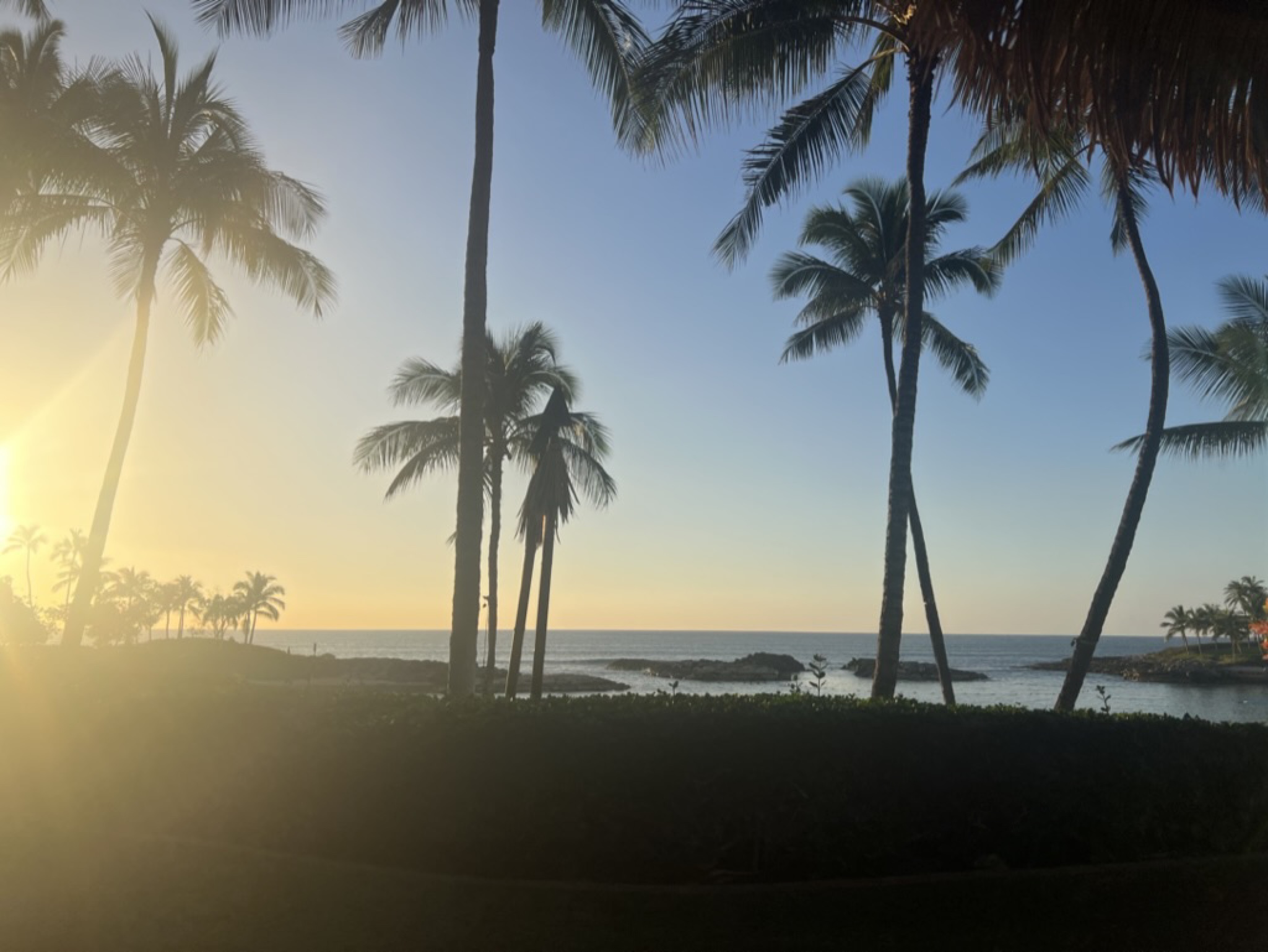
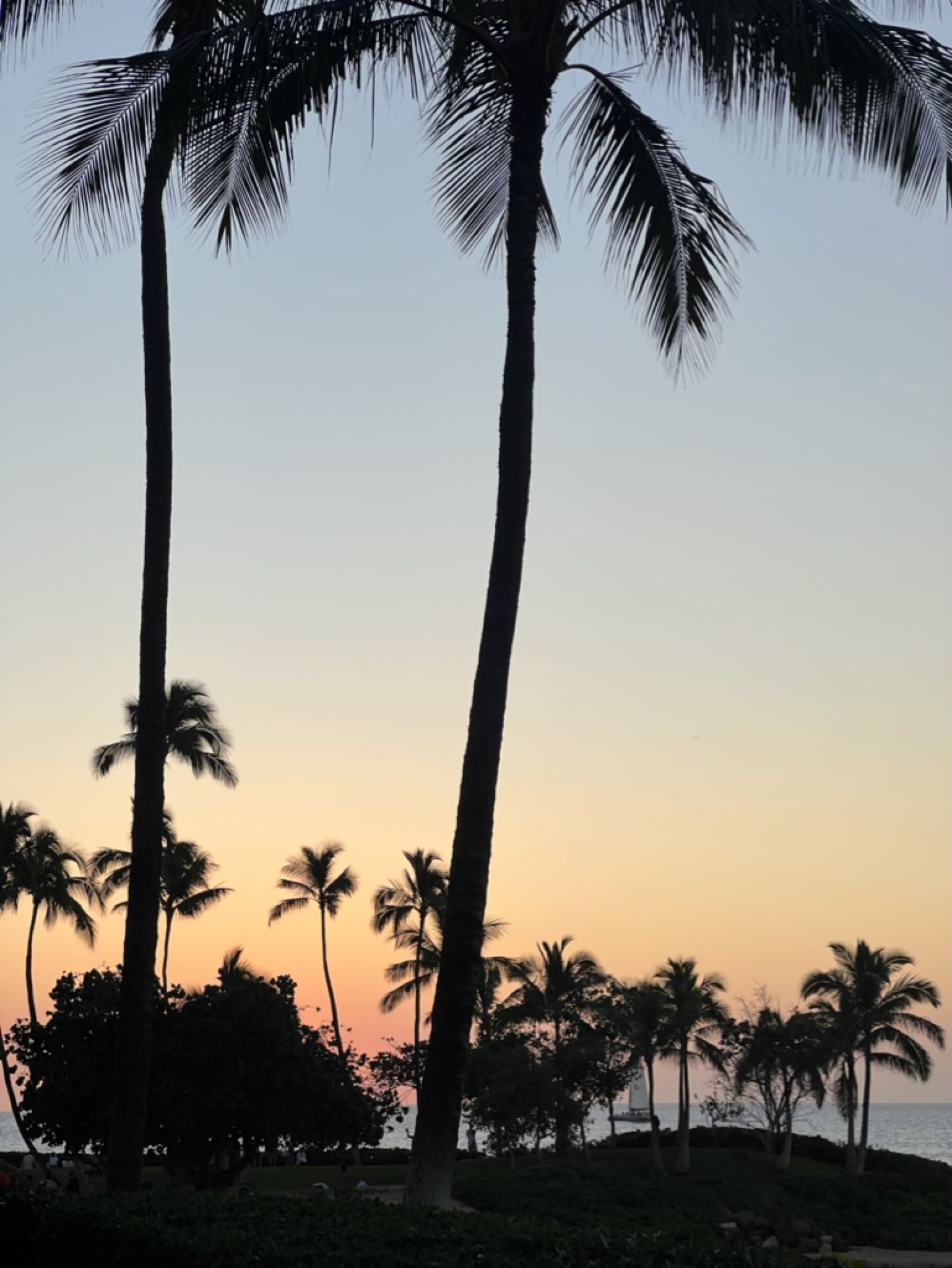
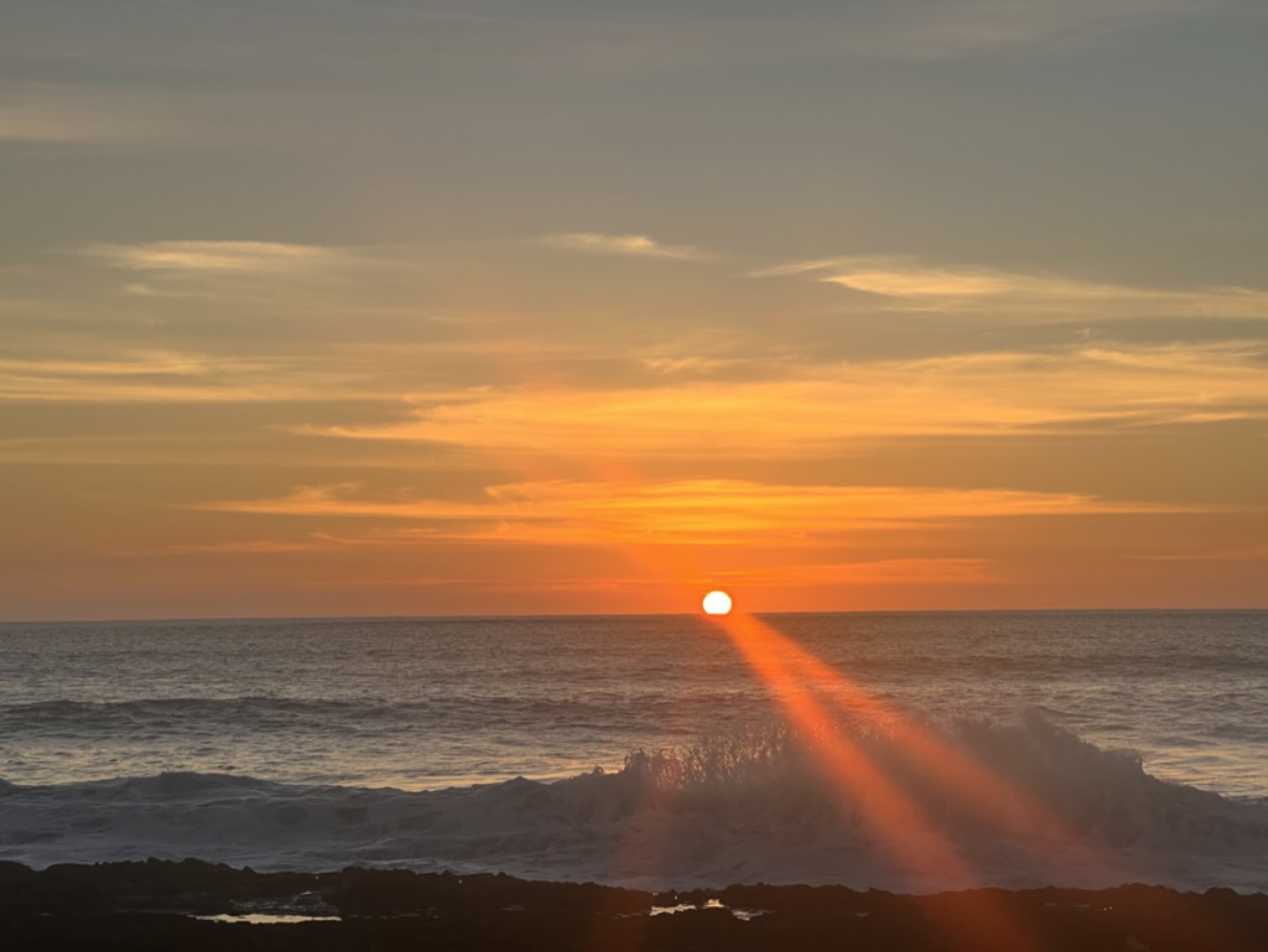
I'd been told the Ko Olina sunsets were good. They're better than that. The lagoons face west, the rocky outcrops in the foreground are exactly where you want them for composition, and the trade winds usually leave you with enough cloud structure to give the colour somewhere to land. Most evenings I just walked down to the rocks with a drink and stayed until the green flash didn't happen and then watched the afterglow until it cooled off. I took too many sunset photos and I do not regret any of them.
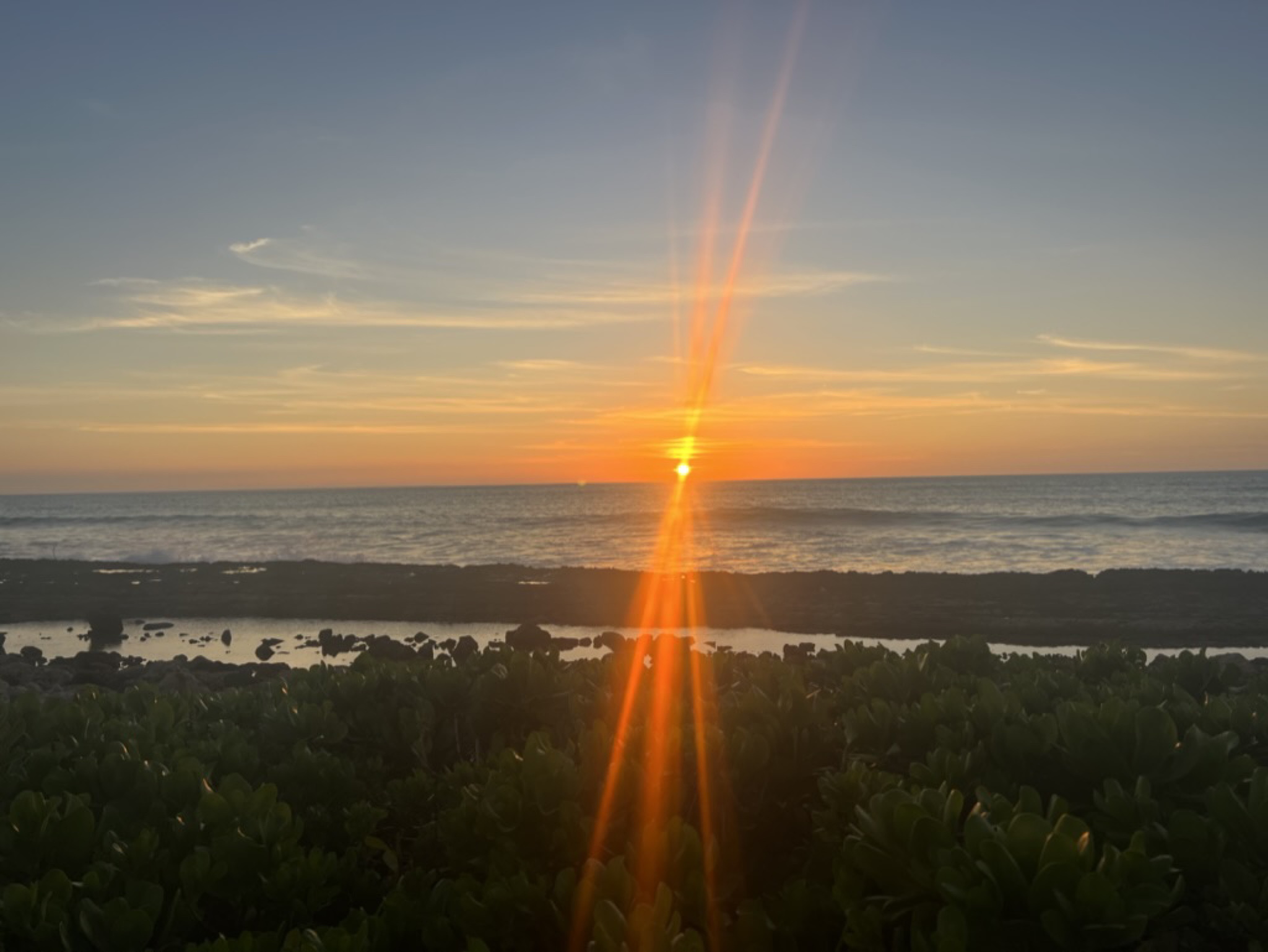
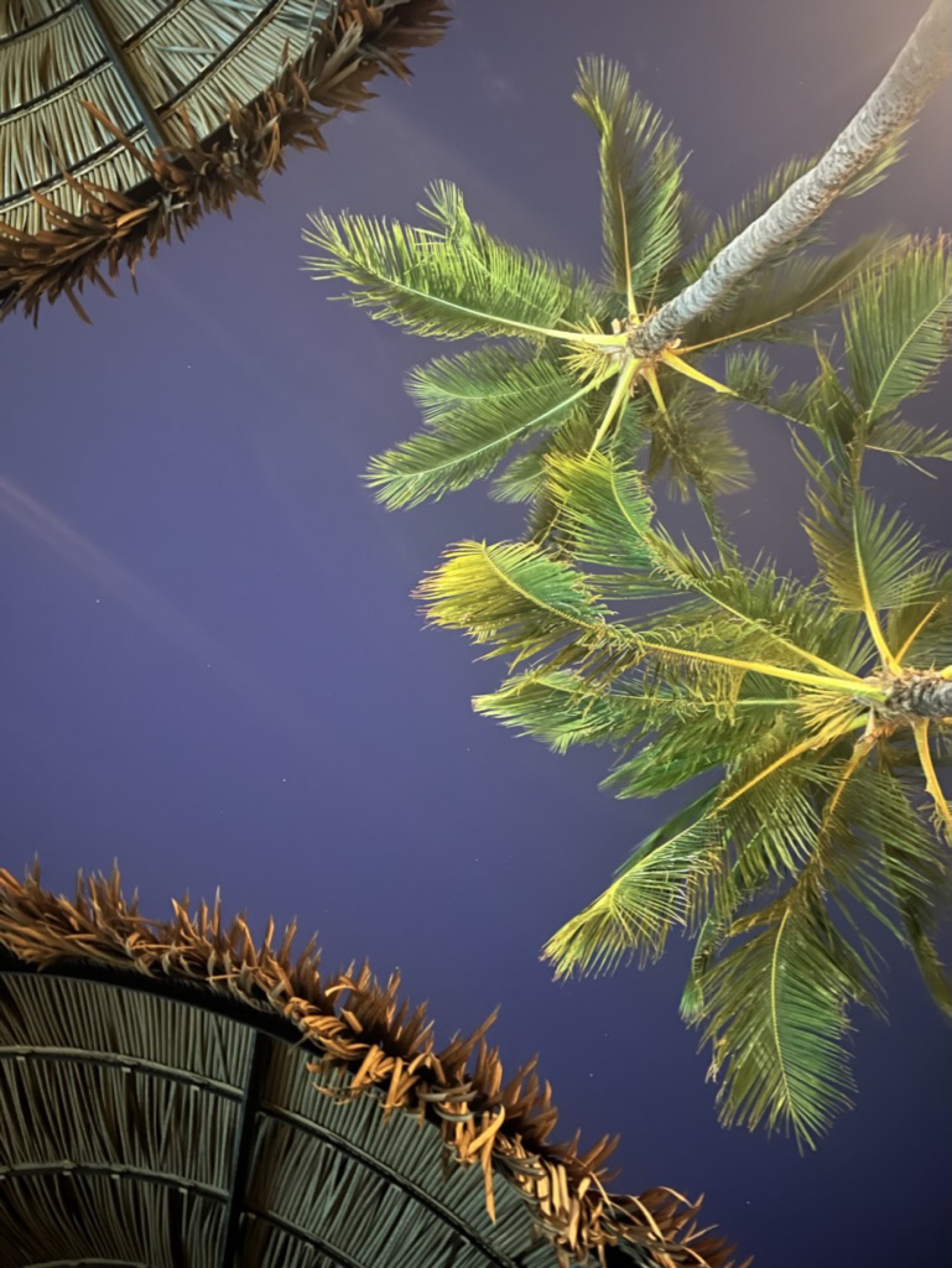
That last shot is from a late-night walk back from one of the resort's outdoor restaurants, looking straight up. It's not technical. It's just what the canopy looks like when the lights underneath are on.
A resume, penciled at gate 8
The flight home was an evening departure out of Honolulu. I had three hours to kill before boarding and the trip had me in a particular mood — somewhere between grateful and unsettled. A few days earlier a call had come in asking me to submit a resume — the kind of call you don't get often and don't ignore when you do — and the rest of the trip had given me enough room to take it seriously.
I pulled out a notebook at the gate and started drafting.
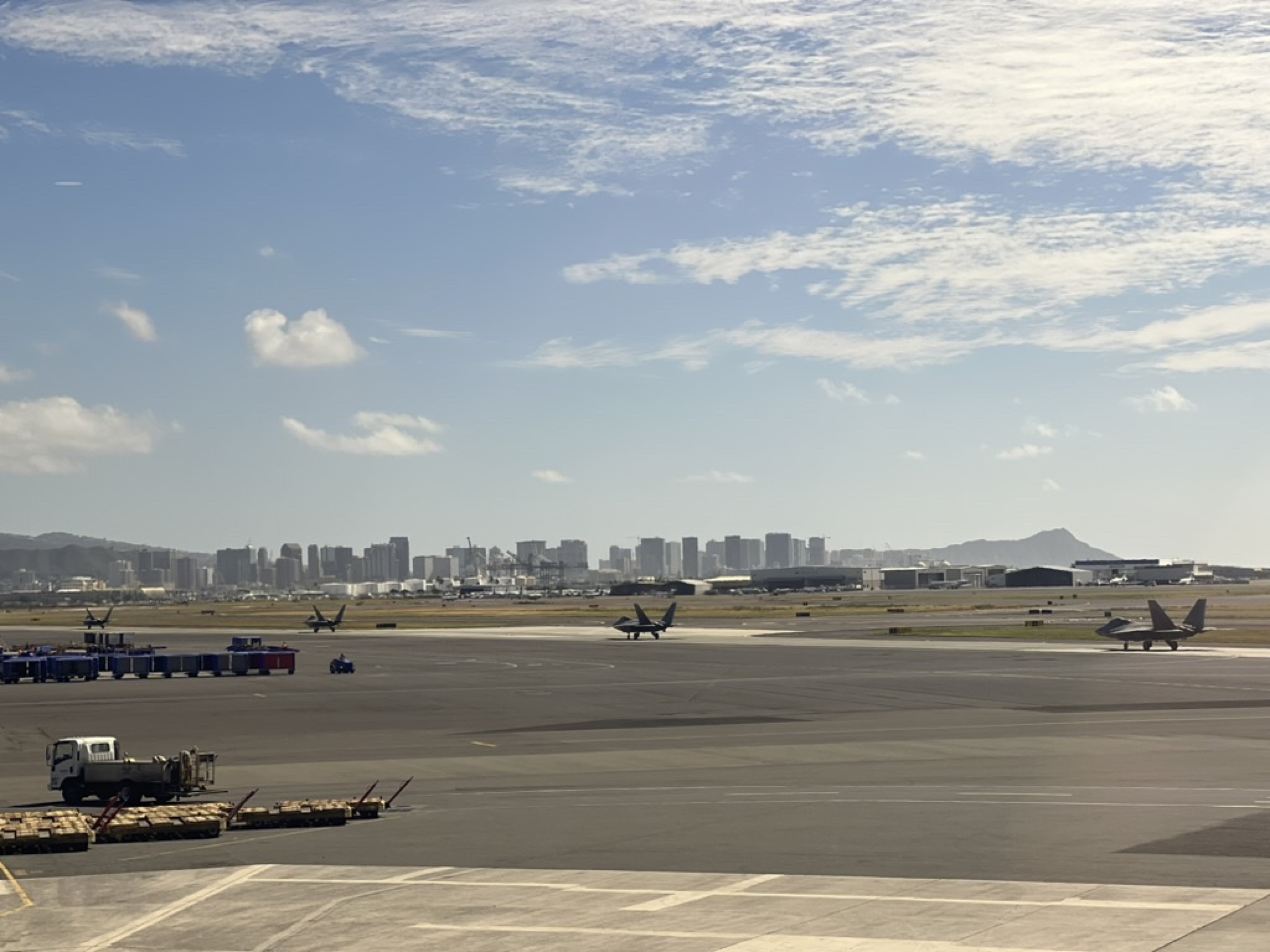
That photo's the view I had while I did it. Honolulu International shares a runway complex with Joint Base Pearl Harbor–Hickam, so on the ramp side you get the airliners and on the far side you get fighters from the Hawaii Air National Guard. Diamond Head sits at the far end of the apron. It is, generously, an unusual place to redo your career planning.
That resume turned into the application that turned into Edge Autonomy, which is where I work now. I'm not in the habit of treating travel as a productivity exercise, and I don't mean to retroactively claim "I went to Hawaii to find my next job." The honest version is that I'd been deferring the question for a long time, the trip created the room for it, and the room created the resume. The job was the consequence, not the goal.
Closing out
I went on this trip because there was a spare room. I came back having bought into Vacation Club, having drunk more than my share of Monkey Pod Mai Tais, having stood in front of a Buddha statue and thought about nothing for a while, and having drafted my way into my next role.
The Islands, in retrospect, were what I needed. They make you slow down — the air, the light, the rhythm of a place where everything closes earlier than you'd expect. I came home with a working theory that I should be taking better care of myself, more time for myself than I'd been giving, and a resolve to come back. (I have, three times now. The 2024 trip and the 2026 trip have their own posts; the 2027 Maui trip is on the books.)
2023 was a year of chance, realisation, learning, and growth. It all started with Hawaii.